‘Missing Middle’ Is a Major Barrier to Youth Employment, PPRC Study Finds
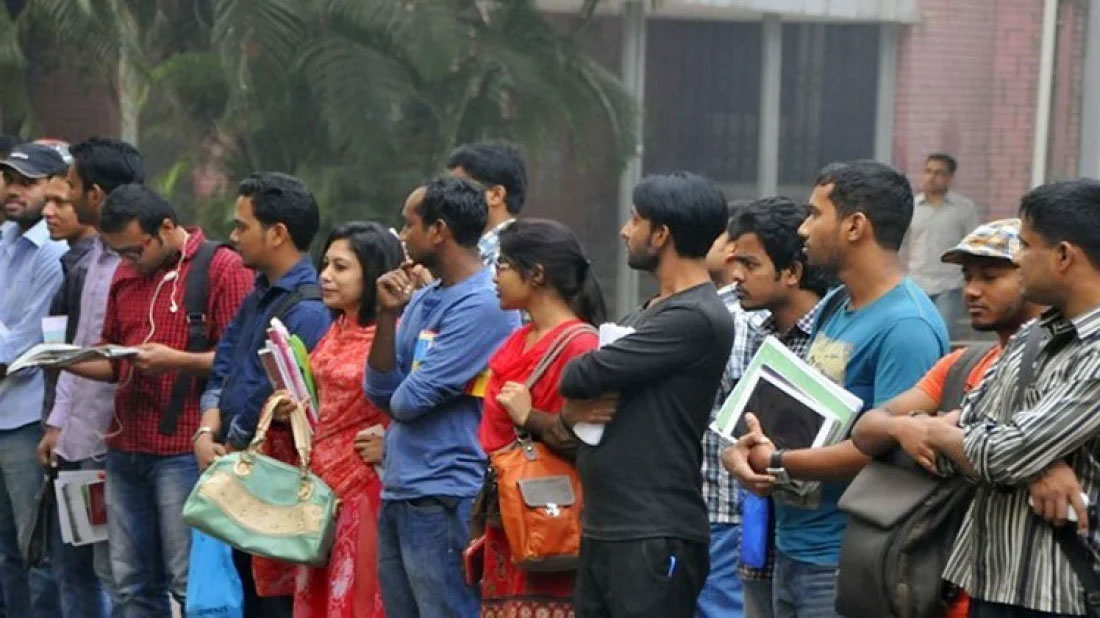
The economic crisis facing young people in the country is not only about a lack of skills or a shortage of job opportunities; institutional weakness in turning existing opportunities into jobs, sustainable ventures and dignified livelihoods has become a major barrier, a new study has found. Researchers have described the failure of institutions at the intermediate stage between policymaking and implementation to function properly as a ‘missing middle’.
The study, titled ‘Economic Opportunities and Realities for Youth in Post-Uprising Bangladesh’, was conducted by the Power and Participation Research Centre (PPRC) and The Asia Foundation.
PPRC Executive Chairman Dr Hossain Zillur Rahman and Senior Research Associate Namira Shamim presented the findings at the CIRDAP auditorium in the capital on Saturday.
Hossain Zillur Rahman said there is a lack of effective connection between macro-level policy and the individual efforts of families, young people and entrepreneurs. As a result, even when opportunities are created, they do not translate into real outcomes.
The study was based on consultations with young people and employers in Rajshahi, Jashore and Chattogram in August and September 2026. A total of 100 young people and 59 employers and entrepreneurs took part. Field-level discussions were also held in Naogaon, Pirganj, the Jashore Hi-Tech Park, coastal Noakhali and with indigenous communities in Bandarban. The researchers said it was not a nationally representative survey; its aim was to identify the obstacles to making use of economic opportunities in different regions.
The study found that although Rajshahi has opportunities in mango and horticultural crop processing and marketing, storage, quality testing and financing arrangements there are weak.
In Jashore, the digital sector, light engineering, flowers and women-led businesses have advanced, but necessary institutional support remains inadequate. Local food and culture-based businesses also have potential there. The study also raised questions about the productive use of public investment in the unused Jashore Hi-Tech Park.
In Noakhali, products such as soybean are processed in other areas, so the local economy does not retain the benefit of value addition. Entrepreneurs are in trouble because there are no loans suited to seasonal businesses, and women face various obstacles in obtaining loans. In Chattogram, employers complain of a shortage of skilled workers, yet young people cannot find the opportunity to gain the experience needed for a first job. In Bandarban, limited access to markets, infrastructure and services is holding back the expansion of economic activity.
Both young people and employers pointed to a shortage of practical skills and a financing system unsuited to small youth-led ventures. But the two sides differ over job experience. Employers complain that graduates are not ready for work; young people ask how they are supposed to gain experience if they never get a first job.
Drawing on the study, Hossain Zillur Rahman set out seven priorities. They include strengthening the institutions between policy and implementation, making local government and educational institutions drivers of regional economic transformation, increasing practical skills and mentorship, identifying why entrepreneurs drop out, and ensuring the productive use of public assets. He also stressed the development of regional products and the creative economy, and the inclusion of women, indigenous and marginalised communities.
The PPRC executive chairman said the economic aspirations of the young people associated with the July mass uprising were not merely a demand for more jobs. They also involved questions of fairness, dignity, access to opportunity and economic justice. The challenge now, he said, is to turn the opportunities that have been created into real benefits.
At the event, The Asia Foundation’s Bangladesh Country Representative Kazi Faisal Bin Seraj said productive and meaningful employment matters not only for economic prosperity but also for creating a sense of participation, ownership and stability among young people. In a written statement, Finance Minister Amir Khosru Mahmud Chowdhury said increasing productive employment for young people should be one of the main priorities of the country’s economic programme, and called for realistic steps to remove the obstacles they face.
BRAC Institute of Governance and Development (BIGD) Executive Director Dr Imran Matin emphasised removing institutional barriers at the local level and strengthening local government. He spoke of acquiring real skills instead of certificate-based training, risk management for young entrepreneurs, and expanding mentorship and apprenticeship-based learning. Jean Pesme, the World Bank’s Division Director for Bangladesh and Bhutan, said the current growth model is no longer inclusive enough and that cracks have appeared in the process of converting growth into employment; skills, businesses, financing and private investment need fresh attention to deal with the situation.