Toy Story Turns 31: How Two Rival Toys Changed Hollywood Animation
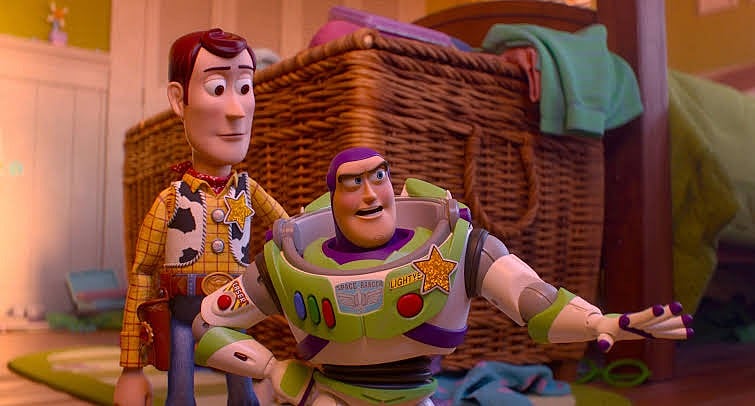
On Andy's birthday, his toys are the most anxious of all. A new gift could bring a newcomer into the room, and then what would become of the old ones? That fear opens the story of Toy Story. The cowboy doll Woody had long been Andy's favourite toy. But when Buzz Lightyear comes out of the box, the balance changes. With his shiny space suit and wings that pop out at the press of a button, Buzz quickly wins Andy's heart, and the new guest believes he is a real space ranger.
It was through the rivalry of these two toys that Pixar opened a new chapter in the history of animated cinema. Toy Story was released in United States theatres on 22 November 1995. Today, 22 November 2026, marks 31 years since that release. Directed by John Lasseter, it was Pixar's first feature film and the world's first fully computer-animated feature. The Pixar-made film was released by Walt Disney Pictures.
Pixar had been making computer animation before Toy Story. After Steve Jobs bought Lucasfilm's computer division in 1986, Pixar began as an independent company. That same year came Lasseter's short film Luxo Jr., which showed character through the movements of a desk lamp. That small lamp later became part of Pixar's identity.
In 1988 Lasseter made Tin Toy, in which a crawling baby looks frightening through the eyes of a toy named Tinny. The Oscar-winning short experimented with a toy's point of view, and Toy Story expanded that experiment. In 1991 Disney and Pixar signed a deal to make and distribute computer-animated films, and that deal set Toy Story in motion.
Telling the story through the toys' eyes turned Andy's familiar room into an entirely different world. A bed and a window are ordinary parts of a room to people, but to a toy a few inches tall, falling out of that window is a major danger. Buzz's shiny plastic, Woody's cloth outfit and his pull-string voice box show at a glance that the two belong to different eras of toys.
Watching Woody on screen, no one would guess that this character once brought the film to a halt. On 19 November 1993 Pixar showed Disney executives a storyboard version of the film. In it Woody was so harsh that there was little room for sympathy for him. Driven by jealousy, he threw Buzz out of the window and mistreated the other toys. The executives did not accept that version, and production paused while the script was rewritten. The day is known in Pixar's production history as 'Black Friday'.
Lasseter, Andrew Stanton, Pete Docter and Joe Ranft then sat down with the story again. In the final film Woody is still jealous and still plots to remove Buzz. But behind his behaviour is an understandable fear — losing his place with Andy. Buzz, in turn, is shaken when he realises he is not a space ranger but one of many toys sold in shops. In the end, both need each other's help to get back to Andy.
Tom Hanks voiced Woody and Tim Allen voiced Buzz. Randy Newman's song 'You've Got a Friend in Me' first recalls Woody's bond with Andy, and as the story moves on, the song comes to fit Woody and Buzz's friendship as well.
22 November 1995 was a Wednesday, the day before Thanksgiving in the United States. Toy Story opened that day in 2,457 theatres. In its first three-day weekend it earned about $29.1 million in the United States and Canada, while the James Bond film GoldenEye earned about $18.1 million in the same period. Over five days from release day to Sunday, its takings stood at about $39.1 million, and it held the top spot the following weekend with more than $20 million.
According to Box Office Mojo, by the last day of 1995 Toy Story had earned about $146.2 million in the United States and Canada. Its first release run took in about $191.8 million in total, making it the highest-earning film of 1995 in that market. Pixar's published history puts the film's worldwide gross at about $362 million.
At the 68th Academy Awards in 1996, Toy Story received three competitive nominations, one of them for original screenplay — the first screenplay nomination ever for an animated film. The screenplay was written by Joss Whedon, Andrew Stanton, Joel Cohen and Alec Sokolow, with story credit to John Lasseter, Pete Docter, Stanton and Joe Ranft. The other two nominations came through Randy Newman, for original song and for original musical or comedy score. At the same ceremony John Lasseter received the Academy's Special Achievement Award for leading the Pixar team that created the first feature-length computer animation. In 2005 the US Library of Congress added the film to the National Film Registry for preservation.
In the first film, Woody's fear was that a new toy would take Andy's affection. In the later films that fear took other forms. In Toy Story 2 in 1999, Woody has to decide whether to return to Andy or remain a valuable doll with a collector. In Toy Story 3 in 2010, Andy reaches college age. Toy Story 4 followed in 2019. Toy Story 5, released on 19 June this year, gives Woody, Buzz and Jessie a new rival: a tablet called Lilypad.