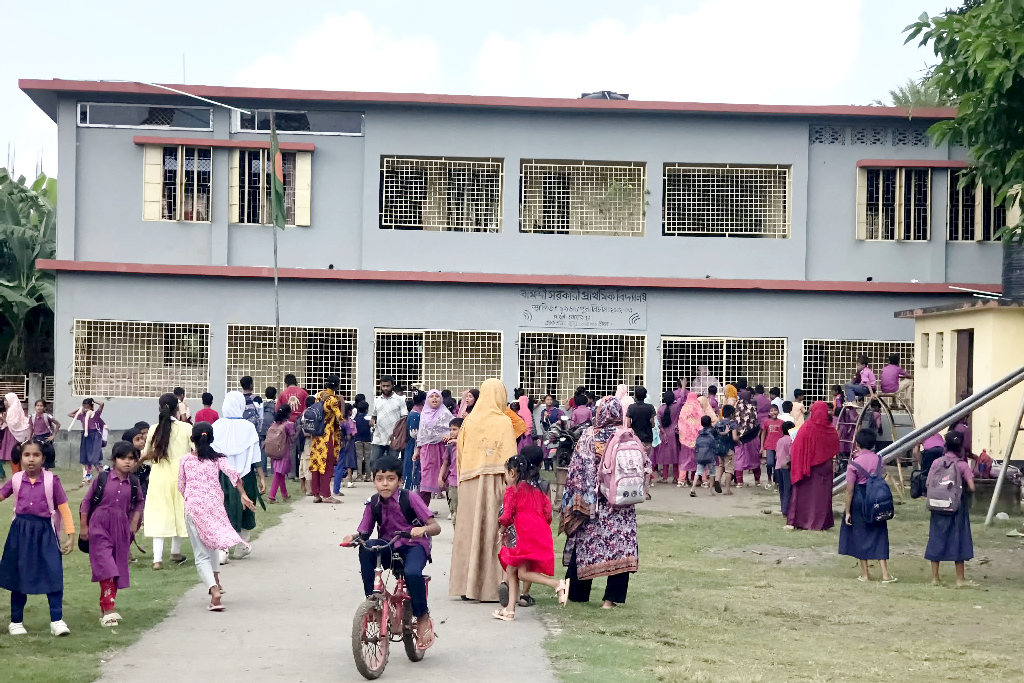
Five Teachers Teach 120 Pupils Without Pay at Barail School in Chapainawabganj, Which Has No Electricity, Water or Sanitary Toilet
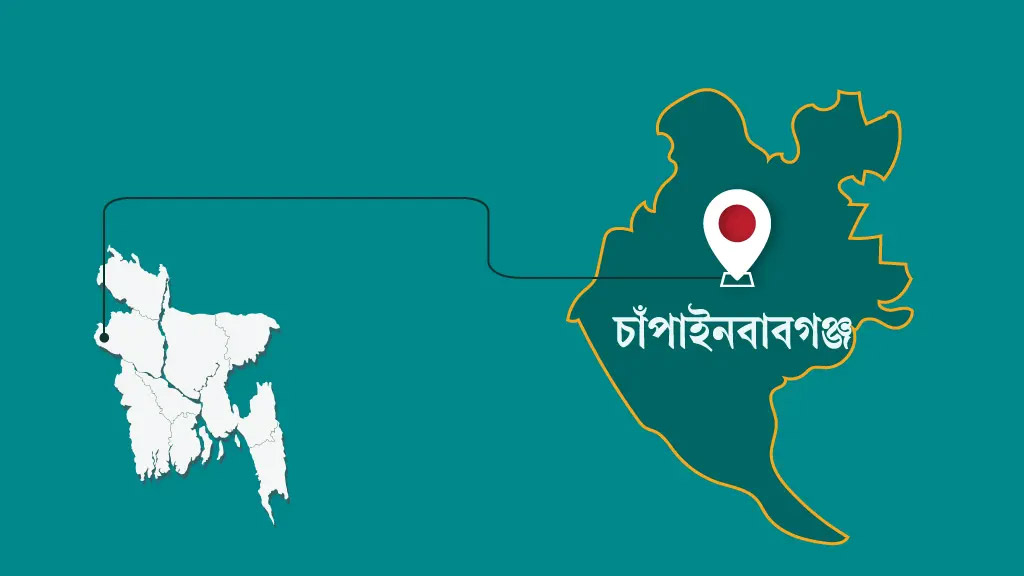
Paddy fields stretch in every direction. In the middle is a village inhabited by a small ethnic community, reached by an unpaved earthen road. On one side of the village stands a dilapidated mud building. Children are taught in two classrooms at the two ends of the building, and the teachers sit in another small room in the middle. This is Barail Non-Government Primary School in Parbatipur Union of Gomostapur Upazila in Chapainawabganj.
School sources say the institution began in Barail village of Parbatipur Union in 1985 as 'Barail Mission School'. After the missionaries left, its activities stopped. Teaching resumed in 2008 under the name Barail Non-Government Primary School, and after closing again for several years it started once more. About 120 pupils now study there, and five teachers teach regularly.
The teachers say they are teaching without salary or allowances to ensure education opportunities for the area's children. They have kept the school alive through their own labour, time and sincerity.
Local residents say the school is a main hope for primary education for children of small ethnic community families in seven to eight nearby neighbourhoods. They want the school's dilapidated building rebuilt so children can study attentively in a good environment.
On a visit, the school's tin roof was seen to have numerous holes. Four to six pupils sit on a single bench in the classrooms. The school has no electricity, no sanitary toilet and no safe drinking water arrangement.
Pupils say rainwater leaks into the classrooms and soaks their books and exercise books. Water is brought from outside and kept in pitchers or jugs. When there is no water, they sometimes drink water from the irrigation channel in the neighbouring paddy field.
Third-grade pupil Sangita Barman said, 'The classroom tin has holes and the walls have cracks. There is no drinking water arrangement at the school. When we are thirsty we have to drink water from the channel in the crop field nearby. We suffer a lot every day because of these things.'
Another pupil, Smriti Toppo, said, 'The condition of our school buildings is very bad. There are not enough benches to sit on in the classrooms. There is no sanitary toilet either.'
Local guardian Jogesh Gojar said pupils of several classes have to sit together in the same room. Without electricity, children suffer greatly in the heat. There is also no good toilet or safe drinking water arrangement.
Assistant teacher Ferdousi Khatun said, 'Thinking of the children's future, I have been teaching without pay for a long time. There are many limitations; still, I do not want the children's studies to stop.' Another teacher, Ganga Rani, said the area is inhabited by a small ethnic community and the village children do not want to go to distant schools, which is why the school was established in Barail village. But it lacks necessary infrastructure, electricity, toilets and safe drinking water.
Head teacher Pranab Barman said they have kept the school running on their own initiative to spread the light of education among the area's children, and have not stopped teaching despite many crises. They hope the school will receive government recognition like other institutions, but despite many efforts it has not been possible to make it a government school.
Parbatipur Union Parishad chairman Moazzem Hossain said the small ethnic community's settlement grew amid crop fields. Within two to two and a half kilometres there are Bhatkhair Government Primary School and Deopura Government Primary School, and another government primary school in Pitihar village of Rasulpur Union in Niamatpur Upazila of Naogaon district. But the community's children show little interest in attending those institutions. He said a government primary school close to their own settlement is therefore necessary.
District primary education officer Md Saiful Islam said, 'For nationalisation of a primary school, the institution must have 33 decimals of land in its name, along with 150 pupils, and there must be no government primary institution within two kilometres. If these conditions are met, they can apply to the district primary education office. If they apply, we will inspect on the spot and take necessary measures.'