Day-Long Wage Board Meeting in Segunbagicha Ends Without a Decision on Garment Workers' New Minimum Wage, Talks May Run Into Night and Tuesday
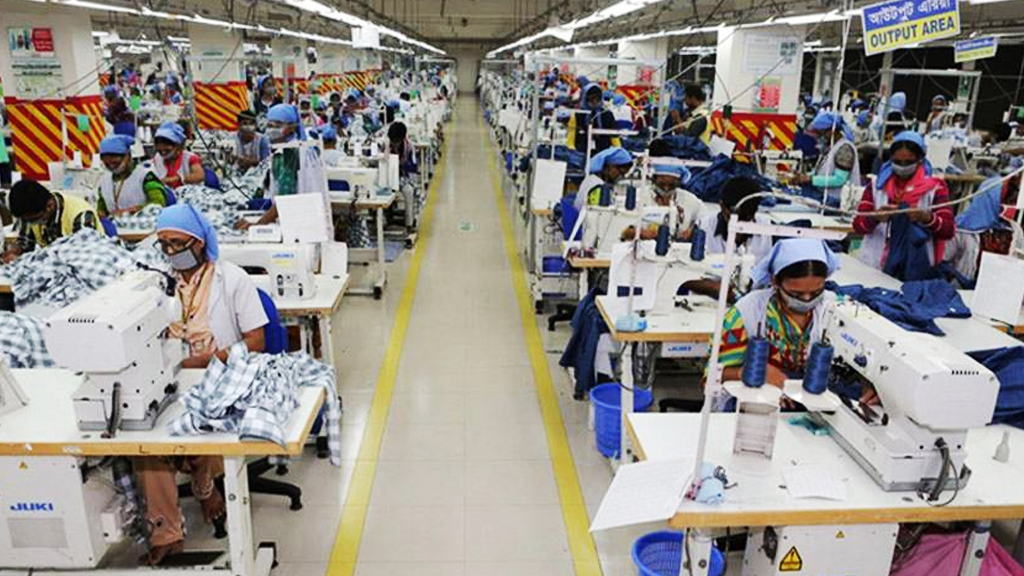
The third meeting of the board formed to set the minimum wage for the ready-made garment industry ran all day on Monday without producing any result. During the Asr prayer break in the afternoon, Wage Board Chairman Syed Azad Subhani told reporters waiting outside the venue that discussions would continue into the night if necessary. For the sake of the talks, the meeting may also roll over to Tuesday.
The board's scheduled third meeting began at around 11:30am today at the Minimum Wage Board office in Segunbagicha in the capital. Representatives of the owners, the workers and other board members were present.
Meanwhile, throughout the day while the meeting was under way, several separate groups of workers staged protests below the building demanding a minimum wage of 30,000 taka.
After the day-long meeting, Minimum Wage Board Chairman Syed Azad Subhani faced journalists during the Asr prayer break in the afternoon. He said the meeting would continue. The owners had made a proposal, and it was being discussed.
The chairman said what had been found during inspections in Dhaka, Ashulia, Savar, Narayanganj and Chattogram had been presented at the meeting. The proposals of the owners and the workers were being discussed, with arguments and counter-arguments from both sides. The meeting decided that the owners' proposal would not be disclosed now.
When a journalist mentioned that a minimum wage of 14,500 taka had reportedly been proposed for garment workers, the chairman said that was completely incorrect and not even close. What was appearing in various media was completely unrealistic, he said, and the actual proposal was much higher. He said only the statement formally issued by the Wage Board should be accepted.
Earlier, at the Wage Board's second meeting, workers' representative Babul Akhtar had made a proposal based on a minimum wage of 32,000 taka. However, he too was unwilling to disclose how much the owners had proposed at today's board meeting.
Workers' leader Babul Akhtar said discussions were proceeding according to the meeting's agenda. The owners had made a proposal, but he was not disclosing the figure now. They always propose a low amount, and they had done the same this time, he said. It did not seem reasonable to the workers' side, and the workers' side had said so.
Babul Akhtar said a demand had been made that the meeting should not be ended. If necessary, the meeting would run until 10pm, and if necessary it would be adjourned and reconvened tomorrow. Even so, the wage issue must be finished quickly. He said revised proposals would come from the workers as well as from the owners, and those would be discussed again. The owners had said the workers' proposal was not acceptable to them, and the owners' proposal was likewise not acceptable to the workers' side.
Addressing the workers, Babul Akhtar said wage talks were under way and urged them to join work.
Asked whether the proposal was not being disclosed for fear that dissatisfaction would grow, the board chairman said: 'No, we are doing it the way the rules require. The wage will be set taking into account the existing reality of Bangladesh.'
The chairman said this board's term runs until 30 April. Even so, an attempt was being made to finish the next three days of meetings today itself. In his words, for the first time in Bangladesh's history a wage would be set in the shortest time. Besides the proposals of the owners and workers, inflation, market prices, families' dependence on workers, the owners' capacity, the world market situation, the impact of a wage increase and the situation in competing countries were all being taken into account in the discussions.
Owners' representative ABM Samsuddin said: 'One thing must be understood — a goose lays one golden egg every day. When that goose falls ill, will you still expect golden eggs?'
This year the labour law was amended to reduce the period for re-setting workers' minimum wage from five years to three years. On that basis, the term of the garment sector's current minimum wage will end this November.
In 2023, the minimum wage for the ready-made garment sector was raised from 8,000 taka to 12,500 taka. The wage rose by 56.25 percent in that instance. However, amid all the discussions, all sides have agreed that the new wage will take effect from next December and that salaries will be paid under the new wage structure in January.