Two Days, Two Innings, Three Overs: Merv Hughes and Test Cricket's Strangest Hat-Trick
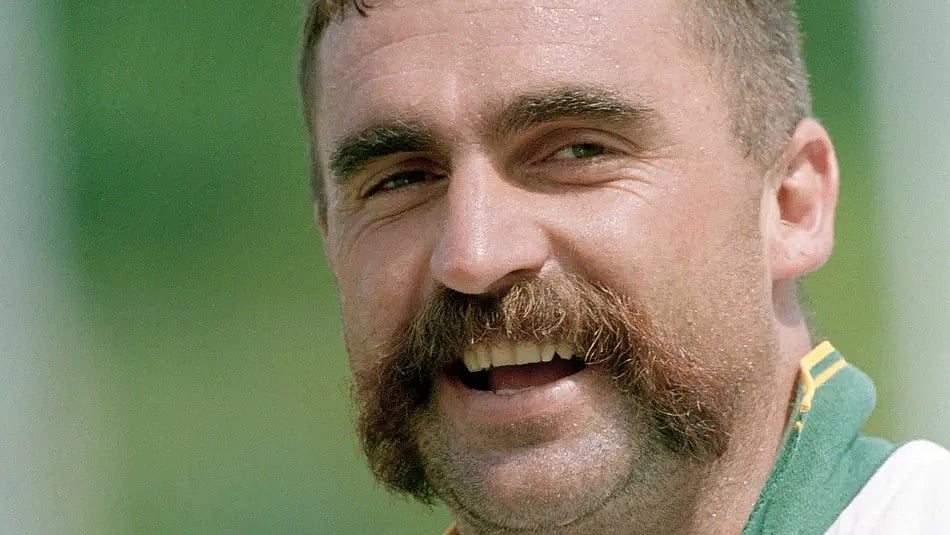
Many bowlers have taken a hat-trick in Test cricket. But former Australia pacer Merv Hughes's hat-trick was like no other — it came across two days, two innings and three overs, making it arguably the slowest hat-trick in Test cricket.
Hughes took 212 wickets in 53 Tests, along with 38 wickets in 33 one-day internationals. He retired from international cricket 32 years ago. Today is the cricketer's birthday.
That famous hat-trick came in the Perth Test against the West Indies. Its first wicket arrived with the last ball of the 36th over of the West Indies' first innings, when Hughes dismissed Curtly Ambrose.
The next over was bowled by off-spinner Tim May, who also took a wicket, leaving the West Indies' last pair at the crease. With his first ball back, Hughes dismissed Patrick Patterson to end the innings.
A full Australia innings then passed in between. Almost 24 hours later, with the first ball of the West Indies' second innings, Hughes dismissed Gordon Greenidge to complete the hat-trick.
Hat-tricks spread across two innings exist twice more in Test cricket, but Hughes's remains unique for taking three wickets in three separate overs. Because an Australia innings intervened, spectators — and even commentators — did not at first realise a hat-trick had been completed.
In that Perth Test, Hughes had only just returned to the side after sitting out the first Test of the series. He took five wickets in the first innings and eight in the second.
Extra responsibility had fallen on Hughes after his bowling partner Geoff Lawson's jaw was broken by a Curtly Ambrose bouncer. Despite taking 13 wickets for 217 runs in the match, he could not save Australia from defeat — setting an unwanted record: the best bowling figures by an Australian in a Test his team lost.
By pace alone, Hughes was never a fast bowler. After he managed only 21 wickets in his first seven Tests, former Australia captain Ian Chappell jibed that Merv Hughes's problem was that he thought he was a fast bowler.
But to Allan Border, his captain in all 53 of his Tests, Hughes was the 'go-to man' — whenever a wicket was needed, the ball went to him. Border once pointed him out to a journalist and said: look at him, 20 kilos overweight, you never know what he'll do, but on the field he will give his life for you — that is the kind of cricketer I want.
Hughes also played a big role in Australia's revival after Dennis Lillee, Greg Chappell and Rod Marsh all retired in the same Test in the 1980s, leaving the team struggling. With bouncers, slow leg-cutters or sledging, he unsettled batters and most of the time got the job done.
In the 1993 Ashes series, after Craig McDermott was ruled out injured, Hughes gave even more of himself: in six Tests he bowled nearly 300 overs and took 31 wickets. The side effect was injury, which also played its part in his career ending just two Tests later.