Jensen Huang returns as Nvidia CEO 11 days after resigning, shares jump more than 25 percent
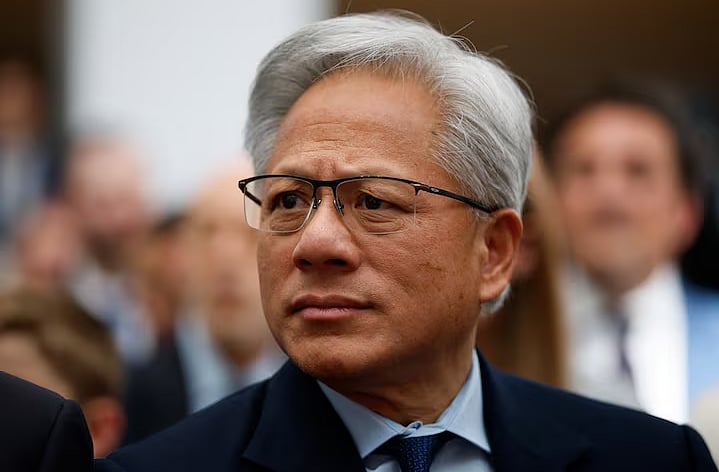
Chipmaker Nvidia said on Monday it has reinstated Jensen Huang as chief executive officer. The decision takes effect immediately. The company said the board voted unanimously to bring Huang back as president, CEO and board director.
In a statement, Huang said, 'I am honored to return to NVIDIA and lead one of the most consequential technology companies in the world at the beginning of a new industrial revolution. I take this responsibility with the greatest humility and renewed commitment.'
Nvidia shares jumped sharply on the news. In pre-market trading, the company's share price rose by more than 25 percent. The broader stock market also rose on Monday morning.
US President Donald Trump endorsed the move, calling it the 'correct and proper decision'. He said Huang's leadership was needed in order to ensure the success and prosperity of not only the company, but the American economy. Trump added that the government does not see Huang's return as a national security risk.
Only a few days ago, the company's board had ruled out the possibility of Huang returning. But the board has now completely reversed that earlier position and decided to bring him back. Nvidia said the decision followed a series of conversations and meetings, as well as input from people at senior levels of the United States government.
The board said it is satisfied with Huang's candour and leadership ability. It also said that after receiving input from senior US government officials, it sees no national security risk in his return.
Huang resigned on 12 November after information about extramarital affairs leaked. Among those he had relationships with is a businesswoman whom US authorities suspect of spying for China. Beijing has denied the allegation.
In late October, The New York Times first reported Huang's relationship with Alice Huang, a former executive of Singapore-based datacentre firm Megaspeed. US officials suspect China's Ministry of State Security recruited Alice to gather information, although the spying allegation has not been proven.
Later, allegations of his relationships with two more Nvidia women executives also surfaced. When Nvidia's board began an investigation on 9 November, the 63-year-old co-founder Huang admitted the relationship with Alice and resigned as president, CEO and board member.
After Huang's resignation, Nvidia's chief financial officer Colette Kress took over as interim CEO, and recruiting firm Heidrick & Struggles was tasked with finding a permanent CEO. At a conference after third-quarter results last Tuesday, the board chairman had said bringing Huang back as CEO was not being considered.
Huang built Nvidia from an ordinary video-game chipmaker into the leading supplier of artificial intelligence processors. On that journey he played a central role in future chip plans, deals with customers and maintaining relations with Washington.
The fall in Nvidia's share price amid the controversy also caused a large drop in Huang's personal wealth. A Forbes report on 21 November said that from 9 November to last Friday his wealth fell by $47.9 billion, or 29.5 percent, to $110.1 billion. That dropped him to 17th place on Forbes' list of the richest people.
Even amid this turmoil, Nvidia's third-quarter financial results were quite strong, with earnings per share at $2.68 and revenue of $107.6 billion from the datacentre business alone.
Huang's resignation had also created geopolitical tension between the United States and China. For years Huang had lobbied against the ban on selling advanced chips to China. Even last year, despite objections from both Republicans and Democrats, US President Donald Trump approved the export of Nvidia's 'H200' chips to China.
After Huang's resignation, Chinese foreign ministry spokesperson Mao Ning called the spying allegation 'completely baseless and speculative' and urged the United States not to use it to impose a technology blockade. Megaspeed, on the other hand, said in a statement that it takes US export control obligations seriously and is committed to working transparently with the US government.