California Braces for Record Floods as King Tides Collide with El Niño Before Thanksgiving
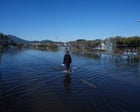
California's coastal cities are racing to prepare for possible historic floods as a winter high tide event collides with super El Niño conditions just before the busy Thanksgiving travel week. Coastal Californians have already endured flooding, extreme waves and beach erosion during this super El Niño season, and experts now warn that Thanksgiving week could bring more havoc, with potentially record-breaking floods on the coast and farther inland.
Ocean levels that are already unusually elevated during this super El Niño year will be pushed even higher by these so-called king tides. The first of them arrives on November 22 to 24, just as many Americans are traveling for Thanksgiving.
Scientists have warned that if heavy rainstorms hit California on any of those days, the combined impact could be disastrous, with wide-ranging effects on homes, infrastructure and travel — airports, roads and trains all at risk on some of the busiest travel days of the year. The flooding could affect parts of California that have not been inundated in the past.
Daniel Lurie, the mayor of San Francisco, called on residents to avoid unnecessary travel from Monday afternoon through Wednesday, saying the weather forecast was "extremely serious" and "we are anticipating high tides and rain that this city has never seen before." He advised locals to stock up on food and other essentials, as a meteorologist warned that San Francisco International Airport and its tarmac risked being inundated with flood waters.
A series of events this year lies behind the risk. In September, intense storm-driven waves battered southern California's coastline, eating away at beaches and damaging coastal homes. In October, it did not even take the year's highest tides to swamp low-lying neighborhoods of southern California, leaving people kayaking and paddle-boarding through flooded city streets despite no storms at all. In early November, areas of the coastline saw giant 50-foot waves. And this past week, heavy and sometimes record-breaking rain pounded San Francisco and Los Angeles, causing temporary flooding of urban streets and highways.
Scientists are worried that these different dangerous weather patterns may overlap during the highest tides, multiplying the potential flooding damage.
Daniel Swain, a climate scientist at the California Institute for Water Resources, explained in a recent online briefing that "king tides" are simply "the very highest high tide cycles of the year" — a natural, annual occurrence, the periods of the highest astronomical tides, related to the orbits of the sun and moon. But this year, he said, the high tides have raised concerns about "widespread and potentially significant — maybe even record-breaking — coastal flooding".
According to the California Coastal Commission, king tides will occur on November 22-24, before Thanksgiving; on December 23-25, over Christmas; and on January 21-22. Some areas of northern California will see the tides arrive a day earlier.
Swain said these tides are predicted to be "half a foot to a foot higher" than October's high tide event. If the tides combine with even a "moderate" storm, that "can produce 6in to 12in of storm surge", he said. Both storm surge waves and heavy rain "are more likely than usual during a very strong El Niño winter", he added.
The king tide flood risk is not limited to people living along California's beaches. "Even places that are not along the Pacific coast, but that are inland — San Francisco Bay, Monterey Bay, San Diego Bay, even places much farther inland along the San Joaquin Sacramento estuary that are tidally influenced — could see significant to record-breaking inundation due to elevated water levels," Swain said.
El Niño is one phase of a cyclical weather pattern in the Pacific Ocean believed to date back at least 120,000 years. The warm phase of the cycle occurs every two to seven years, when Pacific Ocean surface temperatures rise at least 0.5C above average for a period of months. It has massive global effects, leading to drier weather, droughts and wildfires in some parts of the world, and wetter weather and floods in others, including across the western US. The last El Niño season was in 2023-2024, and some of the strongest recent seasons were in 1982-1983, 1997-1998 and 2014-2015.
The current El Niño season is expected to be record-breaking, with experts predicting it could be the most intense in 1,000 years. A "very strong" or "super" El Niño season is defined as one where Pacific Ocean temperatures are 2C warmer than usual. At its peak, this super El Niño season is expected to hit 4C warmer than usual, a development scientists have described in striking terms.