Federal judge blocks Connecticut rules on ICE officers' masks and use of force
Connecticut's effort to impose state rules on federal immigration officers has hit a major legal obstacle after a federal judge ruled that the provisions are likely unconstitutional.
In a preliminary ruling on Friday, U.S. District Judge Vernon D. Oliver blocked Connecticut officials from enforcing certain sections of SB 397 against federal officers while the federal government's lawsuit over the law continues.
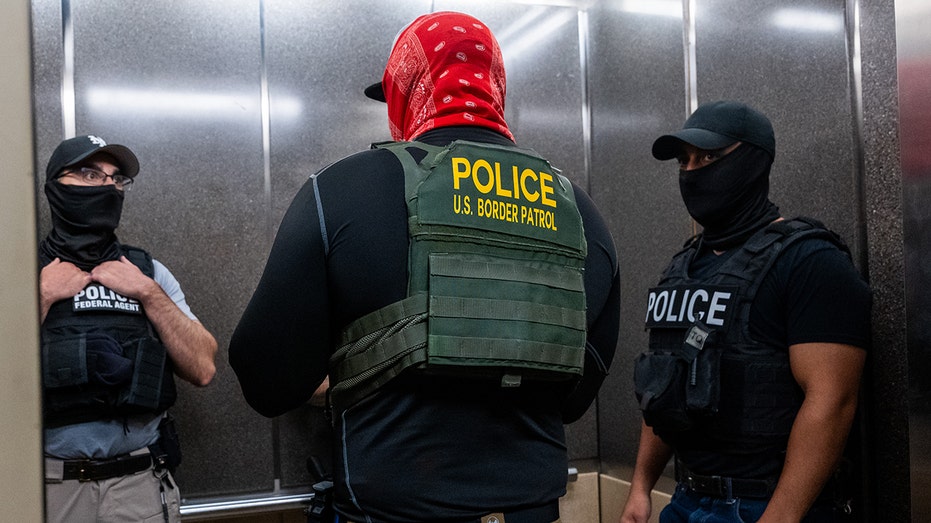
The blocked provisions of the law, passed in May, set statewide use-of-force standards, gave state officials authority to investigate and prosecute certain cases involving federal officers — such as excessive use-of-force incidents — and restricted federal officers' use of face coverings.
Judge Oliver wrote that the sections likely violate the Constitution's supremacy clause, which limits states' ability to control federal operations.
The case underscores a broader legal fight over how far states and cities can go in regulating federal officers who operate within their borders. Federal judges have already blocked state and local restrictions on federal officers in Virginia, New York and Philadelphia.
Most recently, a federal judge in California entered a permanent injunction barring enforcement of challenged state mask and identification laws against federal officers. The cases, however, vary in scope, and none resolves Connecticut's separate dispute over state use-of-force standards.
Democratic state Sen. Matt Lesser, the deputy majority leader in the Connecticut State Senate, said following the ruling: 'It is un-American to allow masked, secret police to detain our residents and I am hopeful that this ruling will be overturned on appeal and the law will survive in its entirety when the case is heard on the merits.'
Oliver's ruling gives the Justice Department a win, but it is not a final decision on the matter. The federal lawsuit also did not challenge a separate section of SB 397 allowing people to sue over alleged constitutional violations, so that provision was outside the injunction.
Lesser continued: 'I want Connecticut residents to know that the majority of this law still stands, and it still provides them the right to sue for violations of their constitutional rights. It also provides protections from ICE activity without a warrant in sensitive locations like schools, hospitals, and places of worship.'
State Rep. Steven Stafstrom, a key backer of the law as co-chair of the Judiciary Committee, also criticised the ruling, saying he feared it would leave Connecticut less safe because it blocks state tools to investigate deaths involving federal officers. He said he would work with colleagues and the attorney general's office on next steps.
Governor Ned Lamont's office and Attorney General William Tong's office were asked whether Connecticut plans to appeal and for comment on the ruling. Neither office responded by publication.