Hill women trafficked to China through marriage and job lures, over 730 cases in five years, study finds
Women and girls from the Chattogram Hill Tracts face a growing risk of being trafficked to China through lures of marriage, jobs and a better life. More than 730 human trafficking cases were recorded in the three hill districts between 2020 and 2025.
Of those, about 400 were in Khagrachhari, 300 in Rangamati and 30 in Bandarban. The study said the real number of trafficking cases could be higher, because many people hide them out of social fear and shame.
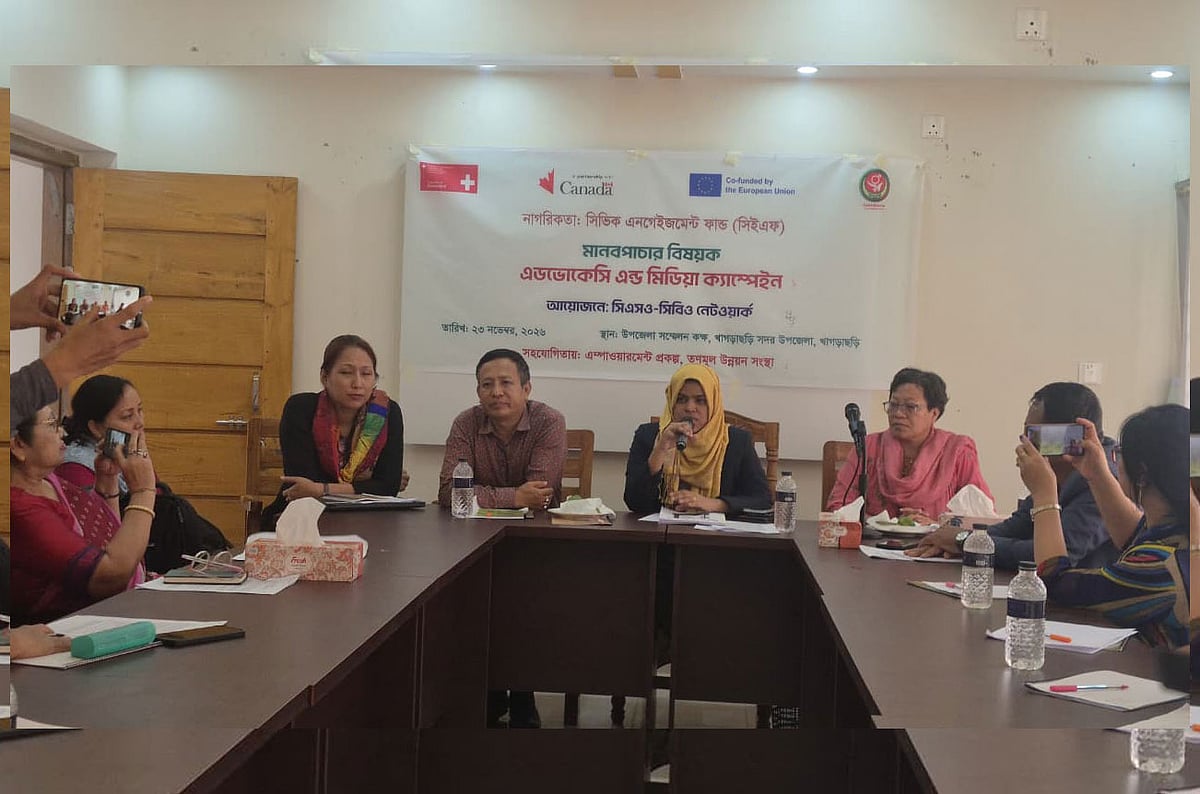
The findings were presented on Monday at an awareness meeting on human trafficking held at the Khagrachhari Sadar Upazila conference room.
The study, titled 'From the Chattogram Hill Tracts to faraway China', said women are being trapped through fraudulent marriages, job lures and through relatives and acquaintances.
According to the study, trafficking gangs use social media platforms such as Facebook, WeChat and WhatsApp for this work. Poverty, unemployment, land crises, limited access to education and gender discrimination were identified as among the causes of human trafficking.
Speaking as chief guest, Khagrachhari Sadar Upazila Nirbahi Officer Faria Sultana said the trafficking of women to China by showing them dreams of a better life is worrying. Everyone must work together to prevent this crime, she said.
Srijoni Tripura, public prosecutor of the Khagrachhari Women and Children Repression Prevention Tribunal, said that even when trafficking cases are filed, complainants in many cases settle them. That gives offenders a chance to get away, she said.
Susmita Khisa, deputy director of the district Department of Women Affairs, said young women's personal and emotional posts on social media can also attract traffickers. Awareness needs to be raised on this, she said.
Chaired by Trinamool Unnayan Sangstha executive director Ripon Chakma, the event was also addressed by Golabari Union Parishad chairman Ullas Tripura, women's leader Namita Chakma, KMKS executive director Gitika Tripura and women's trader Anjali Tripura.
The research findings and recommendations were presented by Smriti Ranjan Dhamai, senior monitoring and evaluation officer of the project. The event was conducted by Shashwati Dewan, coordinator of the Empowerment project.