Latin America leads global farm AI use, Asia trails, survey finds
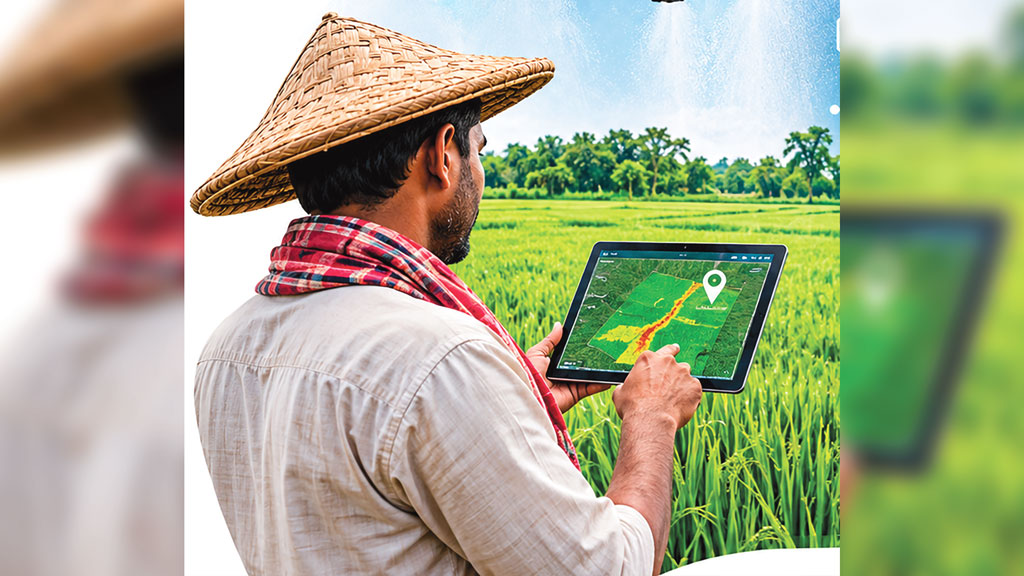
Farmers around the world are adopting artificial intelligence at sharply different rates by region. A Global Farmer Insights 2026 survey found that 17% of farmers use generative AI at various stages of farm work. The study covered 5,500 farmers in 10 countries.
By region, Latin America leads with 26%, followed by North America with 23% and Europe with 13%. In Asia the rate is only 7%, meaning Latin American farmers use generative AI at nearly four times the rate of Asian farmers. Willingness to pay for the tools remains low, however: only 4% of farmers worldwide pay to use AI tools.
Visible progress in farm automation can be seen in China's skies. At the start of this year, the number of plant-protection drones in China stood at about 309,000, roughly 23% more than the previous year. In 2025 alone, about 58,000 drones were added.
In 2025, those drones worked about 203 million hectares of land in China, compared with an estimated 6.64 million hectares in the United States. As the two countries have roughly similar amounts of cropland, China's drones did about 30 times more work than America's on a comparable area.
The number of registered agricultural drones in the United States rose from about 1,000 in January 2024 to about 5,500 by mid-2025. Price differences play a big role: a spray drone costs less than $10,000 in China, compared with $20,000 to $30,000 in the United States. In Thailand, drone use was near zero in 2019 but reached 30% of farmland by 2023.
Small farmers cultivating less than two hectares make up 85% of all farms worldwide. A single drone can spray pesticide over 4 to 10 hectares of land per hour.
Europe's market for applied AI in agriculture is comparatively small but growing fast. In 2024, Germany led with $150m, followed by the United Kingdom with $100m, France with $90m, Russia with $70m, Italy with $50m and Spain with $30m. Europe's total market grew from $388m in 2023 to $514.2m in 2024 and was estimated to reach about $665m in 2025; it could reach $8.7bn by 2035.
In Japan, which faces a shortage of younger farm workers, the average age of commercial farmers is 68.4 years. The country's agricultural AI market is forecast to grow at 26.2% a year through 2032.
In investment, the United States led global agrifoodtech in 2024 with about $6.6bn, while India was second with $2.5bn; among developing markets, Brazil followed India. Global investment reached about $16.2bn in 2025, with the United States, India and China in the top three.
The benefits of AI also appear in surveys and field trials. AI-controlled irrigation has been reported to cut water use by up to 30%. Farms using AI precision tools have reported yield increases of 15 to 20%, and up to 40% with strong application, while AI analysis is estimated to be able to cut input costs by up to 25%. Field trials in the US Midwest and in Tamil Nadu, India, found irrigation water use 12 to 35% lower and yields about 3 to 4% higher.
A large trust gap remains, however. Only 6% of farmers use generative AI or AI search information as a reliable source for decision-making, while 56% trust technical agronomists — more than nine times the trust placed in AI.
Among current users, AI is used most for planning, followed by crop management. In the United States, 11% of farmers pay for AI tools. Farmers' spending plans fell by 24 percentage points in 2026, and the influence of sales representatives dropped from 67% to 56%. The survey data was sourced from World Population Review and Global Farmer Insights 2026.