Vitamin K refusals rise in the US as doctors struggle to save newborn babies
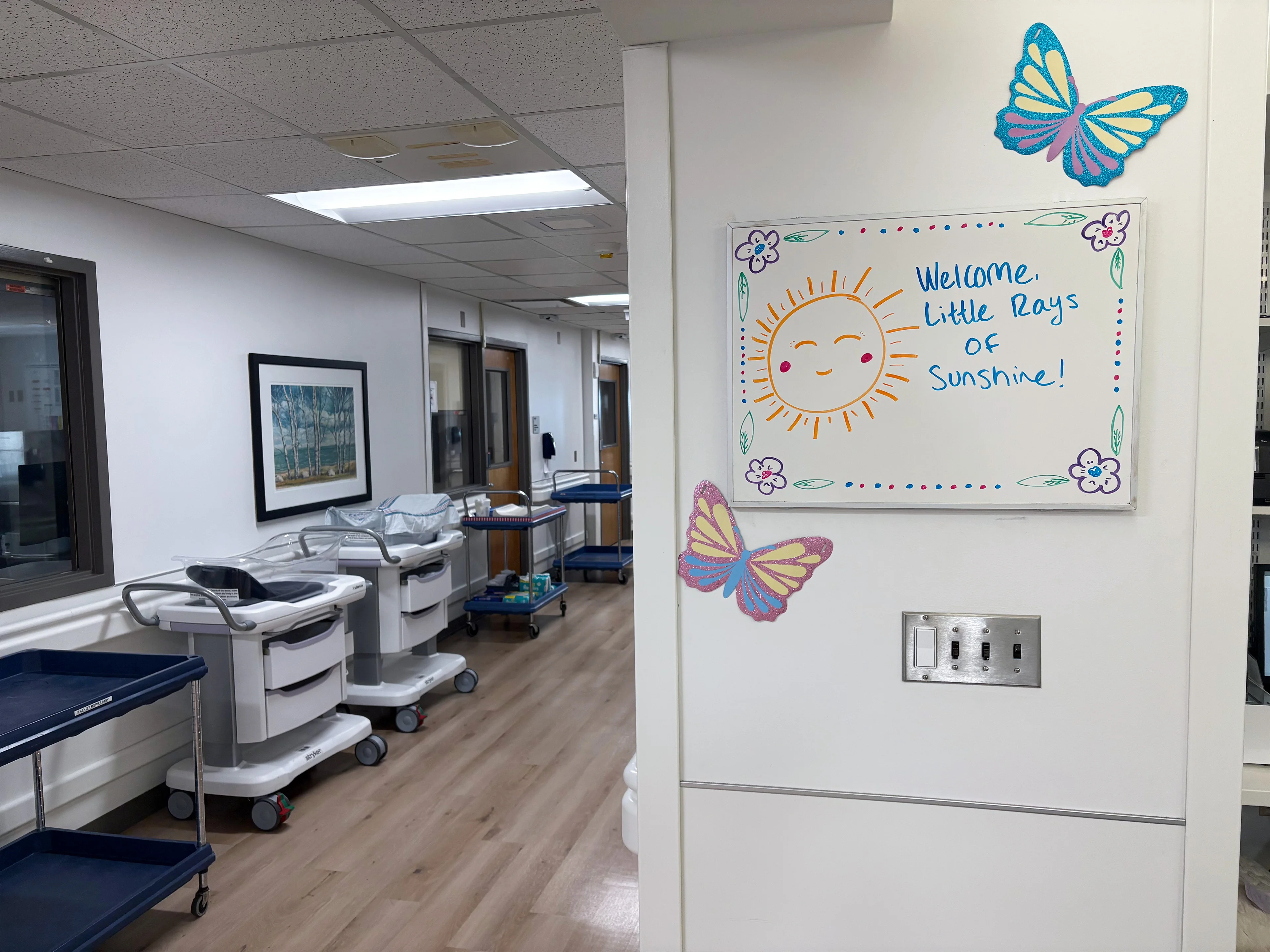
At Corewell Health's Butterworth Hospital in Grand Rapids, Michigan, at least one family on average each day refuses the vitamin K injection for their newborn. Doctors say refusals are rising under the influence of online disinformation, increasing newborns' risk of life-threatening bleeding.
Physician Torrie LeBlanc recalled a baby girl delivered last year in the labour and delivery unit where she worked at the Corewell Health hospital system in Grand Rapids. In the early hours the day after she was born, the baby suddenly started bleeding 'from everywhere' — her eyes, nose and rectum all oozed blood.
The girl's parents cried out for help from their hospital room. Nurses and doctors on the overnight shift rushed her to the neonatal intensive care unit, where they pumped fresh frozen plasma and other blood products into her small body, trying to replace what she was rapidly losing.
Her parents had declined a vitamin K injection for their baby, which is given to most newborns within six hours of birth to prevent rare but life-threatening hemorrhaging. With their baby on the verge of bleeding to death roughly 36 hours after birth, the parents agreed to let doctors administer vitamin K.
It worked and the baby survived, largely because she received treatment almost instantly, according to LeBlanc and an attending physician who helped care for her. Had the baby been at home when she started bleeding, they believe she would have died.
What LeBlanc witnessed has become much more common in recent years, as more parents, influenced by the anti-vaccine movement and broader mistrust of the medical system, refuse to allow doctors to give their babies vitamin K shots at birth.
Nationally, the rate of newborns who do not receive intramuscular vitamin K has more than doubled, rising from 3.1 percent of newborns in 2017 to 6.8 percent in 2025, according to research published in JAMA in November.
The spike moved LeBlanc and her colleagues to launch an initiative to reduce the rising number of vitamin K refusals at the hospital. Two years in, the team won a modest victory: vitamin K refusal rates are now flat at the hospital, even as refusals of other standard newborn medications, including the hepatitis B vaccine, continue to climb.
LeBlanc said: 'I honestly thought it would be easier. The more people I talk to, the more I learn about the misinformation that's online and the different reasons that people are refusing.'
Babies are born with very low levels of vitamin K, which is why the injection has been a routine part of newborn care since the 1960s. The shot is safe, with virtually no severe side effects, according to the Centers for Disease Control and Prevention. It effectively prevents vitamin K deficiency bleeding, a rare condition that can involve bleeding in the brain.
Among babies who receive the shot at birth, fewer than 1 in 100,000 develop the most serious form of bleeding. But babies who do not receive it are 81 times more likely to develop the condition, according to the CDC. Of those who do, 1 in 5 die.
Solomon Behar, a paediatric emergency medicine doctor in Los Angeles, recently treated an infant with vitamin K deficiency bleeding who died. He said: 'It just made me sad more than anything else. This was something that literally was a historical footnote up until the recent modern time, when people have decided that Mother Nature is someone that wants to work with them, rather than is trying to kill us.'
Jaspreet Loyal, a paediatrician at Yale New Haven Hospital in Connecticut, said: 'We can't walk into rooms where families don't know us from the doorknob and say, you have to do this. We have to practice humility, to sit there and listen, and then come back the next day and sort of use that nudge approach.' He said the most important thing to convey is that everyone is on the same team.
LeBlanc gets only about 50 percent of parents who initially refuse the shot to change their minds. Other doctors at the hospital said their success rates are closer to 20 to 40 percent. A refusal is now included in the patient's electronic medical record, so the family's regular paediatrician can bring it up at the first well-child visit.