Three Fort Hood Shooting Survivors Denied Permission to Witness Attacker's Firing-Squad Execution
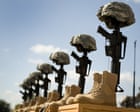
Three survivors of the 2009 shooting at the Fort Hood army post in Texas will not be allowed to witness the execution of the attacker, Nidal Hasan, military officials said on Tuesday.
In the 2009 attack, Hasan shot 13 people dead. More than 30 others were wounded by gunfire. Hasan was later found guilty of multiple counts of murder and attempted murder.
Hasan is scheduled to be executed by military firing squad on the afternoon of December 3. On November 10, however, the Army said the three applicants could not attend because none of them was the direct victim of the charges in the case, citing the regulations that govern military executions.
In an email sent on Tuesday, military officials also rejected their request for reconsideration, citing security and space issues. Recipients of the email shared it with the Associated Press.
The three had argued that the Army should apply a broader definition of 'victim' from the Uniform Code of Military Justice, under which a victim can be someone who suffered direct physical, emotional or pecuniary harm. They argued that refusing them attendance implied they were not victims because they had not been struck by bullets.
An earlier plan to livestream the military execution had been rescinded after bipartisan backlash. It would have been the first military execution since 1961 and the first by firing squad since the Second World War.
Hasan is held at the Fort Leavenworth military prison. A letter signed by the prison's commandant said the three cannot appeal again, and added that the decision was not meant as a judgment on any emotional injury they suffered as a result of Hasan's crimes.
Retired Colonel Kathy Platoni, who would have been Hasan's supervisor during a planned deployment to Afghanistan, described the denial as a betrayal. Speaking from her home in Ohio, she said she desperately wanted to attend, to look Hasan in the eye and say: 'You didn't get me.'
The Army said in a statement that its regulations specify who can witness a military execution, and it reiterated the size and space restrictions. It said efforts had been made over the years, from the trial to notifications to memorials and now to the execution, to recognize the impacts and support the victims.
Platoni said the survivors from her unit deployed to Afghanistan 29 days after the attack because they still wanted to serve their country, and if they had not, Hasan would have won. She said the building where Hasan first opened fire had been crowded with returning soldiers and those preparing to deploy, and that she had been moved to another building when the attack began.
Julia Wilson, who was nine months pregnant when Hasan opened fire, also had her request denied. She said the way the military has handled the case has caused her anguish, describing repeated institutional betrayal.
Retired Major C Alan Hopewell testified at Hasan's trial and confirmed Hasan's identity after he was shot by two service members trying to halt the rampage. On Tuesday he said he would accept the denial with mixed feelings, noting that a bullet missed him and hit his car, and that had it struck him, he might have been considered a victim and allowed to attend.