US Army Plans to Detonate Nearly Five Tons of Lead Azide in Iowa as Doctors Warn of Health Risks
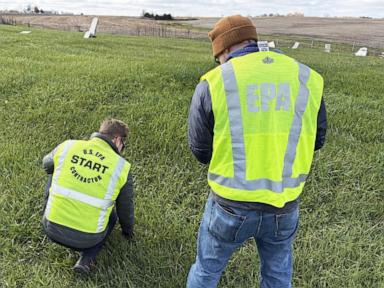
The US Army plans to carry out a controlled detonation of explosive material at an ammunition plant in rural Iowa on Wednesday.
Last week, environmental groups filed lawsuits in an attempt to stop the controlled explosion, saying that detonating nearly five tons of lead azide could harm people and contaminate the environment.
The Army has insisted the stockpile is too unstable to be moved and that destroying it in place is the only responsible option.
Lead azide is an explosive chemical compound of lead used mainly in detonators. According to the National Center for Biotechnology Information, when heated it can release highly toxic fumes containing lead and nitrogen oxides.
According to the National Oceanic and Atmospheric Administration, lead azide is unstable. It explodes at 350 degrees Celsius, but it may also explode if shocked, heated or subjected to friction when dry.
Although lead azide decomposes during detonation, the lead itself does not disappear. The Army says the resulting dust plume will contain some lead, and lead-containing particles and residue may remain in the surrounding environment. Lead does not biodegrade and can persist in the environment for many years unless it is physically removed.
ABC News medical correspondent Dr Darien Sutton told ABC News Live on Monday that there is already a huge health threat. Humans are exposed to lead in two main ways, he said: inhaling it or ingesting it, and with a detonation the immediate effect is inhaling it.
Dr Sutton said lead damages nearly every organ in the human body, including the brain, the kidney, the liver and the reproductive system. Lead accumulates in the body, he explained: when inhaled or ingested, it is stored in vital organs and in the skeleton, replacing calcium and bone mineral, and years or decades later it can leach back into the blood and cause harmful outcomes.
He added that lead can contaminate surfaces and that lead landing on the ground or in water could affect food or drinking water. It is unclear how much exposure to lead azide is required to be considered a health risk, but lead azide is a highly toxic and extremely sensitive explosive compound, and no amount of lead exposure is considered safe.
According to the Occupational Safety and Health Administration, airborne lead exposure of 30 micrograms per cubic meter averaged over eight hours triggers workplace safety requirements, while 50 micrograms per cubic meter is the maximum permissible occupational exposure limit. These limits apply to the lead component, not specifically to lead azide, and do not guarantee safety below those concentrations.
Dr Sutton said that when someone is found to have an elevated lead level, the only real treatment is to avoid exposure or continued exposure. There is no easy way to extract lead from the human body, he said, so the dangerous effect could be long-term after the initial exposure.
On Tuesday, federal officials recommended that local residents, especially children and pregnant women, evacuate. Residents are advised to remain relocated until Friday at the earliest. In an advisory posted on Tuesday, the Army said evacuated individuals would be notified by phone once the all-clear is given and could then return home at their convenience.
Residents of Middletown, the town adjoining the Army facility, were taping up their doors and preparing to leave ahead of Wednesday's detonation.