
London's Met Police Culture Barely Changed in Three Years, Review Finds Force Still Institutionally Racist and Misogynist
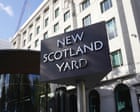
London's Metropolitan Police (the Met) remains institutionally racist, misogynistic and homophobic, an independent review has found. The report said the picture has changed little three years after a damning review into the force's culture.
The independent review by public health leader Gillian Fairfield was commissioned by the mayor of London, Sadiq Khan. The 389-page report found 'fundamental, systemic issues' and 'institutional defensiveness' still existed in Britain's biggest police force, which has struggled 'to acknowledge racism as a structural problem'.
Responding to the report, Sadiq Khan called on the Met's commissioner, Mark Rowley, to reset his relationship with those tasked with holding the Met to account and to provide Londoners with the police service they deserve. Khan said: 'It is simply not possible to change the culture of the Met if the existence of institutional racism, institutional misogyny and institutional homophobia continues to be denied, underplayed or tiptoed around.'
The report detailed disturbing accounts from officers. One said women were 'subject to punishment' if they reported misconduct. Another criticised the predatory behaviour of some senior officers toward younger women and recruits.
Bereaved families accused the Met of victim-blaming and gaslighting, the report said, as it detailed how forensic exhibits, statements and CCTV went missing in a homicide investigation.
The Fairfield review examined the Met's progress since a scathing 2023 report by Louise Casey, which followed the abduction, rape and murder of Sarah Everard by a Met officer in 2021.
After 11 months of fieldwork, the review found the Met displayed 'some of the best policing and some of the worst'. It said the force had not made good progress on any of the 14 recommendations made by Lady Casey, but had made some progress in nine areas and limited progress in five.
The report said some progress had been made on dealing with racism but 'the Met still struggles to acknowledge racism as a structural problem', and that defensiveness remains 'deeply ingrained'. Fairfield told journalists: 'The Met struggles to acknowledge racism. But if it can't name it, it can't face it. If it can't face it, it can't sort it out.'
Commissioner Mark Rowley accepted the review's recommendations but said he refused to be drawn into 'what I think is a politicised debate about certain labels'. He added: 'I'm not afraid of using the term racism. We have no problem with using it and confronting it.' He said 1,800 officers and staff had been removed from the force.
The report said only 44% of staff felt confident raising concerns about a senior officer, a quarter said they were 'not so confident', and another 17% were 'not at all' confident their concerns would be acted on.
Trust among the LGBT community has not improved, the report said. That trust, damaged by catastrophic failings in the case of serial killer Stephen Port, has not recovered, and the force was 'still making false assumptions about — and sometimes blaming — LGBT+ victims', it said.
The report warned that unless the Met identifies and fully addresses cultures in closed environments such as its parliamentary and diplomatic protection command, 'further scandals are highly likely'. Sarah Everard's killer, Wayne Couzens, and the rapist David Carrick both served in that command.
