Houthis encircle Aden as Yemenis prepare to flee once again
Six years ago, Hussein (a pseudonym) fled his home after it fell under Houthi control and moved as far south as he could, to the port city of Aden, where there was a measure of safety. Now he is once again facing the painful decision of leaving home.
In September, the Iran-aligned Houthis swept aside Yemeni government forces and have now set their sights on Aden. Houthi fighters are amassing to the north and east of the city and have begun encircling the government-controlled territory.
Hussein works as a schoolteacher and was formerly a member of the Islah party, which is aligned with Saudi Arabia and opposed to the Houthi movement. He fears that if the Houthis take Aden he could face persecution for that former affiliation. 'The Houthis don't believe in freedom, they just want to hear one voice, the one they like,' he said.
The militia is still about 50 miles (80km) north of Aden, but local people fear government forces may not be able to resist another Houthi assault, having seen the dramatic collapse of government forces and allied militias in September.
Aden has been the seat of the Saudi-backed government of Yemen since 2015. If the Houthis took the city, it would be a huge blow for the government and a massive failure for the Saudi-led coalition, and the 12-year-long civil war would tilt dramatically in the Houthis' favour.
The Yemeni government has pulled back many of its fighters to help defend Aden and the surrounding areas, announcing last week that fighters were redeployed from areas along the south-western coast towards the port city.
Saudi Arabia has tried to halt the Houthi advance with a renewed bombing campaign. According to statistics from the independent Yemen Data Project, hundreds of airstrikes since September have killed and wounded 822 civilians, including 181 children. Houthi authorities have alleged that Saudi Arabia has carried out 5,500 air and missile attacks since July.
The Houthis have not announced any intention to take Aden, but they have been amassing troops north of Kirish and in al-Bayda — areas which, if taken, would cut off the northern and eastern roads to Aden.
Mohammed al-Basha, founder of the US-based risk advisory Basha Report, said: 'The buildups in al-Bayda could threaten Aden's eastern road links through Abyan and Saudi supply lines into the city. The Houthis appear to be testing how well Aden's defences will hold. If they collapse, the Houthis could try to seize the city. If government forces hold, the Houthis could try to lay siege to it.'
Houthi forces have begun striking Aden and its surrounding areas, rupturing the relative safety the city has offered for years. Residents have watched anxiously as explosions grow nearer, and displaced people from surrounding areas have started to arrive in greater numbers.
International organisations are also making contingency plans. An aid worker with an international NGO said management was issuing termination notices to all staff this week; if the Houthis do not reach Aden, operations will continue and contracts will be renewed, otherwise it is the end of the road. Several NGOs were already forced to shut down in the city of Taiz after sweeping Houthi gains.
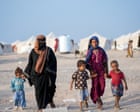
Yemen has for years faced a severe humanitarian crisis, with about 18.7 million people facing acute food insecurity. Fighting has severed transport routes, pushed up the prices of goods and worsened the displacement crisis, including more than 350,000 people displaced since August.
Rami, a 53-year-old Aden resident who spoke under a pseudonym, bitterly recalled the four-month battle for Aden in 2015. He said he was not stocking up on food because he would not stay and wait for the battles to reach the city — and that his family, too, was ready to flee at any time.