Ganges treaty expires on December 12, Dhaka wants a 'guarantee clause' in a new deal
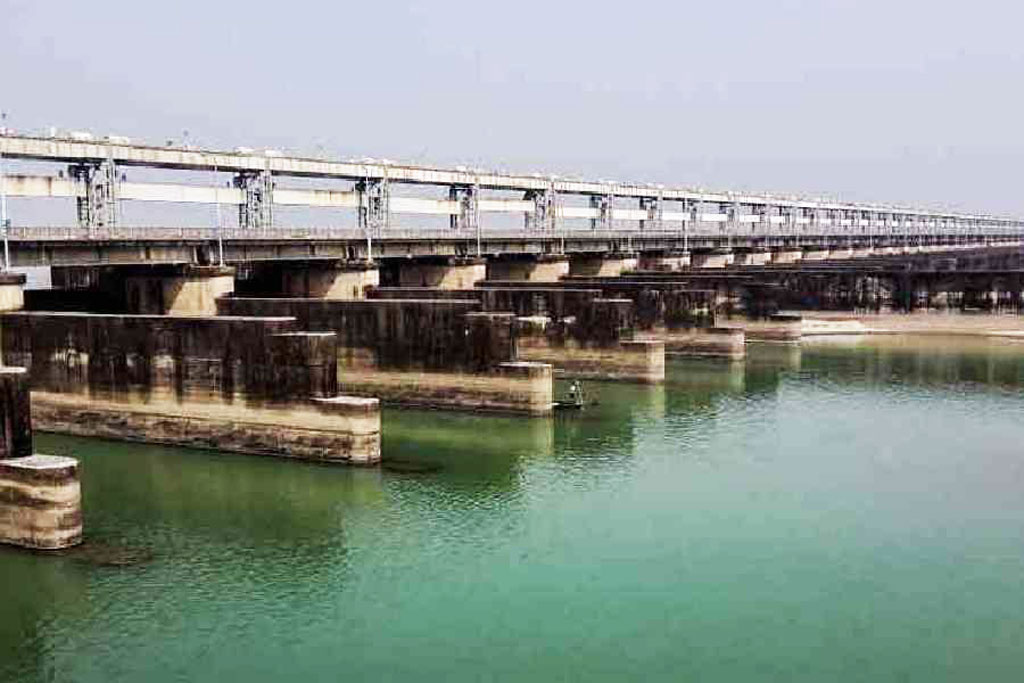
The historic 30-year Ganges water-sharing treaty signed between Bangladesh and India in 1996 expires on December 12. With less than three weeks left before the treaty runs out, formal talks between the two countries on a renewal or a new treaty have not yet begun.
In this situation, Dhaka has demanded that a new treaty include a 'guarantee clause', like the one in the 1977 treaty, to ensure Bangladesh's fair share of water in the dry season.
Water Resources Minister Md Shahiduddin Chowdhury Annie has told the state news agency BSS that bringing back the guarantee clause in a new treaty is Bangladesh's main priority, and that he has written to India's water resources minister to start formal talks quickly towards that end.
Under Article Twelve of the 1996 treaty, it remains in force for 30 years from signing and can be renewed only on the basis of mutual consent between the two countries. In other words, there is no scope for the treaty to be extended automatically.
Bangladesh's position is not merely to extend the existing treaty, but to sign a revised or new treaty that protects the national interest.
The 1977 Ganges treaty had a 'guarantee clause', under which, even if the flow at the Farakka point fell abnormally low in the dry season, Bangladesh had to be given at least 80 percent of its allocated share in any 10-day period. That clause, however, was dropped from the 1996 treaty.
Under the current treaty, water is shared every 10 days from January to May. If the flow at Farakka is 70,000 cusecs or less, the two countries share it equally; if it is between 70,000 and 75,000 cusecs, Bangladesh receives 35,000 cusecs; and if the flow exceeds 75,000 cusecs, India receives 40,000 cusecs and Bangladesh the rest. In addition, from March 11 to May 10, both countries receive 35,000 cusecs each in three alternating 10-day periods.
Water Resources Minister Shahiduddin Chowdhury Annie said, 'Bangladesh wants to ensure its fair share of the Ganges water. That is why bringing back a guarantee clause like the one in the 1977 water-sharing treaty is Bangladesh's priority in a new treaty. We are ready for talks with India.'
As preparation for talks on the treaty, Bangladesh has already formed a high-level technical committee led by Professor Rashed Al Mahmud Titumir, the prime minister's adviser on finance and planning. A proposal for formal talks was sent to India last June, and technical-level preparations were completed in August at India's request. Most recently, a letter was sent to India's water resources minister on November 17 calling for quick talks, but no specific schedule has yet been received from New Delhi.
Professor Rashed Al Mahmud Titumir said, 'Ganges water sharing is not just a water resources issue for Bangladesh; it is also linked to agriculture, food security, the environment and the economy. We want a treaty that ensures a fair share of water in the dry season and protects Bangladesh's interests in the long term.'
Meanwhile, at the 91st regular meeting of the joint committee of the Bangladesh-India Joint Rivers Commission (JRC) in Dhaka last Sunday, the annual report on the implementation of the 2026 water-sharing treaty was finalised. However, Dr Md Anwar Kadir, head of the joint committee on the Bangladesh side, said there was no discussion on treaty renewal at that meeting, because a new treaty falls solely within the jurisdiction of the two countries' governments and political leadership.
According to analysts concerned, India's internal political and regional equations could play a big role in deciding the future of a new treaty. In particular, West Bengal's demand for keeping the Bhagirathi-Hooghly river navigable and the Kolkata port operational, and Bihar's demand for water for drinking and industry, could influence the position of India's central government.
On the other hand, of the 54 common rivers between Bangladesh and India, the Ganges is the only one with an effective water-sharing treaty in place; the Teesta treaty has remained unresolved for a long time. If no new understanding is reached by December 12, agriculture, irrigation and fisheries in Bangladesh's southwest and the ecological balance of the Sundarbans could face serious risk in the coming dry season, and salinity could rise.
Professor Dr Ataur Rahman of the water resources department at Bangladesh University of Engineering and Technology (BUET) said, 'It is not enough to have just a formula for sharing water between the two countries; the treaty must also make clear how much water Bangladesh will receive if the river's flow decreases. Without a guarantee clause, ensuring a fair share of water could be difficult.'