Draft Highway Maintenance Policy: Contractors to Be Liable if Roads Break Within Five Years
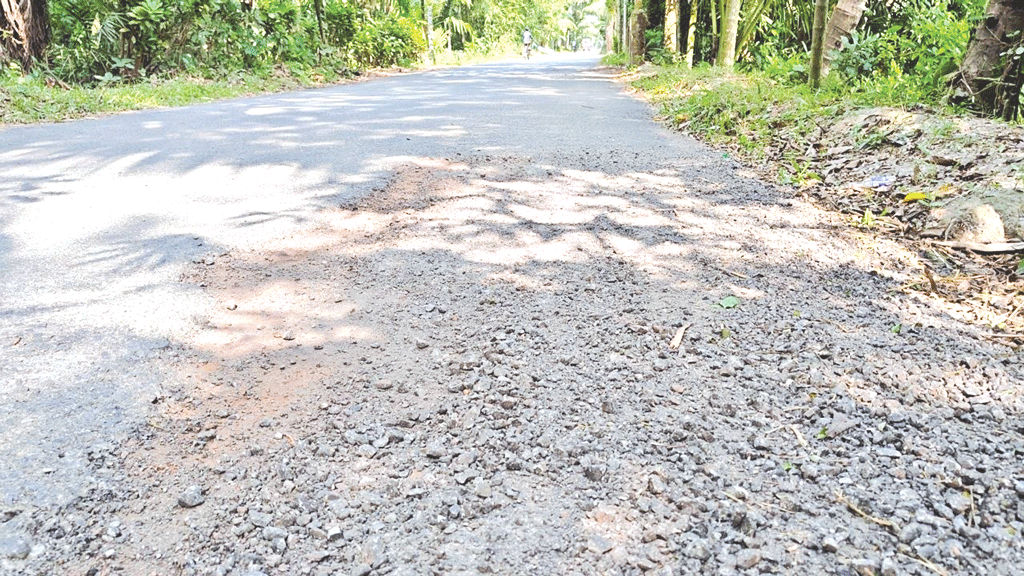
After construction or renovation of expressways and major national highways, contractors will also be responsible for maintenance for up to five years. If a road breaks during this period, the contractor will have to take responsibility. These proposals are in the draft 'Highway Maintenance Policy, 2026'.
The draft also proposes paying bills according to the quality of work. In other words, a contractor will not receive full payment simply for finishing work; payment will be based on the road's quality and usability.
To prevent waste of public money through repeated repairs of the same road and renovation of entire roads instead of only damaged sections, the draft proposes digitally recording where and when work was done on a road, how much money was allocated and how much progress was made. This will make it possible to check whether the same road is being allocated funds again.
The draft was prepared by the Road Transport and Highways Division. An additional secretary of the division said the draft has been prepared and opinions of stakeholders are now being taken on it. If the policy takes effect, it will change the existing system of maintenance planning, allocation and contractor appointment.
Sources in the Road Transport and Highways Division say that, in the absence of an effective maintenance policy, the same section of the same highway is being renovated every few years. In some cases, repairs are needed again within a short time after one job is finished.
According to the sources, even where a small section of a road is damaged, renovation of the whole road is proposed. This wastes public money while the actually damaged section does not receive proper importance. The government has therefore taken the initiative to formulate a new policy to change the existing maintenance system.
Md Moniruzzaman, chief engineer of the Roads and Highways Department, said the draft highway maintenance policy is now with the ministry. Many matters must be considered when making a policy, so further review, additions and corrections are being made. The policy has not yet been finalised.
The draft proposes introducing performance-based maintenance contracts (PBMC) on expressways and major national highways. Under such contracts, a contractor will not be free of responsibility merely by finishing construction or renovation; during the contract period the contractor must also maintain the road's quality and usability. Such contracts will run for a maximum of five years.
Under the existing system, if a road is damaged shortly after renovation, it is often difficult to determine the contractor's liability. If PBMC is introduced, maintenance responsibility will rest with the contractor for a specified period under the contract terms.
The draft also proposes classifying contractors by technical capacity, experience and the quality of their previous work. However, there must be a neutral system to verify whether road damage was caused by defects in the contractor's work, excess vehicle pressure or drainage problems.
The ministry's monitoring teams will conduct sample-based field inspections to verify work quality. If needed, work audits and impact assessments can be done through a third party.
Sources said maintenance proposals have so far often considered an entire road or a large section, although not all parts of the same road are in the same condition. Somewhere the carpeting has come off, somewhere potholes have formed, and somewhere structural weakness has appeared. The new draft therefore says repair proposals should specify the exact chainage or location of the damaged section.
The draft proposes using a geographic information system (GIS) based portal to store highway work information. If a fresh repair is proposed for a section, its previous work history can then be checked. If the same section is damaged again within a short time, investigating the cause will also be easier.
Through this portal it will be possible to verify whether damage was caused by poor-quality work, design weakness, excess vehicle pressure or drainage problems. At the same time, duplicate allocations and unnecessary repair proposals will be easier to identify.
The draft says portal information must be updated regularly to make this system effective. If information on previous work costs, contractor names, work orders and work quality is incomplete, the aim of preventing repeat allocation for the same section could be undermined.
The draft proposes dividing highway maintenance work into five categories: routine, periodic minor, periodic major, special and emergency maintenance.
Routine and periodic minor maintenance work is proposed to be completed within the same fiscal year from the operating budget. For periodic major work, the job must be finished within a maximum of nine months after the work order is issued.
Special maintenance work is proposed to be implemented as schemes of one to five years under the development budget. Creation of new assets, road widening, replacement of large bridges or culverts and structural strengthening will fall in this category. A feasibility study is proposed to be mandatory for new schemes costing more than Tk 100 crore.
The draft also proposes a separate emergency maintenance provision for sudden damage to roads or infrastructure or emergency situations.
For determining maintenance allocations, the draft proposes using data from the Road Asset Management System (RAMS), the HDM-4 model and, for bridges, the Bridge Management System (BMS).
The draft says allocation priorities must be set considering road condition, vehicle pressure, the International Roughness Index (IRI), rainfall, floods and climate-change risks. This will create an opportunity to allocate money based on a road's actual condition and technical data instead of assumption-based proposals.
The draft also proposes forming a pool of skilled workers, increasing the use of machinery in maintenance, ensuring safety at work sites and considering environmental and climate-change risks.
Shamsul Haque, a professor in the civil engineering department of Bangladesh University of Engineering and Technology (BUET), said the big shortcoming in highway maintenance is not doing regular work on time. Small cracks or damage can be repaired as soon as they appear, but the Roads and Highways Department lets the damage grow instead. Maintenance then turns into rehabilitation, increasing both cost and public suffering.
Professor Shamsul Haque also said the new policy must ensure advance maintenance throughout the year. Vehicle registration fees and toll money should be paid directly into a maintenance fund, and performance-based maintenance should be introduced instead of the existing tender-based renovation system.