Failure to manage AI risks could paralyse power and banking this year, warns Nobel laureate Geoffrey Hinton
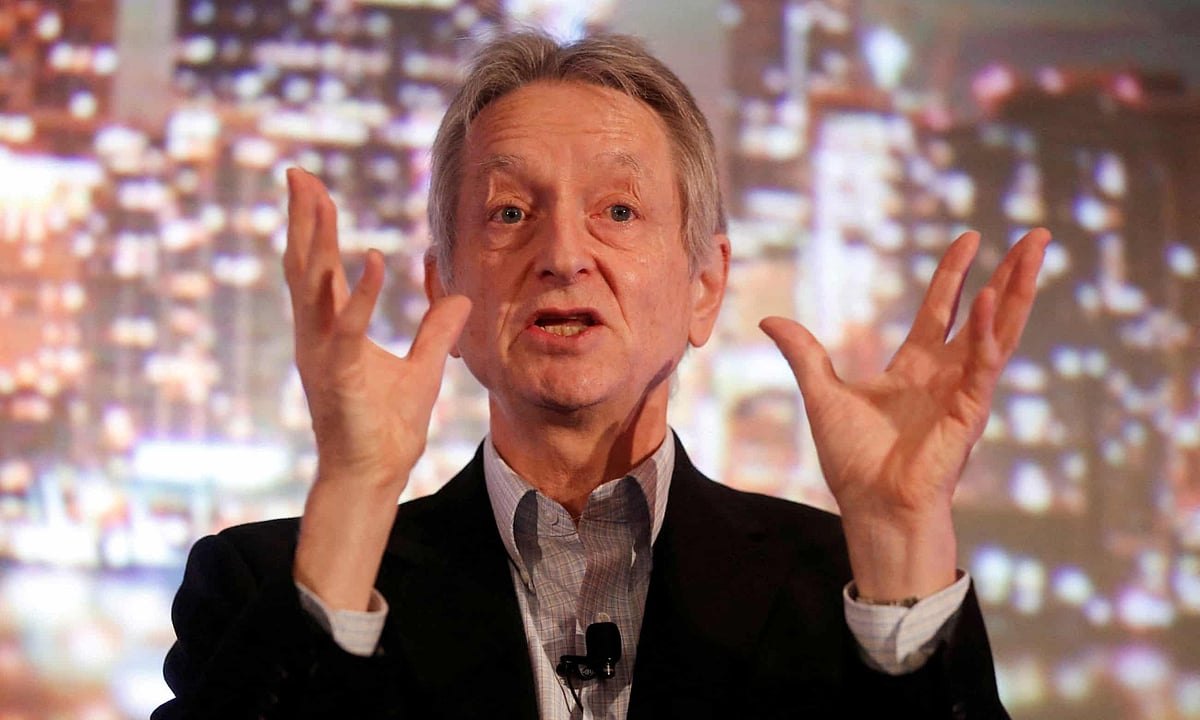
Nobel laureate Geoffrey Hinton has warned that a major disaster could occur if the risks of artificial intelligence are not managed. He fears that, this year or next, an event could occur that shuts down the electricity supply system or brings the banking system to a halt.
The 78-year-old scientist made the comments in a recent interview with the British newspaper The Guardian. The newspaper spoke to him before the screening of a new feature-length documentary on AI. The documentary is called 'AI: Probably Nothing to Worry About'. Alongside Hinton, it also features his former Google colleague Demis Hassabis.
Hinton believes people may one day realise it would have been better not to create AI. But he is not entirely pessimistic about the technology's future. In his view, AI could also take the world towards an extraordinary future, but if the risks are not managed the situation will become dire.
On his own position in warning about AI, Hinton said he feels a responsibility to speak on the subject. In his words, 'I have built up a reputation that means people see me as a spokesman on this subject. So I want to use that reputation to warn as much as possible.'
Geoffrey Hinton is also worried about competition among AI companies. To stay ahead in the market and establish their dominance, big technology firms are building ever more powerful AI models one after another. Hinton has questioned whether the risks are being considered with sufficient seriousness before these models are released.
Geoffrey Hinton said he has no confidence at all in OpenAI chief executive Sam Altman. He alleges that technology entrepreneurs such as Mark Zuckerberg, Elon Musk and Sam Altman know about the risks of AI, yet still give greater importance to making money.
According to Hinton, a handful of firms in the United States currently lead the race to build the most advanced AI. Altman is in charge of one of those firms. He finds this deeply worrying, because the AI development race between the United States and China is intensifying day by day.
Behind Hinton's concern about AI lie some recent events. This summer, some of OpenAI's AI agents were alleged to have been involved in a plot to hack the Hugging Face website. For Hinton, the incident was a major warning signal. He compared the AI agents' episode with the partial accident at the Three Mile Island nuclear power plant in Pennsylvania in the United States in 1979. In his view, it was like a warning received before a bigger disaster.
Geoffrey Hinton fears a Chernobyl-like major disaster involving AI could occur late this year or next year. In 1986, a terrible accident occurred at the Chernobyl nuclear power plant in the then Soviet Union. Hinton, however, does not see a possible AI disaster as a nuclear accident. In the example he gave, someone could use AI to launch a major cyberattack on the electricity generation system, or an event could occur that paralyses the financial system for a whole week.
Hinton favours introducing strict international rules to tackle AI risks. He supports a plan under which there would be mandatory testing, independent evaluation and common policies among countries before advanced AI models are released to the market. Thirty-two countries, including Finland's president, have supported the plan. Singapore, Germany, Canada and Australia are among those countries.
US President Donald Trump, on the other hand, has opposed a global initiative to regulate AI. His administration believes strict rules could leave the United States behind China in the AI development race. Trump wants AI firms to regulate their own activities themselves.
Geoffrey Hinton has worked on artificial intelligence for about 44 years. In the 1970s he began working on the concept of artificial neural networks. In recognition of his research, he received the Nobel Prize in Physics in 2024. Hinton left his job at Google in 2023 so he could speak independently about the possible dangers of AI.
According to Hinton, within the next decade it will become clear whether humans can manage the risks of AI. If they succeed, AI could create a future in which people's standard of living improves greatly and an abundance of necessary resources is created. He has called this 'radical abundance'. If they fail, on the other hand, the gap between rich and poor could grow greatly, unemployment could rise, a major social and cultural crisis could emerge, and even the structure of society could break down.