
Iran Rapidly Building Huge Underground Complex Between Isfahan and Natanz Nuclear Sites, Satellite Images Show
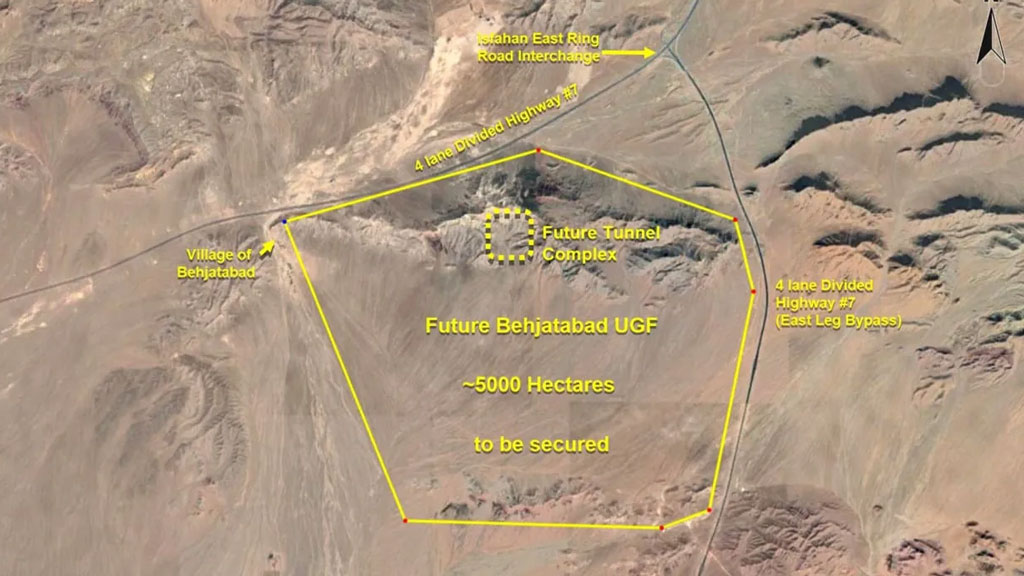
Construction of a huge underground complex inside a mountain, midway between two of Iran's important nuclear facilities, is advancing rapidly. New satellite images show the progress of the construction, the locations of the facility's key areas and the building of its security arrangements. The US think tank Institute for Science and International Security reported the information on Wednesday.
According to the institute, new satellite imagery supplied by Vantor Technologies shows rapid construction under way at Iran's Behjatabad underground facility. The latest images, released last Tuesday, identify the locations of the facility's various areas and the progress of the ongoing work.
The facility, built inside a mountain, sits midway between Iran's Isfahan nuclear facility and the Pickaxe Mountain area near the Natanz nuclear facility. The distance between the two facilities is about 62 kilometres. Iran is known to have built several such underground facilities across the country, but the institute said the Behjatabad site has drawn particular attention because of the unusual speed of construction.
The facility's true purpose is still not clear, and the institute said more information is needed for an accurate assessment. However, considering its security arrangements, the type and pace of construction and Iran's past building methods, it is thought the site may be used for various military purposes, possibly including activities related to missiles or other major weapons systems. At the same time, the possibility that it is being built for a nuclear purpose cannot be ruled out.
In a post on X, the institute said Iran has recently begun building a security fence around the facility's outer boundary, and analysis of the satellite images has also identified the likely line of the outermost security perimeter. Once construction is complete, the whole facility could cover about 12,000 acres.
According to Vantor's review of Sentinel-2 satellite images, the first signs of construction at the site appeared between 7 and 12 December 2025, when land clearing began on ground designated for the future administrative and entrance area. Images from January 2026 showed further construction, signs of excavation appeared in April, and by June the work had spread to several more areas of the underground complex.
Analysts have not yet been able to confirm exactly what purpose the vast facility is being built for. The Institute for Science and International Security said more satellite imagery and other information need to be analysed.


