The darkina is vanishing from the wetlands: artificial breeding offers new hope
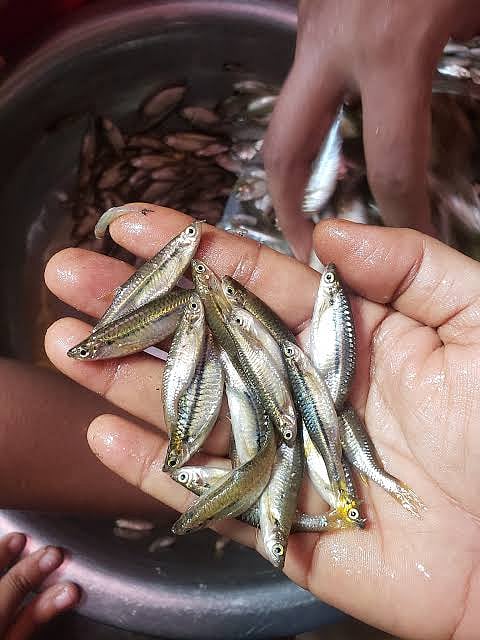
The darkina fish was once seen in Bangladesh's canals and marshes, ponds and ditches, rivers and channels, and in water standing in paddy fields. The small, slender fish has darkish markings on its body. Tasty as it is, the fish is no longer found in many areas the way it once was.
Its name varies by region — darkina in some places, dankina, dankhina, darkini or chukkuni in others. Poet Jasimuddin's poem 'Nimontron' names the fish dankina; the scene in that poem could once truly be seen in villages — small fish swarming in water pooled in a little ditch beside a railway line.
The fish is especially prized by people in the Mymensingh region. There was a custom of putting darkina on the menu when relatives visited. There is demand for the fish in markets too, but in many areas darkina now costs a good price — in places, Tk 400 to 500 is asked per kilogram.
The decline in darkina numbers has been reported in the media at various times. Shrinking wetlands, water pollution, overfishing and the destruction of the fish's habitat are among the causes linked to it.
The darkina is a small fish, so it is easily caught in nets. If fish are caught indiscriminately during the breeding season, the number of new fish has less chance to grow. And when canals and marshes are filled in or wetland water becomes polluted, it becomes hard for the fish to survive.
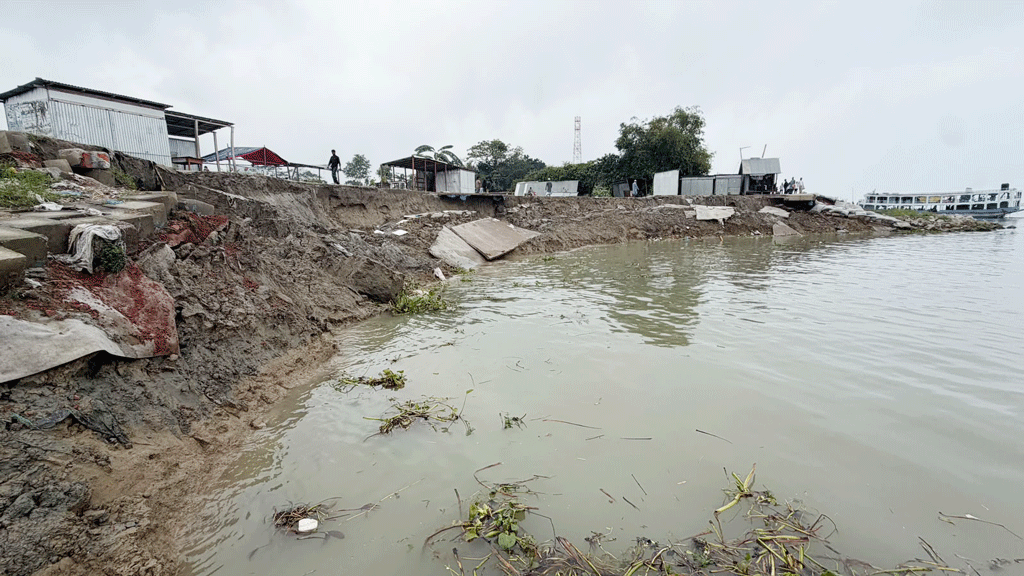
The small wetlands of villages were once the fish's great refuge. Many of those places have now been filled in. In some places the water has dried up; in others the fish's movement routes have been blocked. As a result, the fish's natural life is being disrupted.
One fact, however, is worth remembering — in IUCN Bangladesh's 2015 Red List, the darkina was not identified as endangered. In that assessment the fish is in the 'least concern' category. In other words, even if there are reports of the fish declining in a particular area, its endangerment category for the whole of Bangladesh has to be determined separately; a local decline in numbers is certainly a matter of concern.
There is hopeful news for the darkina as well. In 2022, researchers at the Bangladesh Fisheries Research Institute's (BFRI) freshwater centre in Mymensingh succeeded in developing an artificial breeding technique for the fish.
Through artificial breeding, fry of the fish can be produced. Those fry can be grown and farmed. This can increase the fish's supply in the market, and at the same time reduce the pressure of overfishing on natural wetlands.
The development of the darkina breeding technique is an important advance in research on conserving native fish. BFRI is also working on breeding and farming technology for many other native fish. The aim of these initiatives is to preserve the diversity of indigenous fish and bring them under farming.