Second Phase of Farmer Card Piloting Starts December 2, PM to Inaugurate in Kushtia
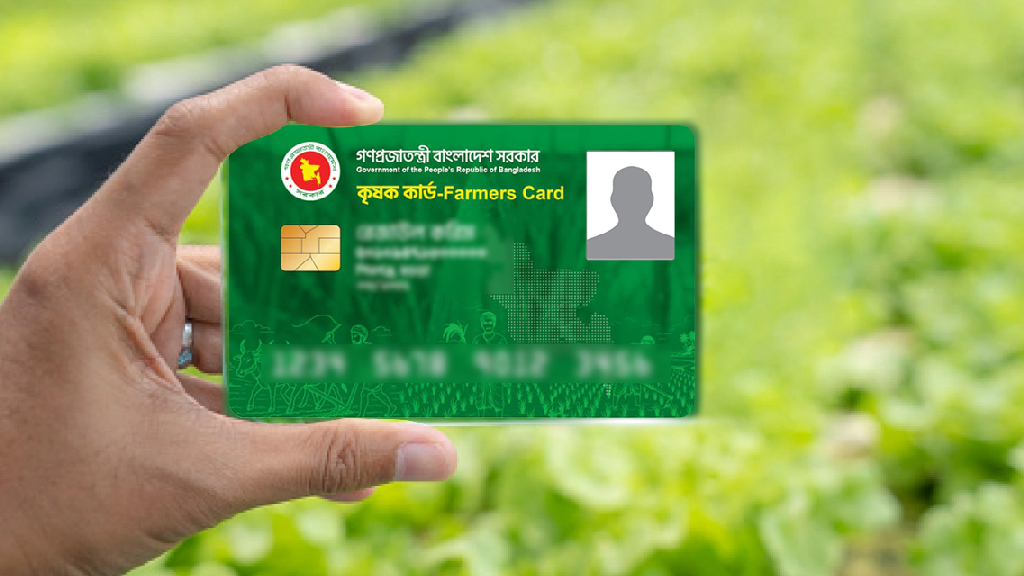
The second phase of the pilot stage of the 'Farmer Card' programme begins on December 2. On that day, the Prime Minister will inaugurate the activities in Sadar upazila of Kushtia district. The Prime Minister will then inaugurate the farmer card distribution and agricultural input support activities for Rangpur division in Gobindaganj upazila of Gaibandha district on December 5. The information was learned from agriculture ministry sources on Thursday (November 26).
At this stage, about 290,000 farmers of Khulna and Dhaka divisions will be included. Among them, about 269,000 landless, marginal and small farmers will receive agricultural input support of about Tk 672 million through iBAS into their bank accounts at Tk 2,500 per person per year. Initially, 2,850 farmers of two agricultural blocks in Kushtia Sadar upazila will be given farmer cards through Sonali Bank PLC.
About 154,000 farmers of Rangpur division will be included at this stage. Among them, about 137,000 farmers will receive about Tk 344.3 million in agricultural input support through iBAS into their bank accounts. Initially, 1,990 farmers of one agricultural block in Gobindaganj upazila will be given cards through Sonali Bank PLC.
The agriculture ministry said there are plans to hold separate farmer card inauguration ceremonies in other divisions in phases during December, alongside Dhaka, Khulna and Rangpur divisions.
Under the programme, three state banks — Bangladesh Krishi Bank, Sonali Bank PLC and Janata Bank PLC — are initially connected nationwide. Once card printing is finished, cards will be given to all farmers in phases. At this stage, however, farmers covered by the support can also withdraw cash from the respective bank branch without a card and use it only to buy agricultural inputs. As proof of purchase, they must inform the upazila agriculture office or the sub-assistant agriculture officer and have it recorded in a register. Upazila agriculture offices have been instructed to provide farmers with necessary assistance.
The ministry also said that over the next four years, about 23.5 million farmers will be included in the programme in phases across 64 districts, 503 upazilas, 16 metropolitan areas and 14,180 agricultural blocks. For the current 2026-27 fiscal year, targets have been set to give cards to about 4.3 million farmers and agricultural input support of about Tk 9.7 billion to about 3.9 million farmers.
About 7,200 sub-assistant agriculture officers are collecting information at field level. As of November 26, information on about 2.703 million farmers has been collected across the country; of them, upazila committees have approved the information of about 1.911 million farmers and bank accounts have been opened. National ID cards, mobile numbers, land amounts and farming information are being taken for verification.
Earlier, on April 14, the first day of the Bangla New Year, pre-piloting in Tangail Sadar upazila gave cards to 20,832 farmers of 11 upazilas and 11 agricultural blocks in 10 districts of eight divisions. Later, on October 1, the pilot stage was inaugurated in Fulgazi upazila of Feni, through which agricultural input support was sent to the bank accounts of about 100,000 farmers in 77 upazilas.
Agriculture Secretary Md Selim Khan said a large integrated database of agriculture-related information — including cultivable land, crop diversity, demand and soil health — is being built through the farmer card, which will take agriculture to a modern, data-based and planned management system and raise farmers' dignity.
Agriculture Minister Mohammad Amin Ur Rashid said the government is working to make agriculture modern and technology-based and turn it into the main sector of the economy. All services for crop production, including demand-based production and fair prices for produce, will be available through this card.