Wholesale cloth buying at Dhaka's Islampur market moves to video calls and couriers
The way business is done at the Islampur wholesale cloth market in Old Dhaka has changed. The narrow lanes are still lined with shops stacked with saris, three-pieces and bolts of fabric, but retailers from districts across the country now come in person far less. Islampur's wholesalers are selling by sending photos and videos of their goods and showing fabric over video calls.
At the roughly 253-year-old market, festival seasons once drew overwhelming crowds of buyers. Now many traders contact buyers by sending pictures and videos on mobile phones. Once buyers approve, prices are settled, the order is confirmed, and the goods reach them through courier and parcel services.
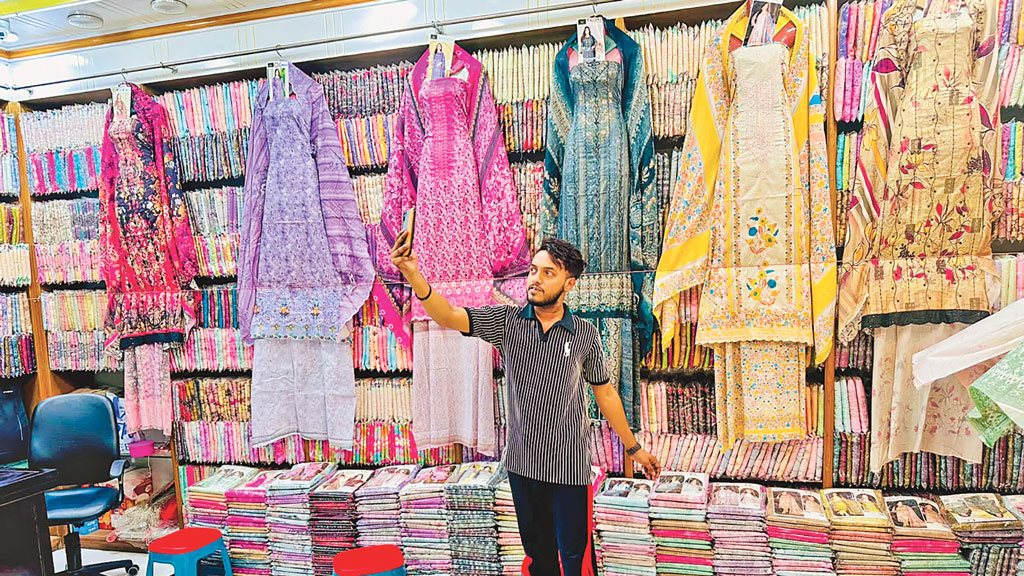
At Wahab Enterprise in Islampur, employee Ashik Ahmed was recently seen talking to a buyer on a video call, showing one piece of cloth after another on his phone camera while the buyer at the other end checked colours, designs and prices.
At Khadija Moni Three-Piece Centre, worker Alamin was recording videos of different fabrics to send to distant buyers on WhatsApp and Facebook. Alamin said it is now hard to find buyers just by sitting in the shop; goods have to be shown through Facebook, live video and online contact.
Mahbubur Rahman, who has traded wholesale shoes and leather goods for about 30 years, said shops once saw huge crowds of buyers in festival seasons. Now many traders order after seeing samples on the phone, so not everyone needs to come to the market in person.
Ashik Ahmed of Wahab Enterprise said out-of-town traders once stayed for days to buy goods. Now they order after seeing photos and videos on mobile phones, and sellers dispatch the goods by courier, which saves time and makes buying easier.
After payment through bKash or bank transfer, sellers send the goods by courier. Traders say, however, that for purchases from a new seller or for large orders, coming in person to check quality still matters. Wholesale trader Faruk Hossain said goods can be shown and orders taken over the phone, and sending goods by courier after payment cuts buyers' time and travel costs.
Saiful Alam, a trader at Gulshan Ara City, said Islampur still holds a large collection of many kinds of fabric. But as wholesale markets have grown in different districts, traders now have more alternatives for sourcing goods.
Ashraf Hossain, a trader from Jashore, said going to Islampur to buy goods means getting stuck for long periods in traffic around Sadarghat, Raisaheb Bazar and Gulistan. He now avoids travelling to Dhaka unless necessary and tries to order by phone for small purchases.
Barkat Molla, a trader from Narail, still prefers buying in person at Islampur. He said many kinds of fabric are available in one place, quality can be checked directly and there is room to bargain, so he still goes to Islampur for large orders.
Islampur now has several thousand shops, large and small. By traders' estimates, the market sees transactions worth roughly Tk 25,000 to 30,000 crore a year. It comes most alive before the two Eids, when buying and selling runs from dawn to deep into the night.