Agricultural Exports Through Central Packing House Rise 26.5 Percent in a Year
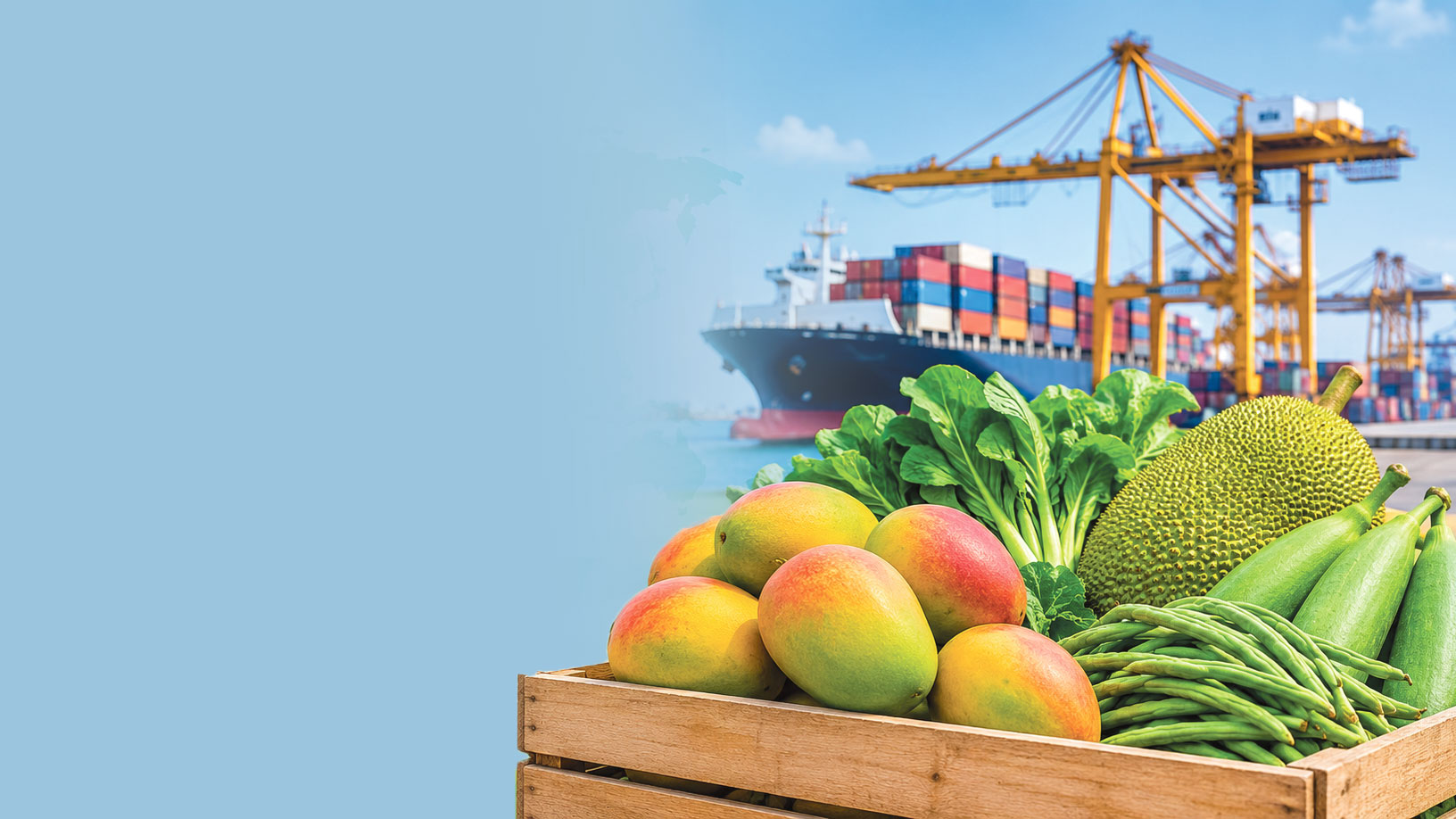
Bangladesh's agricultural exports to international markets are growing. Exports of farm produce through the central packing house rose by 26.5 percent in a year. At the same time, the number of objections from the European Union (EU) over the quality of Bangladeshi farm produce has fallen significantly.
The figures were presented on Thursday at a views-exchange meeting held after a visit to the central packing house at Shyampur in Dhaka, run by the Department of Agricultural Extension. Speaking as chief guest, Industries, Commerce and Textiles and Jute Minister Khandaker Abdul Muktadir said that if international standards are ensured alongside winning the trust of foreign buyers, the export potential of Bangladeshi farm produce in the world market will grow further.
According to the report presented at the meeting, 5,257.41 tonnes of agricultural produce were exported through the central packing house in the 2025-26 fiscal year. In the previous fiscal year the figure was 4,155.49 tonnes. Exports therefore rose by 1,101.92 tonnes in a year.
Of the produce exported last fiscal year, fresh fruit accounted for 3,105.99 tonnes. Another 1,925.83 tonnes of fresh vegetables and 225.59 tonnes of spices and other farm produce were also exported.
Among fruits, mango was exported the most, at 1,095.99 tonnes. Jackfruit exports stood at 719.22 tonnes and citrus fruits at 652.78 tonnes. Beans, bottle gourd, taro-type vegetables, pointed gourd, snake gourd, papaya and various other produce are also being shipped abroad.
Notable destinations for Bangladeshi farm produce include the United Kingdom, Germany, France, Italy, Portugal, Spain, Switzerland, Malta, Sweden, Ireland, Austria, Belgium and Greece.
The report also highlighted the central packing house's role in quality control. Before the facility was set up, the European Union issued 120 to 170 non-compliance notifications a year over failures to meet standards. Since it began operating, that number has fallen to an average of 15 to 20 a year.
Progress in quality control for mango exports was highlighted in particular. Through strict quality control, scientific testing, plant health protection and compliance with international export standards, about 1,095 tonnes of mango were exported in 1,457 consignments. No non-compliance notification was received against any of those consignments.
To ensure quality control in the export process, fully computerised phytosanitary certificates have been issued through the central packing house since the 2017-18 fiscal year. Exportable plants and plant products are tested, harmful pests are identified and pesticide residues are measured. Arrangements are also in place to ensure safe transport of goods to the airport using the facility's own locks and seals.
The minister said that alongside building the country's own capacity, coordinated and cooperative initiatives with the European Union are needed. The meeting also emphasised raising export capacity through modern packaging and compliance with international standards.