Seized belongings of Naga freedom fighter Gaidinliu go on display for the first time at Oxford museum
In 1932, British forces in north-east India imprisoned a 17-year-old girl called Gaidinliu for leading an uprising against colonial rule. While pursuing the freedom fighter through hills and valleys in the homeland of the Naga people, colonial officers also seized some of her most treasured possessions.
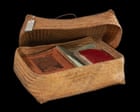
They were sent to the University of Oxford's Pitt Rivers Museum and kept in storage. Now, for the first time, the museum is exhibiting the collection of 27 items, including a basket of Gaidinliu's notebooks believed to contain her prophetic visions as the leader of a Naga Indigenous religion, clothes, bracelets and amulets.
Also on display are protective ritual objects, taken by the British from Gaidinliu's hiding places, which they believed she had used against them. These are a stick with a monkey skull used to ward off evil spirits, and small wooden clubs, traditionally used by Naga people to cast an omen on an enemy.
The exhibition, The Afterlives of Captured Objects, raises questions about the colonial extraction of artefacts from Indigenous communities, which were often originally catalogued using prejudiced and discriminatory language, according to the curator, Clare Harris, a professor of visual anthropology.
Harris said Gaidinliu's notebooks were derided as 'meaningless scribbling' by the colonial anthropologist JP Mills, who collected them. But he also recorded that these writings 'gave her immense prestige', which suggests that they may have been seized as part of British efforts to suppress the religious and political movement that Gaidinliu led, called Heraka.
While most of the objects on display were taken by the British after Gaidinliu abandoned them while on the run, two items were more violently extracted. Textiles displayed on mannequins in the show were taken from a pair of male and female sacred clay figures from a Heraka temple in the village of Kambiron in 1931.
The textiles are shown along with a photograph taken by a British officer of another soldier kneeling with the sacred figures, which were destroyed along with the temple. 'By showing the photograph at the same time, you can make the equation visually about what was extracted by the British there,' said Harris.
The show follows a four-year project by researchers from India and the Universities of Edinburgh and Oxford to digitise the Gaidinliu collection.