11-party alliance wants to join Election Commission dialogue together, will seek separate slot

The 11-party alliance has decided to take part together in the proposed dialogue with the Election Commission. The alliance will formally apply to the Commission for a separate time allocation for this. The decision was taken at a meeting of the alliance's liaison committee, held to review the country's current political situation and decide on the course of action.
The meeting was held on the afternoon of 27 November at the central office of Bangladesh Jamaat-e-Islami in Moghbazar, Dhaka. It was chaired by Jamaat assistant secretary general and coordinator of the 11-party alliance, Dr AHM Hamidur Rahman Azad.
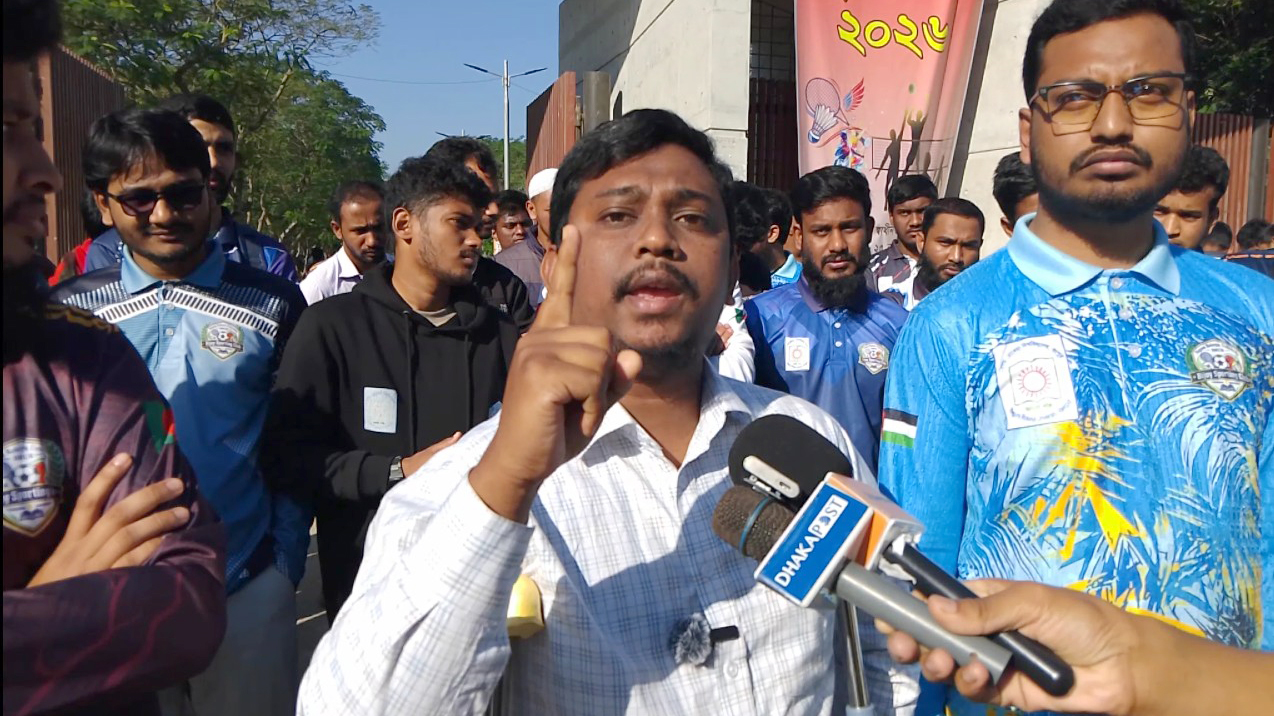
At a press briefing after the meeting, Hamidur Rahman Azad said a political crisis had developed in the country over implementation of the July Charter and the referendum verdict. The commitment to move the country forward together had now given way to division, he said, adding that the crisis had deepened because the BNP government had not implemented the referendum verdict and the July Charter.
He said talks had been under way for several days on a government dialogue with the opposition to resolve the crisis. At the same time, ahead of the upcoming Union Parishad elections, the Election Commission had taken an initiative to hold dialogue with political parties. These matters were discussed at the meeting before the decision was taken.
Hamidur Rahman Azad said the Commission had been informed that, to make the dialogue meaningful, it should be held jointly with the parties of the 11-party alliance. A formal application would be made on behalf of the 11 parties seeking a separate allocation of time.
He also said the current crisis had arisen because the government had not implemented the referendum verdict. Reform was not the demand of any single party but of the whole nation, he said. The 11 parties had repeatedly called for implementation of the referendum verdict, raising the demand in parliament and on the streets and also serving notice on the issue. But the notice was dropped from parliament's discussion without any decision, he said, which was why the 11 parties were protesting on the streets.
The alliance coordinator said implementation of the referendum verdict was the combined demand of the 11 parties, so they did not want to join the dialogue as individual parties. The 11-party alliance wanted to take part in the national dialogue together. They hoped the dialogue would help resolve the country's ongoing crisis and create a path to realise the aspirations the nation formed through the July revolution.
On the government's role, he said that although everyone's cooperation was needed to resolve the crisis, the main responsibility lay with the government. How sincere the government was, whether it wanted reform at all, and if so how it intended to carry it out, were important questions.
Hamidur Rahman Azad said the people had determined through the referendum how reform would take place. Reform must be based on the verdict of the referendum held on the July Charter. About 70 percent of people had voted in the referendum on constitutional reform, he said, and a reform council must be formed to implement that process.
He also said that if the government took the initiative to hold a dialogue, the subjects of the dialogue would be decided after discussion at the top level of the 11 parties.
Present at the meeting were, among others, NCP joint convener Ariful Adib, LDP acting secretary general Billal Hossain Miazi, Bangladesh Khelafat Majlis joint secretary general Maulana Tofazzal Hossain Miazi, Bangladesh Nezame Islam Party secretary general Musa bin Izhar, Amar Bangladesh Party joint secretary general Advocate Abdullah Al Mamun Rana, Jagpa vice president Engineer Rashed Pradhan and general secretary Iqbal Hossain, Bangladesh Labour Party spokesperson Nazmul Hossain, BDP chairman Advocate Anwarul Islam Chan and Bangladesh Khelafat Andolon secretary general Mufti Fakhrul Islam.