Kazi Romiz Uddin: A Life of the Pen, Work and Dreams
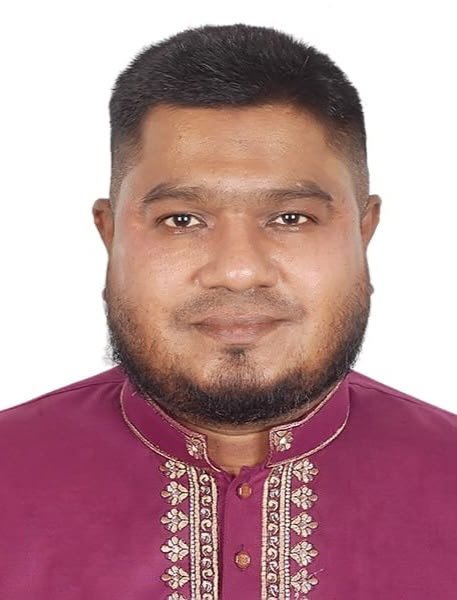
The life of a pen-soldier, built on struggle, courage and dreams
Barlekha, a remote township of Moulvibazar district enriched by the murmur of hill streams, the unmatched beauty of Hakaluki Haor and the fragrance of agar and attar. In this land of boundless natural beauty, Kazi Romiz Uddin is a familiar name in journalism, professional work and the social sphere.
His journey as a journalist has been as rugged and struggle-filled as it has been varied. Beyond the routine bounds of professional duty, he is also deeply involved in education, culture, social organisations and humanitarian work. Through experiences of adversity, repression, cases, torture and imprisonment, his love for journalism, his devotion and his sense of duty have never waned.
He believes journalism is not merely a profession of collecting and publishing news; it is the name of a deep accountability to society and to people. Through objective and impartial journalism, bringing forward the voices of the exploited, the deprived and the oppressed, building public opinion against injustice and irregularities, and responsibly exposing society’s inconsistencies are among the foremost duties of a pen-soldier.
Holding fast to this ideal, for more than two decades he has been striving to present the problems, possibilities, development picture and social realities of his workplace, Barlekha, in local and national media.
Childhood, Family and Upbringing
Kazi Romiz Uddin was born on 1 March 1983 at the traditional Daulatpur Kazibari in Barlekha upazila. His father was the late Maulana Kazi Afsar Uddin and his mother Raihana Begum. He is the third among his siblings. He lost his mother in adolescence. Raised without a mother’s affection, he grew up with his father’s selfless love and the care of his elder siblings.
His father, Maulana Kazi Afsar Uddin, was a devout, education-loving and socially conscious personality. Alongside serving as the Muslim marriage and divorce registrar of No. 4 Uttar Shahbazpur Union, he ran a pharmacy business in Daulatpur Bazar and was involved with the managing committees of various educational institutions.
It was holding his father’s hand that his religious education, life-oriented learning, and his interest in reading and writing began. From childhood he had a special fondness for books, newspapers and literary practice.
Recalling this, he says —
“From childhood, an indomitable curiosity to know the unknown worked within me. My father always encouraged that curiosity. He was a devoted reader of the Daily Ittefaq; he read the paper until his death. In my childhood he would have me read aloud the news and children’s writings from Ittefaq, listening with his eyes closed and full attention, correcting me wherever I went wrong. He would bring me rhymes, poems and children’s books and encourage me to write. Inspired by my father, I became a member of Ittefaq’s Kochikanchar Asor, and it was there that my first writing was published.”
That small childhood habit of writing in time laid the foundation of one of his life’s great passions and his professional identity.
Education and the Beginning of Social Organising
His formal education began with admission to Daulatpur Government Primary School. After primary education, at his father’s wish he enrolled at the traditional Parganahi Daulatpur Senior Alim Madrasa, from where he passed the Dakhil examination in 1998 and the Alim examination in 2000.
Immediately after finishing his education, he devoted himself to social and cultural work together with the local youth. To advance education, culture and social progress in the area, he founded the Daulatpur Dishari Samaj Kalyan Parishad.
Through this organisation, scholarships are provided, financial assistance given to poor and meritorious students, and various social and cultural programmes carried out. These initiatives of the organisation have been praised by the people of greater Barlekha.
In his words —
“It was essentially through carrying out the responsibilities of this organisation that an indomitable urge to work for people was created within me. The lesson I received — to stand beside people and keep myself engaged in society’s welfare — remains one of my life’s greatest inspirations.”
While carrying out the organisation’s responsibilities, sending press releases to various newspaper offices brought him into contact with the local journalist community. The company, advice and inspiration of many experienced journalists, including Abdul Kader Tapadar, Taisir Mahmud and the late Abdur Razzak, further enriched his path in journalism.
The Journalism Journey: Love, Duty and Challenge
The childhood interest in writing eventually turned into professional journalism. In 2003, his formal journalism life began as a trainee journalist at a daily newspaper. Before that he had written for various local papers of Sylhet, notably the weekly Barlekha, the weekly Ajker Surjodoy and the monthly Sylhetbazar.
In 2004 he received responsibility as the Barlekha upazila correspondent of the national daily Sangram, and he has remained associated with the paper to this day.
Rural (mofussil) journalism is always challenging. A rural journalist must perform his duties coping with limited facilities, financial uncertainty, pressure from influential quarters, political adversity and security risks.
Kazi Romiz Uddin is no exception. For publishing news, at various times he has had to face political pressure, cases, attacks, torture and imprisonment. Even so, he never distanced himself from journalism.
To him, journalism is not merely a means of livelihood; it is a unique place of love, ideals, self-identity and accountability to people.
Another Professional Identity: Muslim Marriage and Divorce Registrar
Alongside journalism, another important identity of his life is that of Muslim marriage and divorce registrar.
In 2006, when his father, the late Maulana Kazi Afsar Uddin, retired due to age, Kazi Romiz Uddin succeeded him as the Muslim marriage and divorce registrar of No. 4 Uttar Shahbazpur Union.
For a long time he has been performing this professional duty with great devotion. In this profession, tied to an important chapter of people’s family lives, he gives special importance to honesty, responsibility, patience and professional discipline.
On one side journalism, on the other the duty of marriage registrar — carrying two different professional identities in parallel has given his working life a distinctive character.
Struggle, Cases and 101 Days of Prison Life
One of the most painful and memorable chapters of Kazi Romiz Uddin’s life is his prison life. For journalism, he has the experience of being implicated in three cases at various times and of suffering torture. On one occasion he had to spend 101 consecutive days in prison.
In his own words, the period from 2010 to 2013 was one of the hardest chapters of his journalism life. During that time, for publishing news, he had to face political pressure, cases and torture.
30 June 2010: Camera Snatched and Physical Torture
On 30 June 2010, as part of a central programme protesting the arrest of the top three leaders of Bangladesh Jamaat-e-Islami, a protest procession was held in Barlekha. At Shirish-tala in the municipal town, the procession faced police obstruction. At one stage, chases and counter-chases took place among police, Awami League, Jubo League, Chhatra League and Jamaat leaders and activists.
As part of his professional duty he was present at the scene, taking photographs with his camera. According to his account, at that time two Jubo League activists beat him and snatched away his camera, injuring him. He later received treatment at Barlekha Upazila Health Complex.
1 December 2010: Case After News Publication
On 1 December 2010, tension and clashes occurred in the Barlekha court area centring on a case of the then district president of Chhatra Shibir. The next day, the report of the incident was published in the Daily Sangram.
He says that after the news was published, the police made him an accused in an assault case. For a long time afterwards he had to appear before the Moulvibazar court. The case became a cause of lasting suffering in his personal and professional life.
3 February 2013: Arrest and 101 Days in Prison
On 3 February 2013, he published a report in the Daily Sangram on the attack and vandalism at the Jamaat office and business establishments in Barlekha.
The headline of the report was — ‘Massive rampage by Chhatra League right in front of the police: attack and vandalism at Barlekha Jamaat office and businesses’.
The day after the report was published, he was arrested from a salon in the local bazaar. Later, through the court, he was sent to Moulvibazar District Jail in a vehicle-vandalism case filed under the speedy trial law.
Thus began a hard and painful chapter of his life. The days in prison — mental pressure, uncertainty, loneliness and the pain of separation from family — tormented him deeply. In the solitary cell, tears would sometimes roll down his cheeks unawares.
Finally, after 101 days in prison, on 15 May 2013 he was released on bail from the Honourable High Court. In time, he was discharged from that case.
Even today, that day of 3 February 2013 remains an unforgettable memory of his life. A photograph taken as he was being taken to prison, and the paper cutting of the published report, stand as silent witnesses of that hard time.
Despite all this adversity, he did not give up journalism. In his words, although many left the Daily Sangram in the hard times, out of love, respect and responsibility for the institution he remained firm in his position. The cooperation of senior and junior journalist colleagues gave him the courage and strength to cross this difficult path.
Recognition for Special Contribution to Journalism
In recognition of working in the journalism profession with devotion, honesty and responsibility for more than two long decades, Kazi Romiz Uddin received a special honour in 2026.
In Sylhet, the historian Dr. Mominul Hoque Academy presented him with an honour award for his special contribution to journalism in Barlekha upazila.
This honour is a notable achievement in his career, in recognition of his long effort to bring the picture of local problems, possibilities, development and public suffering to the national media, overcoming the many adversities, limitations and challenges of rural journalism.
Yet to him, a greater attainment than awards or honours is people’s love, respect, faith and trust. He believes a journalist’s real fulfilment is not limited to winning awards; it lies in working tirelessly for people’s welfare while maintaining professional honesty.
Social Service, Love of Education and Human Welfare
To Kazi Romiz Uddin, social work is not a matter of publicity; it is an expression of responsibility and humanity towards people.
The journey of social work that began through the Daulatpur Dishari Samaj Kalyan Parishad has, over time, expanded through involvement with various organisations and institutions.
Moving forward with his inspiration and support is the Daulatpur Blood Donors’ Organisation — one of the largest voluntary blood-donor organisations in the region. Alongside it, he works directly and indirectly with the Dishari Samaj Kalyan Parishad, the Barlekha Welfare Association — an organisation of Barlekha people based in Sylhet — and various other social and cultural organisations.
As a life donor member and education enthusiast of the traditional Parganahi Daulatpur Senior Alim Madrasa, he has long cooperated in the institution’s development and in enhancing its reputation.
In addition, in 2018 he took the initiative to establish the Kumarshail Independent Ebtedayee Madrasa on property donated by his mother and aunts. He hopes the institution will play an important role in creating opportunities for religious and primary education for children in remote areas.
As part of his involvement in social and organisational work, he is a life member of the Jalalabad Association, Dhaka; the Bangladesh Red Crescent Society, Moulvibazar Unit; and the Sylhet Kendriya Muslim Sahitya Sangsad. He is also associated with Barlekha Press Club, the Bangladesh Sangbadik Samity and Barlekha Lions Club.
He also has a special interest in humanitarian work. He tries to stand beside helpless, poor and distressed people according to his ability — sometimes through personal initiative, sometimes with the help of expatriate friends and various development organisations.
A long-cherished dream of his is that the ‘Afsar-Raina Trust’, formed in the names of his late parents Maulana Kazi Afsar Uddin and Raihana Begum, will one day play an effective role in the welfare of helpless, poor and underprivileged people.
People’s Assessment, Love and Criticism
Among local people there are various experiences, opinions and assessments of Kazi Romiz Uddin. Some know him as a journalist, some through his professional duties, and some through his social and cultural work.
Many who have mixed with him for a long time assess him as a gentle, polite, free-of-greed, unassuming and benevolent person. The experience of judging someone from a distance and of mixing with him closely are not the same — this, too, comes up in many people’s comments about him.
Being active on social media since 2006, his sphere of contact with local and expatriate people has widened. Over time, just as positive discussion has grown around him on social media, he has also been criticised at various times.
But he regards this discussion and criticism as a natural part of life. He believes no human being is above mistakes; he too may have faults. Therefore, accepting the positive sides of criticism and trying to correct and refine oneself is the duty of a conscious person.
He believes no one should be judged forever by the mistakes of their past. People can change, can realise their mistakes and correct themselves. Therefore, alongside a person’s faults, the assessment of their good work, social contribution and positive activities is also essential.
Because criticism can give a person the opportunity to correct themselves, and recognition of good work inspires people to do more good work.
Leadership, Social Harmony and Thoughts for the Future
Beyond his social and professional identity, Kazi Romiz Uddin holds a broader vision. He believes a society’s real development is possible through mutual respect, cordiality, harmony and unity.
He considers it important to maintain good relations with people rising above party and opinion, religion and caste, and social position, and to work for the welfare of people of all classes and professions in society.
To him, people’s love, honour, faith and trust are far more valuable than posts, positions or power.
He believes that whether it is public representation or social leadership, the foundation of real leadership should be people’s acceptability, honesty, competence, experience and a mindset of public welfare. Only when a person can reach the place of trust of people of all classes and professions, rather than being a representative of one particular political or social circle, can he truly become a leader of the people.
From this vision he dreams of a peaceful, united and developed Shahbazpur — a land where there will be political differences, competition of ideals and constructive criticism, but no place for personal hatred, vengeance, division or conflict.
The Unspoken Dream: An Enlightened and Welfare-Oriented Society
People move forward because they dream. Kazi Romiz Uddin dreams too. At the centre of his dream are the youth, education, humanity, social harmony and the resolve to build a welfare-oriented society.
He believes the youth will take responsibility for the society and state of the coming days. Only through their right guidance, united effort and creative work can a beautiful society be built.
He wants the youth to move forward on the path of education, culture, human service and creativity, staying away from drugs, crime, frustration and negative activities.
His dream is that every student of greater Shahbazpur, including Daulatpur, will get the opportunity of education; helpless people will receive support; the sick will find blood donors when needed; social institutions will advance; and rising above religion, caste and political identity, people will stand beside people.
The experiences of life’s many adversities, cases, imprisonment, criticism and struggle have taught him an important lesson — human life is limited, but the impact of good work is long-lasting. Therefore, as long as one lives, to do some work for people’s welfare is life’s real fulfilment.
The immortal lines of the timeless poem by Sukanta Bhattacharya, the poet of youth, seem to match deeply with his dreams and philosophy of life —
“A new child has come; room must be made for it. Yet as long as there is life in this body, I will strive with all my might to clear the world’s filth; I will make this world fit for this child to live in — this is my firm pledge to the newborn.”
Kazi Romiz Uddin’s dream is the same — to try with all his ability to remove society’s inconsistencies and to leave behind a beautiful, safe and liveable society for the new generation.
How far he has succeeded on life’s path will ultimately be judged by time and by people. But the ceaseless effort he continues — in journalism, professional duty and social work, and to carry himself forward amid many adversities — is itself one of his life’s achievements.
He may not be a great political leader, nor a powerful person, nor the owner of vast wealth. But the position he has created through relationships with people, involvement in social work and long acquaintance is, to him, a great attainment.
His belief is that posts and positions can present a person’s identity temporarily, but people’s love, faith and work keep a person alive in people’s hearts for a long time.
A pen-soldier’s unspoken dream is therefore not limited to his own establishment or personal achievement; it is of an enlightened society, a united Shahbazpur, an educated and humane youth, and bringing smiles to the faces of helpless people.
Perhaps not all of life’s dreams will be fulfilled. Yet the dreaming will not stop. As long as there is a pen in hand, as long as there is the ability to work, the effort will continue — to speak for people, to work for society’s welfare, and to do something for his birthplace.
Because identity lies not in position — identity lies in work. And life’s real fulfilment lies not in power or wealth, but in making a place in people’s hearts with love and trust.