Mecca defence alliance talks in Islamabad as Pakistan faces pressure over the Houthi question
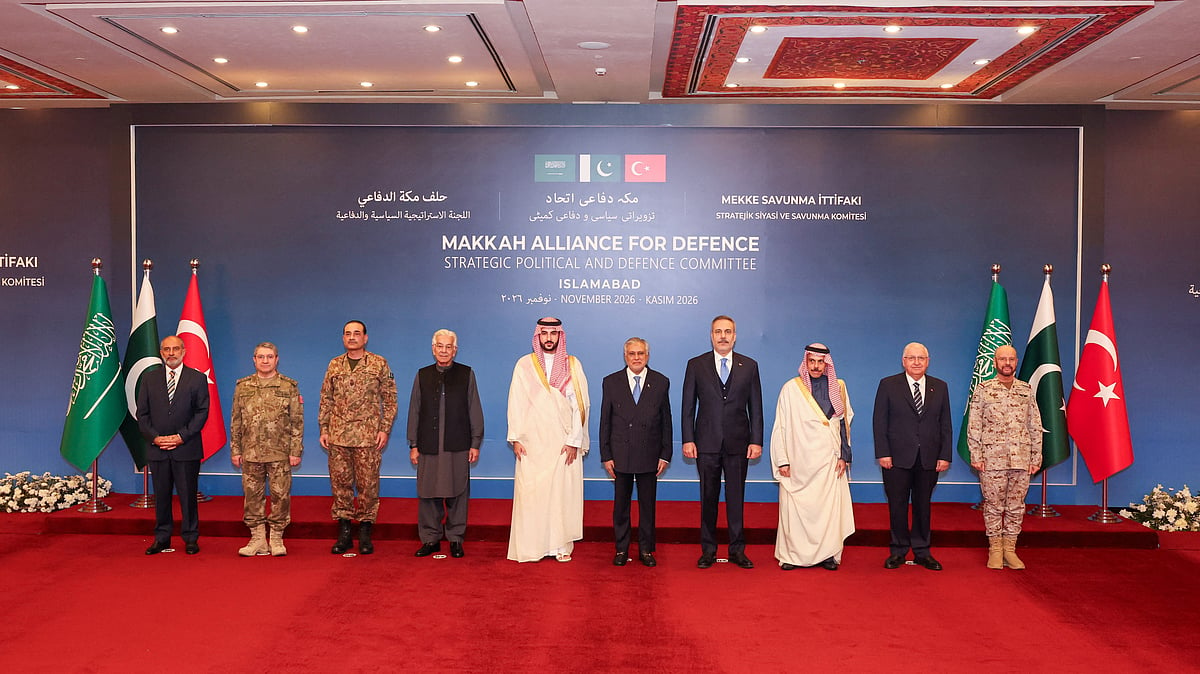
Attacks across the Middle East around the Iran war show no sign of stopping, and fighting continues between Saudi Arabia and Yemen's armed Houthi group. In this situation, officials of the three Mecca defence alliance members — Saudi Arabia, Pakistan and Turkey — have sat down for talks. The first day of talks was held on Friday, and the final day is scheduled for Saturday.
Against the backdrop of the Iran war that began last February, Islamabad, Riyadh and Ankara signed the Mecca defence pact on August 7. Under the pact, an armed attack on any one of the three member countries will be considered an attack on the other two as well. This is the third meeting of the countries since the pact was signed.
The defence ministers of the three countries are taking part in the Islamabad meeting. Also attending are Pakistan's foreign minister Ishak Dar, Turkey's foreign minister Hakan Fidan and Saudi foreign minister Faisal bin Farhan.
Pakistan's defence minister Khwaja Asif recently told AFP that, under the pact, any threat to Saudi Arabia is also a threat to Pakistan and Turkey. In his words, the matter is absolutely clear.
But even after Saudi Arabia came under Houthi attack, Pakistan and Turkey did not step forward for direct resistance. On October 9, Pakistan foreign ministry spokesman Sajjad Haider Khan said Pakistani troops stationed in Saudi Arabia would not enter Yemen to attack the Houthis.
Before the Mecca pact, last April, Saudi Arabia's defence ministry said a Pakistani military contingent, including fighter jets and support aircraft, had arrived in the country. The contingent reached King Abdulaziz Air Base in Saudi Arabia's Eastern Province under the bilateral defence pact signed between Islamabad and Riyadh in 2025.
Sydney-based security analyst Muhammad Faisal said a large part of the Pakistani troops in Saudi Arabia are there under the older pact. Riyadh has not pressured Pakistan to conduct a direct operation in Yemen either.
However, Umer Karim, a researcher at Riyadh's King Faisal Center for Research and Islamic Studies, believes Pakistan's position is not enough to meet Saudi expectations. In his words, a complexity has arisen between the two countries here. The more Pakistan becomes militarily involved against the Houthis, the weaker Islamabad's diplomatic role as a mediator in US-Iran talks will become; mediation efforts between Iran and Saudi Arabia could also be obstructed, because Iran is the Houthis' main backer.
On November 21, Turkey's foreign minister Hakan Fidan said no decision had been taken on deploying troops to Yemen. However, defence assistance is being given to Riyadh.
On November 24, Saudi Arabia's civil defence authority said a Houthi attack damaged a high-rise building in Riyadh and injured 11 people. According to the Saudi government, since September 23 at least 26 people have been killed in the country in suspected Houthi drone and missile attacks, 23 of them in an attack on an airport.
Earlier, on October 5, an emergency meeting of the Mecca pact members in Riyadh agreed on exchanging troops and military capabilities among member countries and ensuring their rapid deployment in Saudi Arabia.
Ankara-based analyst and Atlantic Council researcher Omer Ozkizilcik believes the alliance will remain limited to a defensive role for now. So far, Saudi Arabia has sought only defensive assistance. He also said the Mecca pact includes no superpower; as an alliance of middle powers, its military and force-projection capacity will always remain limited.
Researcher Umer Karim said if Saudi Arabia's diplomatic contact with Iran fails, pressure on Pakistan may grow. If Riyadh then increases pressure for active engagement against the Houthis, Pakistan's good relations with Iran would be at risk of damage. In his words, maintaining a balance between the two sides is becoming harder for Pakistan every day, although the situation has not yet reached a point where relations might break down completely.
Khwaja Asif declined to say how Pakistan would react if Iran directly attacked Saudi Arabia. However, he named Israel as a potential threat to the region, saying there is a risk of conflict or aggression from Israel's side, so the countries of the region need to remain united among themselves.