Over 40,000 cases pending in the Appellate Division, only five justices and a single bench sitting
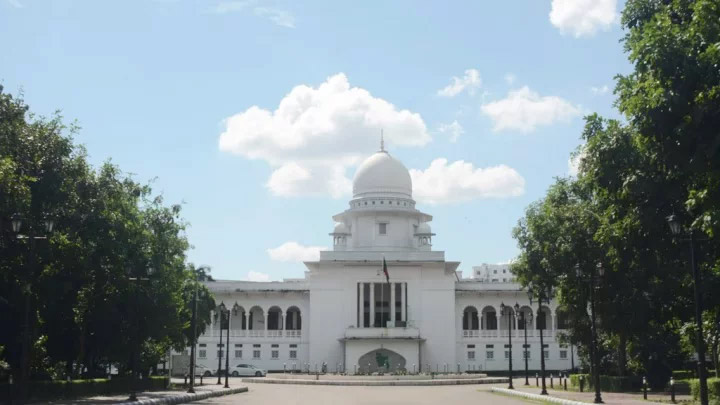
A shortage of justices is steadily deepening the case backlog at the country's highest court. More than 40,000 cases are now pending before the Appellate Division of the Supreme Court, yet it has only five justices. Because of the shortage, more than one bench cannot be formed — judicial work is running through a single bench.
Inquiries at the Supreme Court found that, as of 30 September this year, the number of cases pending in the Appellate Division had crossed 40,000. Of these, 23,645 are civil cases, 16,074 are criminal cases and 291 are other cases.
The Appellate Division currently has only five justices, among them Justice Habibul Gani, who took oath on 30 August. Previously, the division had as many as 11 justices, and up to three benches had been formed.
Lawyers say many important cases are also awaiting disposal. Because of the justice shortage, multiple benches cannot be formed, so they are demanding the quick appointment of justices to the Appellate Division to reduce the backlog. Most recently, leaders of the Supreme Court Bar raised the demand for appointments in a meeting with the President.
Supreme Court Bar Association president A M Mahbub Uddin Khokon said the Appellate Division has become almost ineffective for want of justices. There used to be three benches; now there is only one. Many urgent cases cannot be heard, and litigants are suffering. In his view, at least five or six more justices should be appointed to the Appellate Division, and the number of justices in the High Court Division should also be increased.
Attorney General Ruhul Kuddus Kajol agreed with the Bar president. He said there is a shortage of judges in the Appellate Division, but simply increasing the number will not solve the problem — honest, competent and hardworking justices are essential. He expressed hope that the President will take the necessary steps.
Senior Supreme Court lawyer Mohammad Shishir Monir applied to the President on 22 July for the appointment of the required number of justices to the Appellate Division. He said that because of the shortage, many important cases cannot be heard, the backlog is growing, and hearing an appeal in a case takes years. Competent justices therefore need to be appointed quickly.
Meanwhile, 26 lawyers including Humayun Kabir Pallab have filed a writ seeking directions for adequate budget allocation for the Supreme Court, appointment of the required number of justices, and improved basic professional facilities for lawyers. The writ, filed on 3 November, says that against the cases filed each year, the High Court Division disposes of about 35 percent and the Appellate Division only 18 percent.
Humayun Kabir Pallab said there is a judge shortage in both divisions of the Supreme Court. A preliminary hearing on the writ seeking appointments has been held, and the High Court has adjourned the hearing for three months. He hopes it will return for hearing after three months.
The Supreme Court began its journey on 16 December 1972, comprising the Appellate Division and the High Court Division. The Appellate Division started work on 18 December 1972 with four justices. At that time, 4,056 cases were pending before it and the country's population was about 64.3 million. The population is now about 178.1 million, and the cases pending in the Appellate Division have crossed 40,000.