In Afghanistan's Balkh, Women's Real Names Allegedly Banned from Documents and Prescriptions
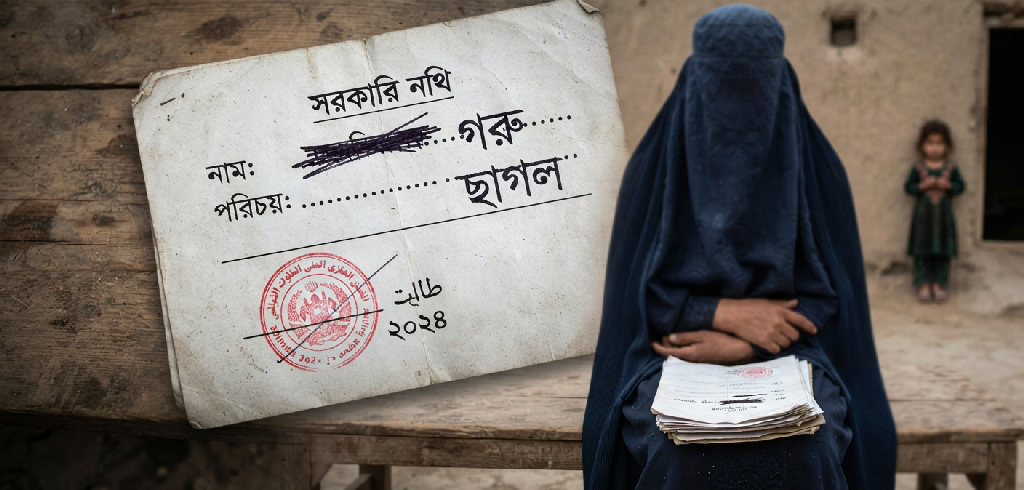
The use of women's real names in government documents, doctors' prescriptions and medical records has allegedly been banned in Afghanistan's northern Balkh province. Several Afghan women told the Spanish daily El Pais that Taliban officials have ordered that women be addressed as 'Bibi' instead of by their names.
Rights activists claim that in some cases women are also being called by derogatory names such as 'goat' or 'cow'. El Pais recently published a report on the matter.
An investigation by the Afghan media outlet Zan Times and the British newspaper The Guardian said hospital staff and other government employees in Balkh have been instructed to address women as 'Bibi'. In the country, 'Bibi' means a grandmother or an elderly woman.
Lalah Osmani, a Germany-based Afghan rights activist, told El Pais that a name is a gift of birth for a person and survives after death. In her words, a name is 'a face, a voice, a story'.
Citing various testimonies from women, doctors and civil rights activists, Osmani said the Taliban has not only ordered Balkh officials to stop writing and pronouncing women's real names; in many cases women are also being called by derogatory words associated with animals.
Osmani said, 'This is a process of deliberately taking away dignity as a human being. When a ruling group gives an animal's name instead of a woman's name, it takes away her human entity and turns her into merely a biological creature or a man's property.'
She also said that in Afghanistan there is a practice of referring to women in government documents as the 'wife' or 'daughter' of a male relative, and women's names are not written on gravestones either.
During the Taliban's first period in power, between 1996 and 2001, the word 'woman' was removed from the names of streets and public spaces. According to Osmani, in the five years since returning to power in 2021, the sole purpose of the Taliban's policies on women has been to deny their human dignity, and the first step in ignoring a person as a human being is to take away their name.
Karishma (a pseudonym), a rights activist in Kabul, confirmed the Balkh instruction on WhatsApp. However, she claimed that so far the ban on using women's names has been ignored.
Zubaida Akbar, director of the Afghanistan programme of the US-based non-governmental organisation Femena, fears that such a locally started initiative could later become a decree banning women's names across the country. She said this has happened in the past on other issues as well.
According to Femena's count, the Taliban has issued more than 144 decrees curtailing Afghan women's rights. Akbar said these include stopping education for girls over 12, banning women from most jobs and restrictions on speaking in public.
In 2017, Osmani started a campaign titled 'Where is my name?'. Its aim was to include women's names in government documents, including children's birth certificates, where their names were absent. As a result of her campaign, in September 2020, with the approval of the pre-Taliban Afghan government, an opportunity was created to voluntarily include the mother's name in documents including children's birth certificates.
Osmani fears that erasing women's names in the current situation could also create serious practical problems. She said if dozens of prescriptions and medical records in a hospital are under the same name — 'Bibi' — or a single number, the risk of medical error is huge.
The report also cited the example of Khadija Amin, an Afghan journalist exiled in Spain. Her name was not on her children's birth certificates. The report said she could not even file a complaint at a police station in Germany because she had no document proving her identity as the children's mother.