Dengue deaths reach 530 this year, hospital admissions exceed 179,000

Dengue infections and deaths are both rising at an alarming rate in the country. Around two hundred people are being admitted to hospital with new infections every day.
By 28 November this year, 530 people had died of dengue and 179,708 had been admitted to hospital. This has raised fears that the toll will pass the 2024 death record and reach the second highest position in more than two decades. Government and private hospitals are struggling to cope with the situation.
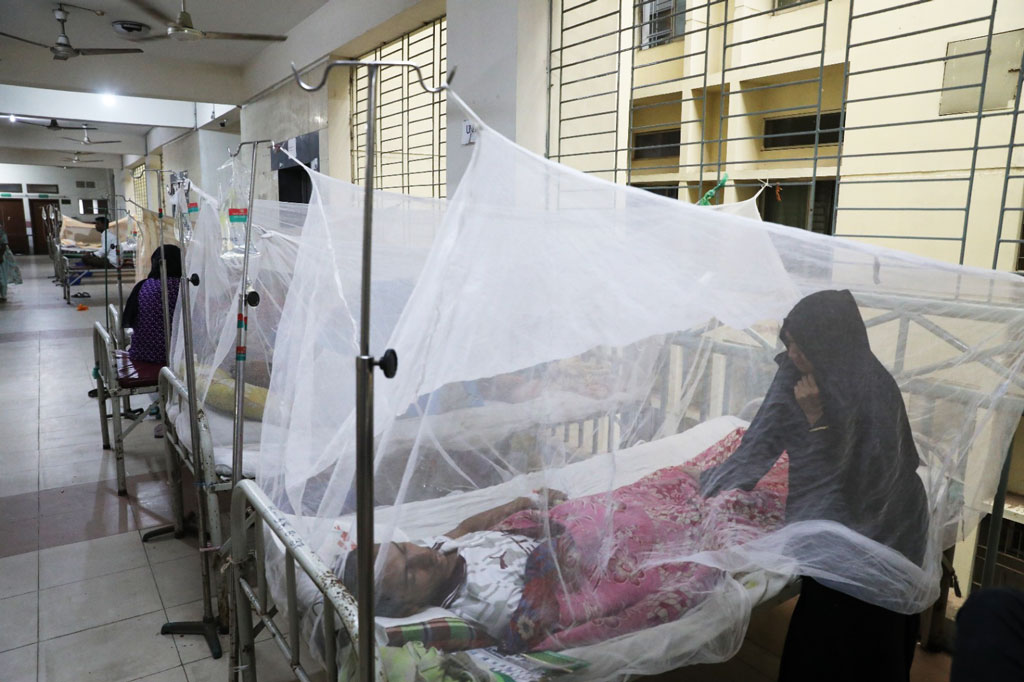
Patient pressure has been seen at the capital's dengue-dedicated hospital and at various government and private hospitals. There are long queues in emergency departments from the morning. Because of a bed shortage, many patients are receiving treatment on hospital verandas and floors with mosquito nets hung up. There are also complaints that some private hospitals are turning patients away for lack of beds. Doctors, nurses and health workers are also having to handle extra pressure as patient numbers rise.
According to the Directorate General of Health Services, 575 people died of dengue in 2024. That year 101,214 people were admitted to hospital. In terms of deaths it was the second highest between 2000 and 2024, and the third highest in terms of cases.
In 2025, 413 people died of dengue and 102,861 were admitted to hospital. Before that, in 2023, the country recorded its highest ever dengue death toll of 1,705. That year 321,179 people were admitted to hospital with the disease.
By 22 November this year the death toll stood at 518, with 173,473 cases. The death figure has therefore already passed the 2024 number.
After a large dengue outbreak appeared in the country in 2000, 2023 was the most devastating year. In the 23 years from 2000 to 2022, a total of about 250,000 people were infected in the country and about 850 died.
Some dengue patients are delaying treatment by treating the illness as ordinary fever at first. In many cases this causes the patient's physical condition to deteriorate.
Akkach Ali, a resident of Badda in the capital, became seriously ill after neglecting his fever. His wife Jahan Ara said testing was delayed at first despite the fever, and dengue was later detected. While receiving treatment at home, he suddenly lost consciousness one day. Tests showed his platelet count had fallen sharply. He recovered after being taken to hospital for treatment.
Sumona Islam, a resident of Mirpur, said her daughter is nine years old. Despite suffering from fever for several days she was not taken to hospital. When her condition did not improve despite medicine, a test after six days detected dengue.
Doctors say taking medicine on one's own without identifying the cause of fever is risky. Their advice is not to neglect fever, to contact a doctor from the first day and to get a dengue test as needed. Severe abdominal pain, repeated vomiting, bleeding from the nose or gums, or extreme weakness should prompt a quick trip to hospital. Water should not be allowed to collect in and around homes, and city corporations and municipalities must also run regular and effective mosquito control programmes.
Normally, Aedes mosquito breeding is expected to fall in November-December as temperatures drop. But entomologists say untimely rainfall and weather changes have kept mosquito breeding grounds active. In particular, if rainwater from cyclones and depressions collects, the dengue outbreak may continue into December.
Jahangirnagar University entomologist Professor Dr Kabirul Bashar said that once dengue transmission starts in an area or country it gradually increases, and if not controlled the transmission continues. Once many people have been infected with one dengue serotype, the risk of infection with that serotype later falls, so infections from another serotype that previously caused comparatively fewer cases can rise.
The dengue virus has four serotypes: DEN-1, DEN-2, DEN-3 and DEN-4. Experts say DEN-2 and DEN-3 infections are playing an important role in the current situation. During the devastating 2023 outbreak DEN-2 was the main serotype. According to World Health Organization report data, at that time DEN-2 was found in 62 percent of samples, DEN-3 in 29 percent, and both DEN-2 and DEN-3 in 9 percent. This year too DEN-2 and DEN-3 predominance is being seen in different parts of the country.
Public health experts say one of the main reasons for dengue deaths is arriving late at hospital. Treatment becomes difficult when patients arrive after complications such as a falling platelet count or dengue shock syndrome appear. People previously infected with dengue may also face a higher risk of complications if infected this time with a different serotype.
Dengue is also no longer limited to the capital. Patient and death numbers are rising outside Dhaka in Khulna, Chattogram, Barishal and Mymensingh divisions. Experts have noted that about half of total deaths are occurring in districts outside Dhaka.
Public health specialist Professor Dr Abdus Sabur said patients often come to hospital after their physical condition has deteriorated. There are also limitations in the health system; he believes patients have trouble getting needed services because government hospitals are not open after 2 pm. He said mobile laboratories in pickups or microbuses at important locations would make rapid dengue detection possible, and starting treatment at an early stage would reduce the death rate.
Public health expert Dr M Mushtaq said mosquito infestation is higher this year than last year. Initiatives beyond conventional methods are needed for mosquito control. Although the treatment and scientific methods for dengue prevention are known, increasing the budget and ensuring public participation in mosquito control are essential to make them effective.
Asked about dengue deaths heading for the second highest in 26 years and about the effectiveness of larvicide used, State Minister for Health Dr M A Muhit said the current year has not ended yet and questions should come after it ends, adding that the situation was worse in 2023 and 2019. He also said those who are working hard, killing mosquitoes and keeping the city clean, should be thanked, and that everyone is trying together.