Unsafe pesticide use is raising farmers' cancer risk, surveys show a worrying picture
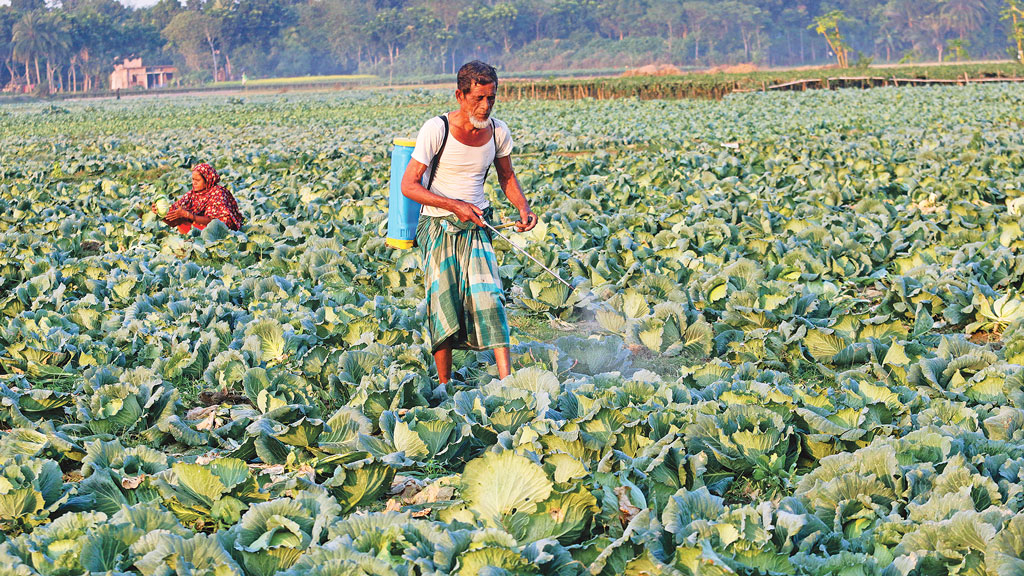
A survey by the National Institute of Cancer Research and Hospital has found that farmers make up the largest share of cancer patients in the country. The survey, covering patients admitted to the institute's hospital from 2015 to 2017, found that in 2017, 64 percent of the male cancer patients admitted were involved in farming in one way or another — that is, they were farmers.
According to the World Health Organization, about 346,000 people in the country are currently living with cancer. More than 167,000 people are newly diagnosed with cancer in the country every year, and more than 100,000 people die of cancer each year. Agriculturist and environment specialist Mrityunjay Roy cited these figures in his analysis and asked why farmers, who produce food for the country's people, should suffer this fate the most.
His analysis also presented another picture of the country's overall health situation. According to the International Diabetes Federation, about 13.9 million Bangladeshi citizens aged 20 to 79 have diabetes, yet 40 percent of people do not even know they have diabetes. Bangladesh ranks seventh in the world in the number of people living with diabetes.
The analysis named tobacco and smoking, environmental and air pollution, and unhealthy and adulterated food among the main causes of cancer in Bangladesh. It identified crop fields as the main source of unhealthy and unsafe food, where farmers, knowingly or unknowingly, indiscriminately apply various approved and unapproved agricultural chemicals.
Those chemicals mix into the soil from crop fields, and irrigation water leaving the fields flows into ditches, canals and wetlands, polluting soil, water and air as a result. Produced crops often retain pesticide residues, especially insecticide residues, above tolerable levels, and eating that food raises the risk of cancer.
Farmers themselves are also directly at risk. When they spray toxic pesticides to protect crops from disease and insects without proper protective measures, the chemicals touch their skin and eyes and mouth, and enter the body through breathing. The analysis said not all pesticides cause cancer, but long-term and unsafe exposure to certain pesticides in Bangladesh is considered a possibly important factor in raising cancer risk.
The history of pesticide use is also long. In 1951, the first government decision was taken to import pesticides into this country, and in 1955, three tons of Endrin were brought in for the first time and applied to crop fields. Pesticides arrived with the Green Revolution in the 1960s, and in 1970 about 4,000 tons of pesticides were imported. Pesticide use has increased more than tenfold over the past five decades.
A study by the Department of Agricultural Economics at Bangladesh Agricultural University in Mymensingh produced striking findings on farmers' pesticide use. It found that about 60 percent of farmers use no personal protective equipment when applying chemical pesticides, most farmers do not store pesticides in a safe place, and 56 percent store them in their bedroom or living room. About 81 percent of farmers apply pesticides with a spray machine.
According to that study, many farmers suffer headaches, weakness, skin burning and itching and various other physical problems while applying pesticides. For that reason, 52.7 percent of farmers are now interested in buying bio-pesticides. Bio-pesticides are made from various biological sources; after being applied in the environment they leave no long-lasting residue like chemical pesticides and do not harm other beneficial organisms in the environment. However, many farmers still do not know about these bio-pesticides, and they are not as cheaply available as chemical pesticides.
Another survey showed the change that training can bring. A recent survey of 50 trained farmers in nine upazilas of eight districts under the Partner project found that, as a result of the training, chemical pesticide use among those farmers fell by about 26 percent, while bio-pesticide use rose by about 81 percent. Average yields of those crops also rose by 5.49 percent as a result of environment-friendly management.
The analysis said that to reduce chemical pesticide use, the use of bio-pesticides must be increased, and for that, sellers and users must be made aware. Trust must be built among farmers through training, meetings, group discussions and field-level demonstrations of effectiveness on crops, and the Department of Agricultural Extension must take the lead in this, it said.
Mrityunjay Roy's conclusion was that the use of chemical pesticides is not essential for crop production; what is essential is following good crop cultivation practices. However, abandoning toxic chemical pesticides alone cannot guarantee safe and healthy food — issues such as soil, water and air pollution are also involved. Only if those are ensured, he said, will the health of farmers and consumers be protected and the risk of environmental pollution fall.