Britain Secretly Planned Military Move but Failed to Stop Iran Seizing Three UAE Islands: Declassified Files
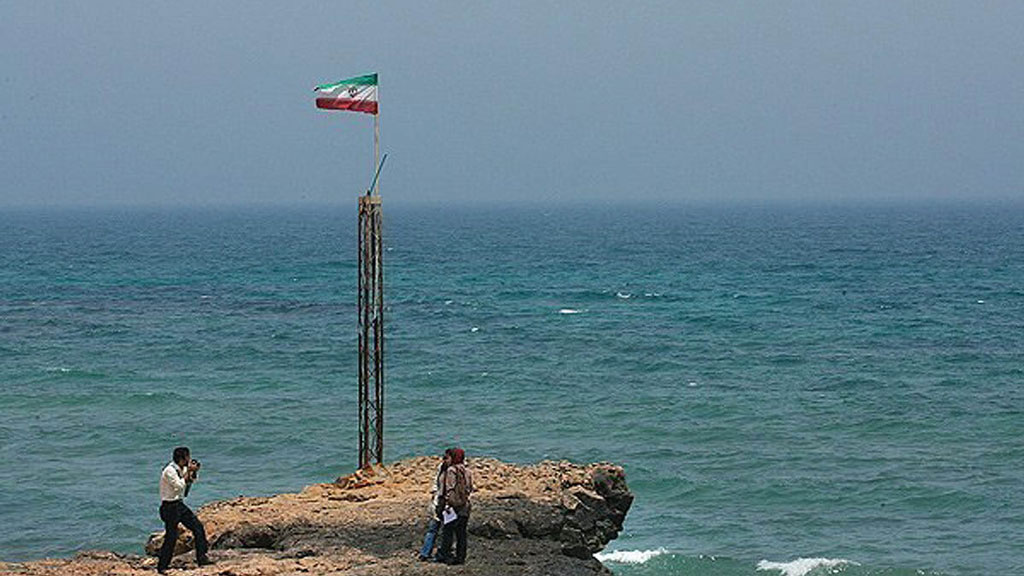
Declassified secret documents in the United Kingdom have revealed that Britain once drew up a major military plan to prevent three islands of the United Arab Emirates from being seized by Iran. But as last-minute diplomatic talks failed, Iran seized the three islands 55 years ago.
On Sunday (29 November), Middle East outlet The National reported that the British plan to protect the islands of Abu Musa, Greater Tunb and Lesser Tunb included a warship, an air force squadron, beach maps for landing under cover of darkness, and leaflets prepared in Arabic. The leaflets were to be distributed among the islanders in a possible guerrilla war situation.
The declassified 1971 documents show that, as British troops were being withdrawn from the Persian Gulf region, it was feared in advance that Iran's then Shah government would seize the islands. But as Iran was an ally of the United States and the United Kingdom at the time, the British government did not want to displease the Shah. Although Iran under the Shah was a British ally 55 years ago, Britain still made secret military preparations and last-minute diplomatic efforts to stop the seizure, but all the initiatives ultimately failed.
At dawn on 30 November 1971, Iranian forces raided the islands. They seized the islands, which were under the control of Sharjah and Ras Al Khaimah, just two days before the founding of the United Arab Emirates.
A Ras Al Khaimah police member, Salim Suhail bin Khamis, was killed in the Iranian forces' raid. He is remembered as the UAE's first martyr.
According to documents of the British National Archives, Britain's top military officials had approved a military plan named 'Operation Pensam' as early as March 1969. Its aim was to resist a possible Iranian military move on Abu Musa and the Tunb islands.
The plan provided for deploying a British warship, five helicopters, patrol aircraft and armed troops. If Iranian forces attacked, resistance was to be built on Abu Musa and Greater Tunb. If necessary, a naval team would secretly land on an island at night and raid at dawn.
Britain was, however, reluctant to enter into a direct conflict with Iran. The military plan itself said that, because of political constraints, the British response could effectively become ineffective if Iran carried out the raid.
Talks between Iran and Britain over the future of the islands continued throughout 1971. British diplomat Sir William Luce was the chief mediator. After a three-and-a-half-hour meeting with the Shah on 11 November, he thought the Shah was interested in a compromise. But the Shah also said military preparations to seize the islands were in place. British officials did not want to take tough steps for fear of damaging relations with Iran.
The seizure of the islands drew a strong reaction in the Arab world. Iraq severed diplomatic relations with Britain. Libya's then leader Muammar Gaddafi also expressed anger.
Tehran did not give up control of the islands even after Iran's Islamic Revolution in 1979. Military installations are currently located there. The islands also became a centre of important military tension in the 2026 war. At this year's UN General Assembly session, the UAE called for the dispute over the islands to be settled peacefully through talks or through the International Court of Justice.