Government Working to Launch a Full New Curriculum in 2028, Says Dr Mahdi Amin

The government has begun work with the aim of launching a complete and modern curriculum in the country by 2028, the prime minister's adviser on education and primary and mass education and spokesperson of his office, Dr Mahdi Amin, has said. He outlined the plan while speaking as chief guest at a dialogue titled "What Kind of Curriculum Do We Want", held on Sunday at the International Mother Language Institute auditorium in the capital.
Dr Mahdi Amin said a lack of time meant not all the expected changes could be brought into the textbooks for the 2027 academic year. However, textbook revision would be broader next year, and preparations for the full 2028 curriculum would proceed at the same time.
At the dialogue he said the opinions of the country's eminent educationists, experts and those directly involved in education at the field level were being given the highest importance in formulating and implementing the new curriculum. Its main goal is to raise students not as merely certificate- or degree-dependent, but as good citizens with moral values, capable working people and entrepreneurs.
Setting out the background of the election manifesto and the government's education plan, he said the mandate of the people is one of the biggest strengths of a government elected by popular vote. The prime minister's election manifesto contains specific and extensive plans for improving education, which were not drawn up in a day. Education featured in the BNP's 27-point and 31-point programmes and in policies presented by Khaleda Zia in 2016, and the plans were refined through discussions with people of various classes and professions at division, district, upazila and union levels. After forming the government, the prime minister directed that the policies be implemented with advice from experts and experienced field-level figures.
Explaining the limits of the 2027 textbook revision, the adviser said that after the government was formed last February there was little time for organising, nationwide discussion and collecting stakeholder opinion. Under the rules, printing must be finalised by July for books to reach students in January, so making every change within three or four months was difficult. Even so, more than a hundred educationists working under the National Curriculum and Textbook Board (NCTB) identified distortions of history, wrong information and inconsistencies in the previous textbooks and made the necessary corrections. The revision process will continue, with additions and deletions on a larger scale in the coming academic year.
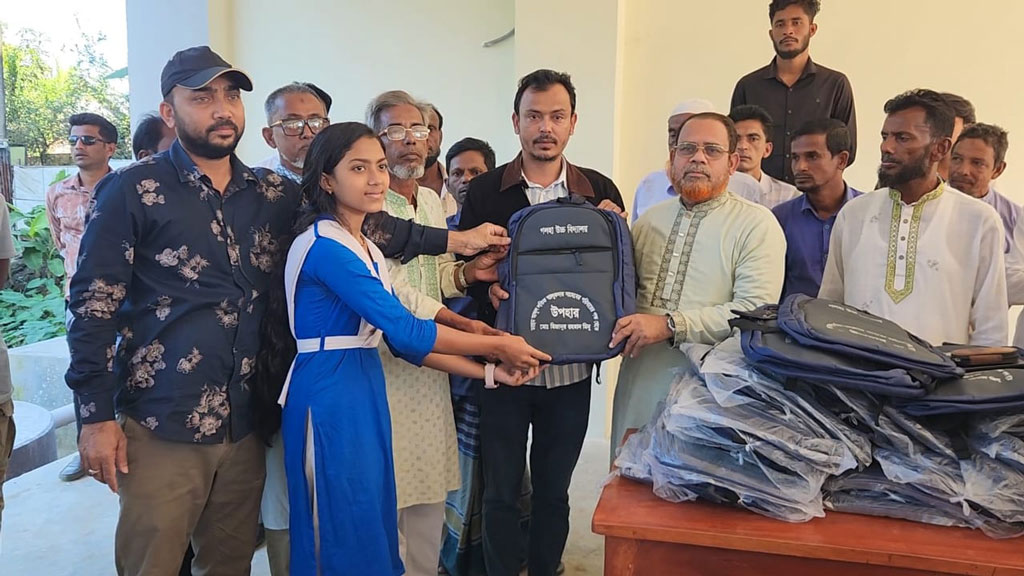
On structural changes in the new curriculum, Dr Mahdi Amin said the prime minister has long been working on a plan to give students free school uniforms, school bags and midday meals. The proposed new structure includes sports and culture in class four, and technical education and health-related subjects in class six.
He added that alongside moves to make technical education compulsory in the education system, learning a third language and co-curricular activities would be prioritised. Initiatives have also been taken so that students can watch sessions and proceedings of the National Parliament to gain a practical understanding of parliamentary activity.
On the purpose of the dialogue, he said its main aim was to identify the shortcomings of the current education system ahead of the 2028 curriculum and to determine the necessary policy changes. A coordinated plan would be prepared from the advice of educationists and others at the dialogue and presented to the prime minister.
The dialogue, chaired by NCTB chairman Professor Mohammad Fakhrul Mawla, was attended by senior secretary of the Secondary and Higher Education Division Abdul Khaleque, director general of the Directorate of Secondary and Higher Education Professor Dr Khan Moinuddin Al Mahmud Sohel, officials of the education and primary and mass education ministries, eminent educationists, journalists, intellectuals, doctors, engineers and curriculum specialists.