Four-Hour Count in Brazil Puts Voting Security in Focus Ahead of US Midterms
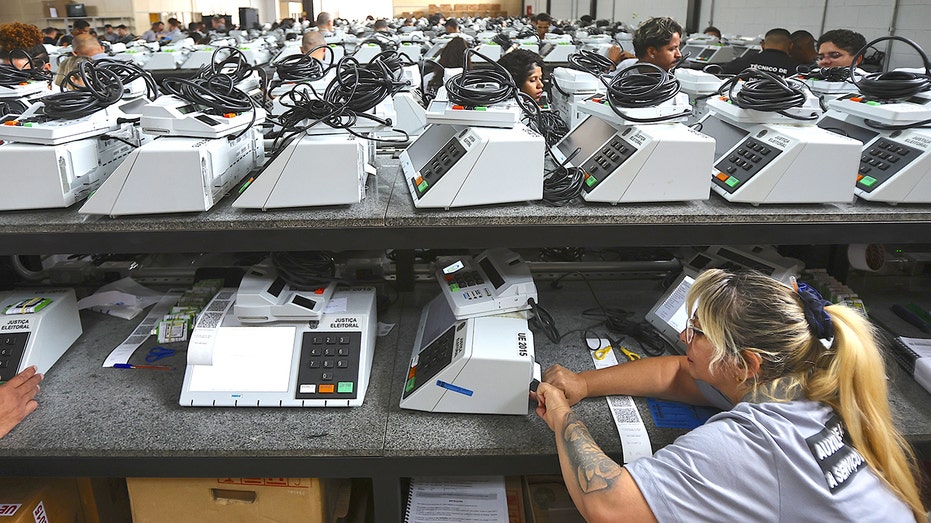
About 125 million Brazilians voted on 4 October on machines that print no paper ballots. Less than four hours after polls closed, the country knew its presidential election was headed to a runoff between conservative challenger Flavio Bolsonaro and leftist President Luiz Inacio Lula da Silva. Eleven days before the US midterms, Brazil's fast and secure counting system is drawing the attention of American analysts.
The process has been in place for over three decades, and Brazilians have become accustomed to its speed, simplicity, accuracy and routine. Analysts say the system is robustly audited, completely disconnected from the internet, and is the largest digital voting system deployed on the planet — one that could offer Americans a more secure way to vote.
The system has been widely praised and was mentioned in President Donald Trump's 2025 executive order on elections, where he cited Brazil's biometric voter identification as an example. Yet Brazil's count runs partially on the kind of paperless machines that the president has vowed to scrap.
Over the years, Brazil merged federal, state and municipal databases into a digital voting record, whereby voter identity, eligibility and the ability to vote only once can — and usually must — be verified biometrically. Nearly nine in ten voters unlock the machines with a fingerprint.
Brazil's Superior Electoral Court, the TSE, which designs the machines and oversees elections, says there has been no proven fraud since their 1996 debut. The 499,248 machines used on 4 October never connected to the internet. Their software was open to inspection by parties, universities and watchdogs for 11 months before being digitally signed and sealed in public.
Last December, the Brazilian government invited a record 149 outsiders to try to break the system; evaluators concluded that nothing they found could alter results or reveal how anyone voted.
On election day, randomly drawn machines are fed paper ballots on camera as federal auditors and foreign observers watch and specifically track results. At closing, every machine at every polling station prints its tally, which is posted in front of the polling place with a QR code, so anyone can check it against the national count.
In an email, the TSE said each file's digital signature confirms that the result was produced by the electronic voting machine registered for that polling station.
Karina Stange Calandrin, a political scientist and professor at IBMEC, says the system combines three traits rarely found together: voting is electronic, votes hashed to voter eligibility are stored locally in the machine, and tallying is automated. Corrupting it, she said, would require breaking the seal of each machine and installing software that would not match the TSE's version, automatically disqualifying its tally — a scale of collusion so large that it simply could not pass undetected.
The machines passed their toughest political test in 2022, when former President Jair Bolsonaro — now serving a 27-year sentence for plotting to overturn his 2022 defeat and presently under house arrest — spent years attacking their credibility without evidence.
This year, for the first time, a Bolsonaro appointee ran the TSE: Justice Kassio Nunes Marques. Bolsonaro's eldest son, Senator Flavio Bolsonaro, finished first with 47 percent to President Lula's 45 percent. The machines at the centre of the senior Bolsonaro's controversy may yet hand victory to his son.
Florencia Ferrer, CEO of e-stategiapublica, which has audited elections in 17 countries, has no doubt the Brazilian system is the most modern and secure in the world. In India, she notes, votes are electronic but each voter takes home a printed version of their vote, which weakens voter safety and raises coercion; Estonia's internet voting and the Philippines' electronically tallied paper ballots carry their own risks.
Still, some defend higher scrutiny. Security researchers say a clean record is not proof enough, and the Carter Center said voters should at least see a printed version of their ballot deposited into a separate area of the machine; otherwise, results integrity rests on software alone. Germany's top court ruled in 2009 that voters must be able to check their ballot without expert help, effectively barring a Brazilian-like system.
Brazil's machines have travelled mostly on loan to countries in Latin America, Africa and Asia. Paraguay adopted them permanently in 2006, with machines that now print each individual vote.
Ferrer says Washington and the rest of the US are way behind in both technology and security when it comes to polling on voting day. US elections are run in thousands of local jurisdictions under 50 sets of state rules, and about 30 percent of 2024 ballots came by mail, which is slower to process. Brazil has one national election authority, compulsory voting and no mail-in ballots.
Brazilians will vote again this coming Sunday, 25 October, in the runoff. The winner is expected to be known and certified in under five hours. The question, Ferrer says, is not whether Brazil has invented a perfect voting machine — no voting system is perfect — but whether democracies can combine the speed and consistency of digital tabulation with independent verification, public scrutiny and rules that citizens across the political spectrum have reason to trust.