Coordination Meeting in Khagrachhari to Reopen Sajek Road, Proposes Phased Talks With Blockade Organisers
A security coordination meeting has been held in Khagrachhari to reopen the Sajek road and restore normal conditions. The meeting, held this morning in the Khagrachhari region, discussed in detail the overall security of Sajek and the situation that has arisen there. With Sajek paralysed by a blockade for the third consecutive day, the meeting is being seen as the first coordinated initiative to resolve the crisis.
Representatives of the army, police, civil administration and intelligence agencies attended the meeting. Also present were the district council, the Sajek Resort and Cottage Owners' Association, bus-truck and restaurant owners' associations, and other important local figures connected with tourism.
The meeting highlighted that repeated obstruction by a regional armed group has kept the Sajek road closed, pushing the daily suffering of local ordinary people, business owners and tourists to an extreme. With travel for livelihood, medical care and daily necessities cut off, pressure is mounting across the hill communities.
Deep concern was expressed at the meeting that the intense anger building among local people because of this prolonged deadlock could at any time take a larger shape and create a communally violent situation. This warning emerged as the meeting's most serious observation.
At the end of the discussion, stakeholders put forward several coordinated proposals to resolve the existing crisis. The main objective of the proposals is to reopen the road and normalise tourism through dialogue, not violence.
Under the proposals, phased talks will be offered to representatives of the blockade organisers through MP Wadud Bhuiyan, the Rangamati Hill District Council and the civil administration to resolve the crisis. Instead of sitting with all demands at once, the approach is to build trust step by step.
The meeting also discussed bringing the Karbari Association under strict accountability for allegedly holding ordinary people hostage by severing Sajek road communications and openly backing this provocative activity. In other words, alongside dialogue, the question of accountability for those responsible also received importance at the meeting.
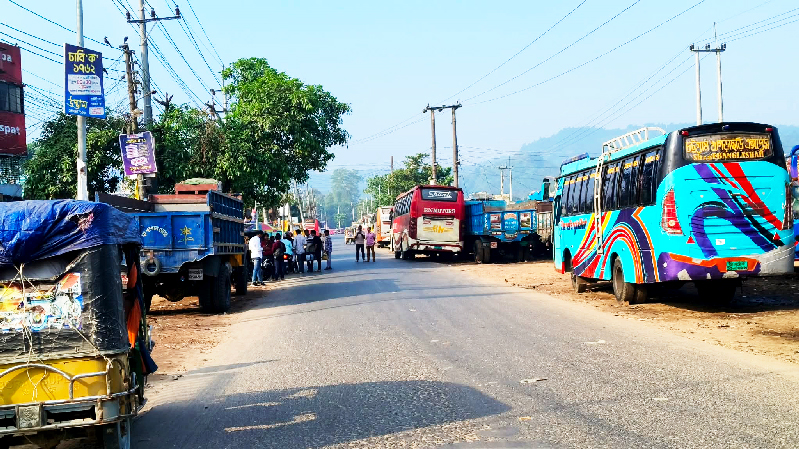
The backdrop is a continuing blockade. A road blockade at Sajek is under way for the third day over three-point demands, and the tourist centre remains closed indefinitely. In the programme that began at dawn on Saturday, picketers were seen burning tyres on important roads in the district town and various upazilas.
Because of the blockade, all long-distance transport from Khagrachhari remains halted. Passengers are suffering, tourists and businesspeople are stranded, and the tourism-dependent local economy is facing losses every day.
Meanwhile, a protest march and rally were held in Khagrachhari demanding the withdrawal of the ban on travel to Sajek, full security for tourists and the reopening of the Sajek tourist centre. Tourism-related businesspeople, transport owners, drivers and local residents took part in the programme.
Speakers at the rally gave a 48-hour ultimatum for the withdrawal of the blockade. Otherwise, they warned of a tougher movement. As a result, the administration's dialogue initiative is now running on one side, while the pressure of the ultimatum's deadline runs on the other.
All eyes are now on whether the proposal for phased talks reaches the blockade organisers and whether they respond to it. If the talks advance, a path may open to reactivate the Sajek road and reopen the tourist centre; if they fail, which direction the situation takes after the 48-hour ultimatum expires will be the biggest question of the coming days.