BNP wants caretaker government restored, but objects to parts of the formula as alternatives are debated
The ruling BNP is in favour of restoring the non-partisan caretaker government system for election periods. The party's election manifesto also pledges to give the system a permanent constitutional and institutional form to ensure free and fair elections.
However, the BNP objects to involving the president and the judiciary in the process of forming that government. As a result, alternative methods for appointing the caretaker government's chief and forming the government are being discussed in the Jatiya Sangsad's special committee on constitutional amendment, though no method has been finalised yet.
The special committee's president and Home Minister Salahuddin Ahmed said the caretaker government's formation process, scope of work and other matters had been discussed in detail, but no decision had been finalised.
Speaking to reporters after the committee's ninth meeting at the Cabinet room of the Jatiya Sangsad Bhaban on Saturday (October 24), Salahuddin Ahmed said the caretaker government system, its formation process and its scope of work were discussed in detail.
The alternatives raised in the discussion include making provision for forming the caretaker government around an upper house of parliament if one is created; creating the post of vice-president in the upper house and giving that person charge of the caretaker government; and making the speaker, elected with the consent of the government and the opposition, the head of the caretaker government. Whether provisions can be kept for appointing other persons as advisers with the consent of the government and the opposition was also discussed. All the proposals would be reviewed and placed in the committee's report, and written opinions had been sought from everyone, the home minister said.
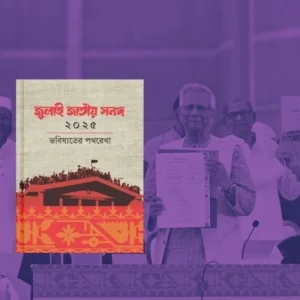
The July National Charter proposes forming a five-member panel to appoint the caretaker government's chief, comprising the prime minister, the opposition leader, the speaker, the opposition's deputy speaker and one representative of the second-largest opposition party. If the panel fails to reach consensus, the charter also proposes an alternative method in the next step, bringing in representatives of the judiciary to choose the chief adviser.
BNP standing committee member Selima Rahman said the party believes the caretaker government system is extremely necessary for a fair election. The Awami League government had abolished the process and destroyed the country's electoral system; the government is sincere about holding elections under the caretaker system to establish the people's voting rights. But she said it was not possible to say finally right now through which process the BNP wants to restore it. The government wants to proceed through constitutional amendment, and further discussions with stakeholders could be held if needed before a final decision, she said.
The BNP's past experience with caretaker governments has repeatedly been at the centre of debate. After the fall of the Ershad government in 1991, an interim government led by Justice Shahabuddin Ahmed, formed on the basis of political consensus, served; the caretaker system was not yet in the constitution then. After the Magura-2 by-election on March 20, 1994, opposition parties' movement over the neutrality of the electoral system intensified.
The sixth Jatiya Sangsad election was held on February 15, 1996, amid a boycott by the main opposition parties. Amid the political crisis, the Thirteenth Amendment was passed in parliament on March 26 that year, Khaleda Zia resigned on March 30, and a caretaker government led by Justice Muhammad Habibur Rahman took charge; the Awami League won the June 12 election held under that government. The election of October 1, 2001, was held under the caretaker government led by Justice Latifur Rahman.
When the dispute over appointing the caretaker government's chief intensified in 2006, President Iajuddin Ahmed took the office of chief adviser himself and the crisis deepened. After the declaration of a state of emergency on January 11, 2007, a new caretaker government led by Fakhruddin Ahmed took charge the next day; the Jatiya Sangsad election of December 29, 2008, was held under that government.
A specific BNP proposal for forming a caretaker government had come publicly in 2013. The then opposition leader Khaleda Zia had proposed forming the election-time government with 10 former advisers of the 1996 and 2001 caretaker governments; the government side and the opposition would nominate five each, and a chief adviser would be chosen with the consent of both sides. That proposal is not the party's current formula, but it is still discussed as a precedent of a past alternative.
What the alternative will be if there is no consensus on appointing the chief, how the advisers will be appointed, how long the government's tenure will be and how much power it will have beyond holding the election — clear solutions to these questions have not come yet. Only once the special committee's final recommendations and the BNP's position become clear will a clear idea emerge about the new method of forming a caretaker government.