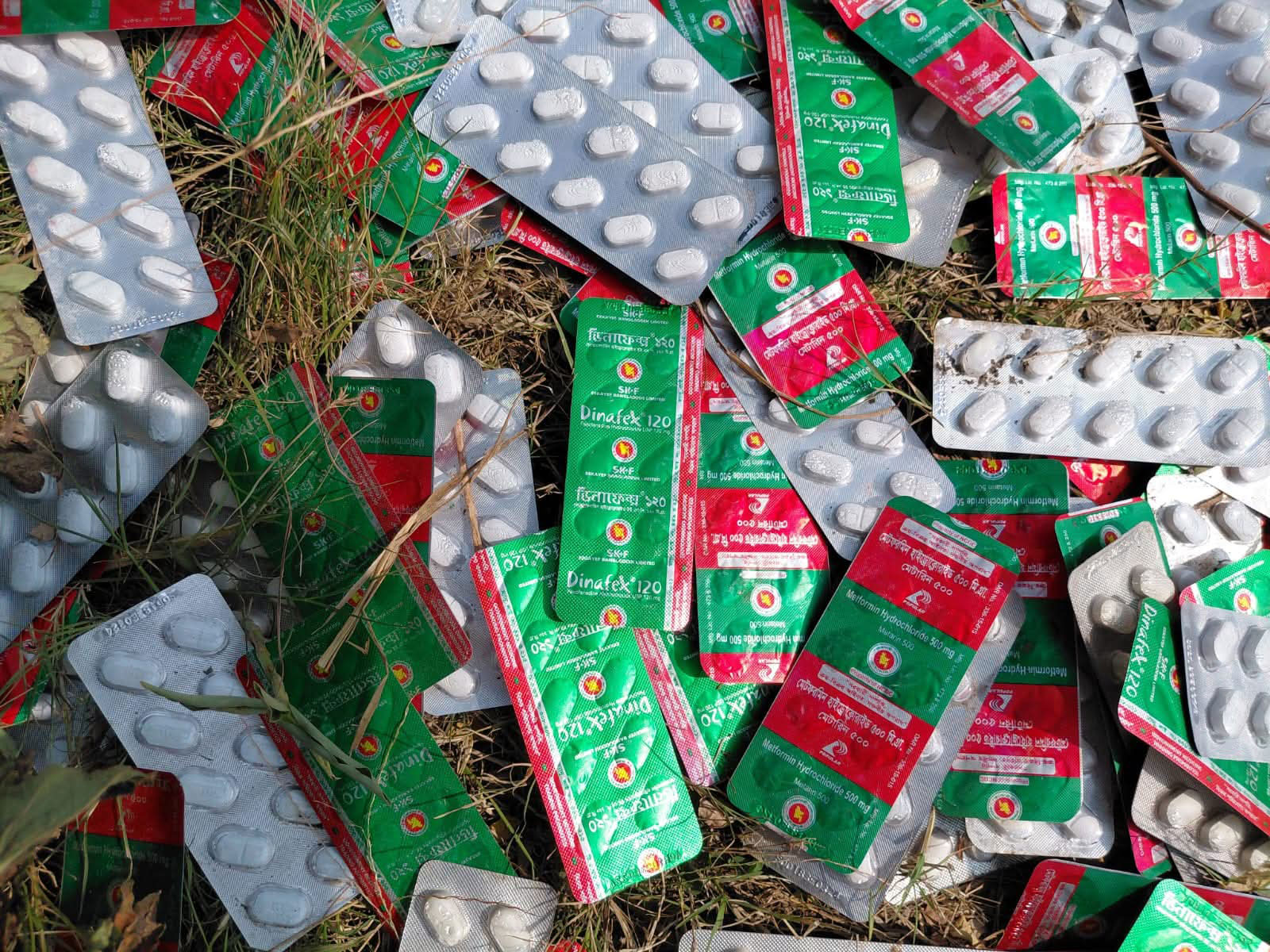
Nearly 70 percent of deaths in Bangladesh are from non-communicable diseases, with food adulteration a major cause, experts say at seminar
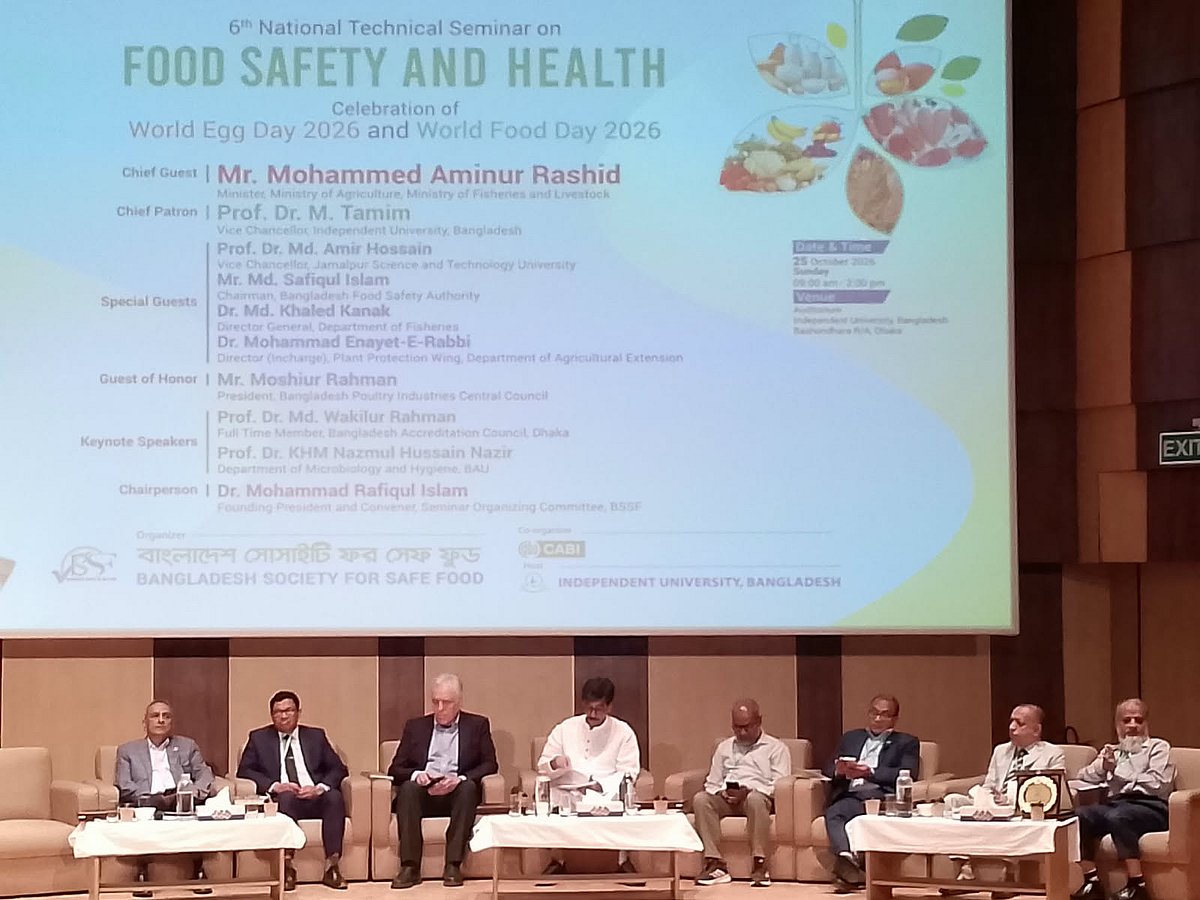
Food adulteration, residues of harmful chemicals and gaps in monitoring are major concerns for public health, experts said at the sixth national technical seminar organised by the Bangladesh Society for Safe Food (BSSF) on Sunday at Independent University, Bangladesh.
Held to mark World Egg Day and World Food Day 2026, the seminar's theme was food safety governance and leadership linking policy, science and practical application for a safe future. Discussions covered safe food production, public health protection, research, institutional coordination and the prospects for agricultural exports.
Professor Md Wakilur Rahman, a member of the Bangladesh Accreditation Council, presented the keynote on agriculture and safe food. Citing a 2026 World Health Organization survey, he said about 866 million people worldwide — one in nine — fall ill each year from unsafe food and about 1.52 million die. In Bangladesh, he said, about 70 percent of all deaths are caused by non-communicable diseases, whose main cause is food adulteration.
Wakilur Rahman said research shows farmers are the most at risk in Bangladesh. Excessive sweating, headaches, body aches, skin problems, nausea, dizziness and breathing difficulties have become everyday problems for farmers, he said.
Discussing the paper, Professor Md Ariful Islam of the Department of Microbiology and Hygiene at Bangladesh Agricultural University called for risk-based regular monitoring and stronger laboratory capacity. He also stressed coordination between universities and government bodies, following the One Health approach, and ensuring food safety from the production site itself.
Professor Jasim Uddin of Sher-e-Bangla Agricultural University highlighted the risks of excessive pesticide use in food production and urged effective farm-to-fork monitoring across the whole supply chain. He also called for training farmers in Good Agricultural Practices (GAP).
Professor K H M Nazmul Husain Nazir of Bangladesh Agricultural University presented the keynote on livestock and fisheries. He said effective food-safety governance in Bangladesh requires an integrated, risk-based and collaborative system bringing together government, industry, professionals and consumers.
Discussing that paper, Professor Sangita Ahmed of the University of Dhaka's Microbiology Department said the country does not lack laws but lacks enforcement. Several agencies work in the field, yet poor coordination makes effective results difficult, she said, adding that public awareness must be raised in advance alongside punitive measures and that a central database is needed to preserve and use research findings.
In his speech as chief guest, Agriculture and Fisheries and Livestock Minister Mohammad Amin Ur Rashid said pesticide imports had long been permitted without an effective testing system at the import stage, and the current government has moved to introduce testing and verification at ports. He stressed increasing farmers' agricultural knowledge, creating agricultural entrepreneurs and formulating policies on production, marketing and control.
The agriculture minister also said Bangladesh must follow international market standards on food safety to increase agricultural exports. He mentioned a plan to export jackfruit and pineapple next year.
Saleh Ahmed, the Bangladesh representative of the Centre for Agriculture and Bioscience International (CABI), raised the need to follow pesticide use rules, raise awareness of health risks and enforce the law strictly. He said CABI has taken an initiative for mandatory training of pesticide dealers in 27 countries including Bangladesh.
Director General of the Fisheries Department Khaled Kanak said Bangladesh exports fish to 52 countries with a market value of Tk 6,100 crore. The European Union imports shrimp and marine fish from Bangladesh, but for aquaculture-produced fish it will inspect for two years before making a final decision. Talks are also under way on exporting aquaculture fish to Saudi Arabia, and a policy for ready-to-cook and ready-to-eat food products is being prepared, he said.
Chaired by BSSF founding president Mohammad Rafiqul Islam, the seminar was opened by organising committee member secretary Jibunnahar Khandaker. The BSSF's annual publication Safe Food Digest was unveiled and distributed. Special guests included Jamalpur Science and Technology University Vice-Chancellor Professor Md Amir Hossain and Bangladesh Food Safety Authority Chairman Md Saiful Islam.