Trump Campaigns in Deep-Red Mississippi as Republicans Fight to Hold a Senate Seat

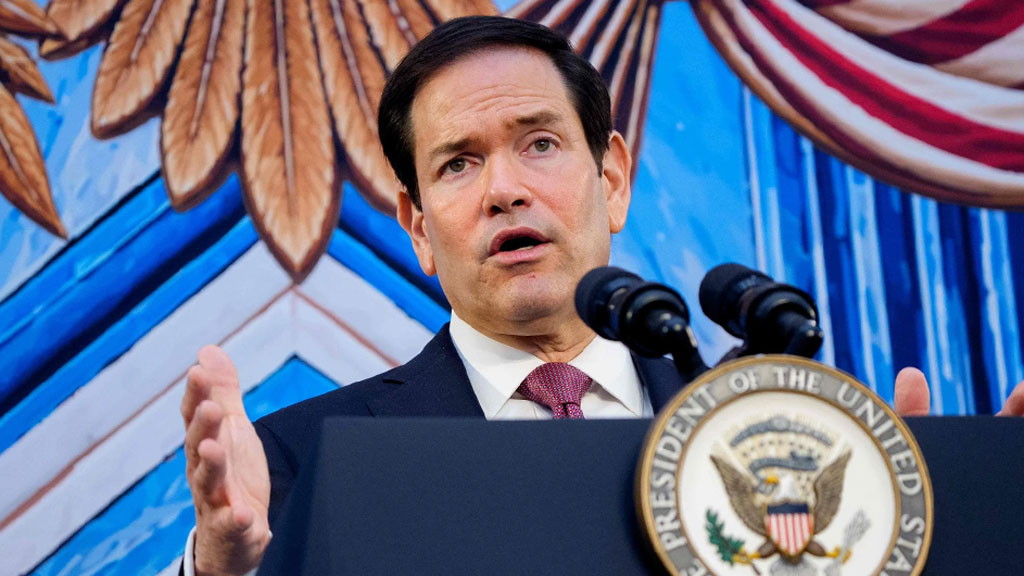
U.S. President Donald Trump campaigned on Monday (October 26) at a rally at Crossroads Arena in Corinth, Mississippi, in a closing midterm blitz. He was working to boost Republican Senator Cindy Hyde-Smith, who is facing a surprisingly stiff challenge from Democrat Scott Colom.
His voice audibly hoarse, Trump told the crowd: "I'm here because Cindy's doing great, but I just got to make sure. I can't take a chance." From the stage he denigrated Colom as a "Marxist radical" and a "fake" and "shameless phony who pretends to be a moderate."
Colom was spotted at the rally site too. He said he had planned to go there to listen to what was on Trump supporters' minds. "They actually deserve a senator that will listen to them, that actually cares about what they think, actually cares about what they're going through," he said ahead of the president's arrival.
Mississippi is among the nation's most reliably Republican states, and it is not where Republicans envisioned needing a late-October stop from the president. Colom is one of many Democratic underdogs who have managed to expand the House and Senate battleground maps because of widespread voter discontent over inflation, the Iran war and other aspects of Trump's second presidency.
Hyde-Smith is vying for her second full term and remains the favourite in a state Trump won three times by an average of nearly 20 percentage points. Colom, a local prosecutor, would make history as Mississippi's first Black senator since post-Civil War Reconstruction if he won.
The state's Senate history underlines the scale of the challenge. Mississippians have not chosen a new Democratic senator since 1947, and Democrats last won a Senate race there in 1982, when the onetime segregationist John Stennis won his last reelection. Even so, Senate Democrats' super PAC has been a late entry in the contest, with a $1.2 million investment.
Trump's event kicks off a week of aggressive campaigning that will include more stops in states he won comfortably in 2024, including Texas, South Carolina and Iowa. Officials announced late Monday that Trump also plans to hold a rally Saturday in Salina, Kansas, marking his second visit to the state in less than two weeks.
Top Democratic candidates and their surrogates were also greeting voters — more than 30 million of whom have already cast ballots, according to data collected by The Associated Press. Former Vice President Kamala Harris, the 2024 presidential candidate, campaigned in Milwaukee, Wisconsin, with Milwaukee County Executive David Crowley, who faces Rep. Tom Tiffany, a Trump ally, in the governor's race; if elected, Crowley would be the first Black governor to lead the battleground state. "This is a tight race because the stakes are so high," Harris said at a "Women for Crowley" event.
In Michigan, Democratic Senate candidate Abdul El-Sayed distanced himself from an ad created by a group called Rebellion PAC that blames high grocery prices on U.S. support for Israel. "This ad is not affiliated in any way with the Abdul for Senate campaign," his spokesperson Roxie Richner said in a statement. U.S. Rep. Haley Stevens, who narrowly lost to El-Sayed in the Democratic primary, condemned the ad. El-Sayed would be the country's first Muslim senator if elected.
Vice President JD Vance returned to Kansas to stump for Sen. Roger Marshall, who finds himself in a tight contest with Democratic nominee and pastor Adam Hamilton. Marshall, who has raised far less money than Hamilton, told the crowd that Trump is on the ballot, even if his name doesn't appear, because of how Democrats will thwart his agenda if they win control of Congress. Earlier, Vance was in Belgrade, Montana, to campaign with Republican Aaron Flint and Republican Senate candidate Kurt Alme.
At the Mississippi rally, Trump said he had in fact expected gas prices to rise even higher than they had, and of the war with Iran he said: "It worked out fine and it'll be over soon." Meanwhile Sen. Tim Scott, chairman of the National Republican Senatorial Committee, told The Associated Press on Monday that GOP candidates are "closing very strongly" in races across the country, including South Carolina.