Skipping Delhi, Rubio goes via Mumbai to Jamnagar: America's energy calculus centres on Reliance's refinery
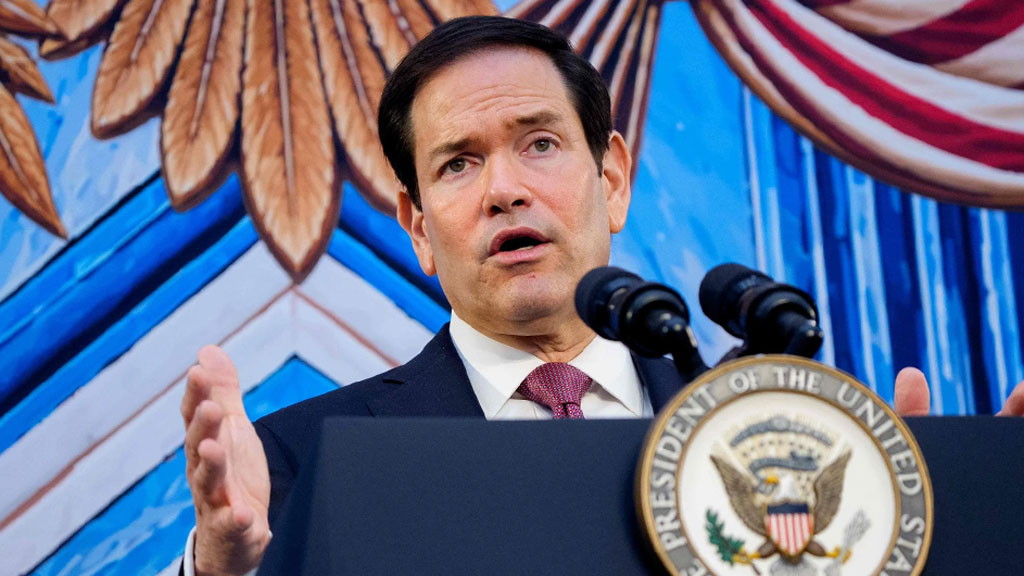
Foreign presidents, prime ministers and ministers visiting India usually head for the capital, New Delhi. US Secretary of State Marco Rubio has broken with that pattern. Skipping Delhi, he went to Jamnagar, the port city in western Gujarat where the giant oil refinery owned by Reliance — the company of Mukesh Ambani, one of Asia's richest men — is located.
Rubio arrived in Mumbai, India's financial capital, on Tuesday. There he met India's external affairs minister S Jaishankar and several of the country's top business leaders. He then ended his trip in Jamnagar. This was Rubio's second visit to India this year.
When the trip was announced, the US State Department said energy cooperation, trade investment and economic ties would be the main subjects of the visit. The officially announced itinerary did not include New Delhi, a fact that raised questions particularly among India's opposition politicians.
Analysts say, however, that there was a strategic calculation behind skipping the capital, and that the timing and the chosen locations carry special significance. Michael Kugelman, a senior fellow at the Atlantic Council, told the BBC: 'The trust deficit is highest in Delhi. Officials there are unhappy with several decisions and policies of the Trump administration.'
Meera Shankar, a former Indian ambassador to the United States, advised against reading too much into the skipping of the capital. 'It was mainly an energy-centred trip. Besides, Rubio also met the foreign minister in Mumbai,' she said.
According to an official statement, the two foreign ministers' meeting at Mumbai's Taj Hotel covered trade, investment, energy security and defence cooperation. India's foreign ministry said both sides expressed satisfaction at the progress of trade talks and reaffirmed their commitment to finalising the long-running negotiation. The two countries have been discussing a trade agreement for about 20 months, but no deal has been reached so far.
After the diplomatic meeting, Rubio went to Jamnagar. According to Reliance's website, the Jamnagar refinery complex can process about 1.4 million barrels of crude oil a day; the complex accounts for roughly 1.5 percent of the world's total refining capacity. Reliance is also a big exporter of diesel and other petroleum products.
On Wednesday, Rubio toured the refinery under tight control, with media access also limited. He looked around the refinery and met Mukesh Ambani and members of the Ambani family. In a statement afterwards, Reliance said the visit saw wide-ranging discussions on the global energy situation and opportunities for commercial partnership in conventional and new energy. The statement did not specifically mention whether any commitment was made on buying crude oil or supplying refined fuel.
In Meera Shankar's view, the refinery visit made clear how much importance the United States attaches to ensuring more refined fuel reaches the market ahead of November's midterm elections. The Trump administration is under pressure to keep fuel prices in check before those elections, while rising tensions in the Middle East have also raised fears of disruption to global energy supplies. With little prospect of US refining capacity growing significantly in the near future, India's ability to refine huge volumes of oil has opened a possible path for Washington to ease pressure on the market.
Just a day earlier, speaking to reporters, Rubio had called India an 'energy refining superpower'. He said the United States wants Reliance to refine more Venezuelan oil. 'India has the capacity to refine heavy crude oil. They have done it in the past. My sense is that when more Venezuelan oil comes to market, India will be able to do this work,' Rubio said. In the short term, he said, Venezuelan oil can 'certainly provide some relief' and can also help ease the supply pressure created by Middle East tensions.
Before US sanctions disrupted the trade, Reliance was one of the largest buyers of Venezuelan crude oil. After Venezuelan President Nicolas Maduro was detained in a US operation early this year, Washington eased some sanctions on the country's energy sector. Reliance then returned as a major importer of Venezuelan oil.
The visit comes at a time when relations between India and the United States are passing through a somewhat complicated phase. Sanctions hang over New Delhi for buying Russian energy, although they are currently suspended. After Russia's full-scale invasion of Ukraine in 2022, India became one of the largest buyers of Russian oil. According to the Centre for Research on Energy and Clean Air (CREA), from December 2022 to July 2026, 37 percent of Russia's total crude oil exports were destined for India.
In August 2025, US President Donald Trump imposed an additional 25 percent tariff on Indian goods over the Russian oil purchases, taking the total tariff rate on many products to 50 percent. The United States withdrew that punitive extra tariff in February 2026. Even so, India's Russian oil imports remain a source of discomfort in relations between Washington and Delhi. India has consistently said its priority is ensuring affordable and reliable energy for its 1.4 billion people.
Meanwhile, earlier this month the United States itself temporarily lifted sanctions on Russian diesel. Against this backdrop, experts say Rubio's Jamnagar visit aligns with three US goals — reducing India's dependence on Russian crude oil, encouraging more imports of Venezuelan and US oil, and moving towards a trade agreement with energy cooperation at its centre.