Plastic Waste Spreads Through the Sundarbans, With Microplastics Found in Water and Soil
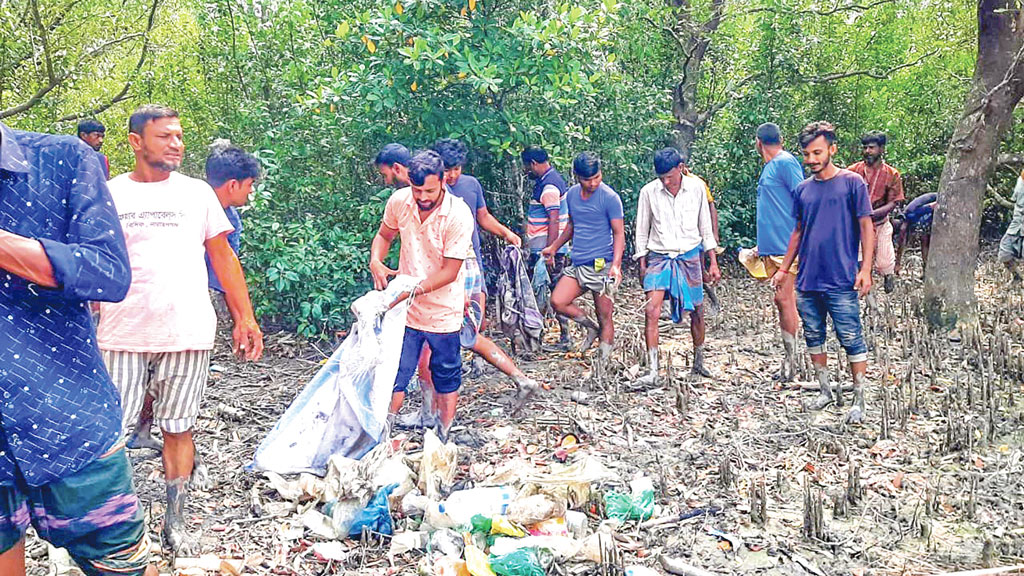
The Sundarbans, the world's largest mangrove forest, is being endangered by plastic waste pollution. Plastic arriving from upstream rivers, the Bay of Bengal and settlements next to the forest is spreading deep into the forest on tidal water. Polythene, nylon nets, bottles and other waste are accumulating on beaches, chars and around the breathing roots of mangroves.
At tourist areas including Kotka, Kochikhali, Jamtala, Dimer Char and Andhar Manik, plastic waste was seen spread from the beach into the forest interior. Cosmetics packets, polythene of different thicknesses, sandals, sacks, discarded nylon fishing nets, empty pesticide bottles, floating net drums and cork sheets were lying there. At Dimer Char, several tonnes of plastic items were seen on high ground along about four kilometres of seashore.
Large amounts of waste have been removed from Kotka and Kochikhali, but large amounts still remain on the beach. The East Sundarbans Forest Division collects plastic at different times and dumps it in Bagerhat and Khulna, but that work is inadequate compared with the waste accumulating across the vast forest.
According to the Forest Department's observation, the first source of waste is upstream rivers. Waste from urban areas of Khulna, Bagerhat and Satkhira enters the Sundarbans through rivers and canals including the Pashur, Shibsa, Shela, Baleshwar, Kapotakkha, Bhola and Kholepetua, and spreads deep into the forest on the twice-daily tides.
The second source is the Bay of Bengal. Large amounts of waste reach the bay from cities including Dhaka and Barisal and through the Padma, Jamuna and Meghna rivers. Nylon nets, drums, cork sheets and bottles discarded by seagoing fishers, tourists and vessels add to it. Because of the sea's funnel-shaped geography and the effect of waves and currents, that waste washes up on Sundarbans beaches and chars.
The third source is the area adjoining the forest. Waste from markets and ports, fish depots, boat terminals, hotels, restaurants and homes next to the forest also enters the forest through local rivers and canals.
There is no specific government count or research-based figure for how many tonnes of plastic accumulate in the Sundarbans each year. A study published in 2017 in the journal Environmental Science and Technology gave model-based information that about 72,845 tonnes of microplastic a year reach the Bay of Bengal next to the Sundarbans from the Ganges-Brahmaputra-Meghna basin. A Sundarbans study published in Frontiers in Marine Science in 2021 also cited that figure.
Khulna University research on samples from six Sundarbans locations between 2020 and 2022 found an average of 2.22 microplastic particles per litre of water and 734 particles per kilogram of soil.
Professor Nazrul Islam of the university's Forestry and Wood Technology Department said pollution could be cut by 70 to 80 percent if plastic were removed from upstream rivers and the sea. He said plastic negatively affects tree growth, seed germination and the reproduction of aquatic animals.
Rezaul Karim Chowdhury, Divisional Forest Officer of East Sundarbans, cited budget and manpower shortages. He said taking or dumping plastic in the forest is prohibited and forest guards patrol and search. But waste floating in from rivers and the sea is hard to stop, he said, and a coordinated initiative by the local administration, the Department of Environment and the public is needed.