Death Toll in Spain's Two High-Speed Train Crash Rises to 68, at Least 80 Injured: Survivors Describe a Horrifying Moment
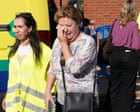
At least 68 people have been killed in a collision between two high-speed trains in Spain's Toledo province. At least 80 people were injured, and the toll is feared to rise further. The collision took place at about 9am local time on Wednesday (October 28) between two trains travelling in the same direction on the railway between Madrid and Andalusia, according to rail operator Adif.
According to reports, after the collision in the area between the towns of Los Yebenes and Urda in Toledo province, two carriages of the trains derailed and fell down an embankment. The site is amid vineyards and olive groves, near the small town of Urda in the Castilla-La Mancha region.
One of the trains involved was a state-owned Renfe AVE train carrying 147 passengers. The other was a train of the Italian company Iryo, carrying 397 passengers. Both were travelling on the Madrid-Seville route, popular with tourists and regular passengers. The Renfe AVE train had left Madrid at 8am heading south to Seville; the Iryo train was travelling in the same direction.
According to preliminary reports, the collision occurred when the Renfe train struck the Iryo train from behind. Two carriages of the Iryo train are believed to have derailed as a result.
Photos and videos from the scene showed one train's carriages had slid down the slope while the other train remained on the track. Emergency workers were seen examining the wreckage lying at the scene. Passengers also posted videos on social media of smoke rising from one carriage, which lay tilted on one side.
Sources told ABC and El Pais that a signalling fault is believed to have caused the accident. A worker engaged in repairing a fault in the main signalling system allegedly failed to warn the Renfe train that the Iryo train was ahead of it. However, this claim is based on preliminary information.
Survivor Josimar Medina woke a little before 9am on Wednesday to find himself airborne, hurtling through his carriage on the fast train from Madrid to Seville. The 37-year-old Peruvian tourist is from the northern Peruvian city of Chiclayo. He said: 'I remember flying through the air and looking for my girlfriend, who was also shooting through the air.'
Once he landed, Medina looked around and realised how lucky he and his girlfriend Vitoria Maia had been. He said: 'I saw people with cuts, people covered in blood, people missing limbs, and I saw one person who had nothing left below the chest. I saw people with their heads crushed and people with mutilated arms.' The couple had been in the seventh carriage of the Renfe train; had they been any further forward, they could well have been among the fatalities. They climbed out of the train and helped the injured while waiting for medics and Guardia Civil officers to arrive. Medina's light brown T-shirt was stained with the blood of a young American man he had helped move to safety.
Within hours of the crash, Urda had been transformed into a centre of frantic emergency activity. A local sports centre was pressed into service as a triage post for the walking wounded. Cars, vans and trucks from the emergency services of Castilla-La Mancha and neighbouring Madrid crowded the town's streets. The lightly injured were ferried to Urda by bus.
Fredrich and Arabella Barilea, a couple from the Philippines who now live in Dubai, were on the Iryo train, and Fredrich was sent flying by the impact. He said: 'One guy was shouting, Get out! Get out! Another train could hit!' He added: 'We saw all the people were also getting off. Many of them had head injuries and were covered in blood. We just got as far away from the train as we could.' Arabella said: 'It all happened in a split second. The table we were sitting at just disappeared in the crash. I feel like we're on our second life. You never know what could happen. We're very grateful.'
Ata Yelkaya, a young tourist from Turkey, usually takes the bus when he travels around Spain; on Wednesday, however, he had decided to try the Iryo train. Sleepy, and assuming his train had come to a halt at a station, he had switched off his tablet and pulled up his hood in preparation for a nap. At 8:53am he felt the impact of the Renfe train smashing into the carriages behind him. He said: 'I woke up with a bump and hit my head on the seat in front of me. I looked across at an elderly couple near me and saw that the woman had a cut in her eyebrow. That's when I knew something serious had happened.' Looking out of the window, he saw that the carriages behind his carriage No 5 had come off the track and that many people had been killed or injured. Yelkaya, who lived through the 2023 earthquake in Turkey, said he stayed calm and tried to help other people get off the train; it was only when he got out and saw some of the dead that it hit him.
Prime Minister Pedro Sanchez, during his visit to Urda, said Spain was in mourning. But many of those fortunate enough to survive Spain's second fatal rail crash in less than ten months were still too deep in shock to begin grieving. In January, 46 people died in the Adamuz rail crash; the two accidents together have claimed at least 114 lives in the space of ten months. Local people brought food and water to a hall set up as a centre for those searching for their relatives, as had also happened at Adamuz.
But, as also happened at Adamuz, the solidarity and kindness on display is likely to turn to anger in the coming hours as people seek answers as to how one of Europe's most modern and extensive high-speed rail networks could experience two such deadly accidents. Spain's transport minister has called the circumstances that led to the crash 'inexplicable'; those circumstances will need to be explained as swiftly and thoroughly as possible.