Ranked Choice Voting in Two States This Midterm: How the System Works and Why It Divides Opinion
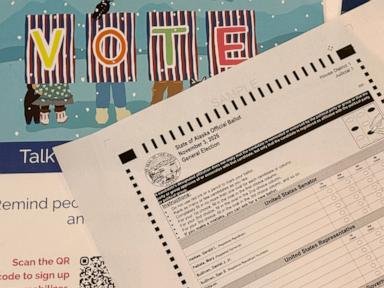
As control of Congress hangs in the balance in the US midterm elections, two states—Maine and Alaska—are again voting under ranked choice voting. Instead of picking a single candidate, voters rank candidates in order of preference: first, second, third, and so on.
The system works like this: if a candidate wins more than 50 percent of first-choice votes, they win. If nobody reaches a majority, an instant runoff begins—the candidate with the fewest first choices is eliminated, and their ballots are transferred to each voter's second choice. The process repeats until someone secures a majority. Tallies are computed by computer programs, usually completing the runoff rounds on election night.
Ismar Volić, director of the Institute for Mathematics and Democracy at Wellesley College, who has researched the system for years, says the thinking is that even if a voter's favourite candidate has no chance of winning, they can also support someone else they think is good. Researchers say this diminishes the role of spoiler candidates who split the vote and change the outcome.
David McCune, a mathematics professor at William Jewell College who has studied the method for a decade, says the evidence points to elections becoming more competitive under ranked choice voting, with the winner ultimately representing a bigger majority of the electorate. He cites the 2014 Maine governor's race, where Republican Paul LePage won with under 50 percent of the vote in a three-way contest.
David Kimball, a political science professor at the University of Missouri at St. Louis, says the system also changes campaign tactics—candidates court second and third choices with more positive campaigning, since mudslinging turns voters off. He points to the 2025 New York City Democratic mayoral primary, where Zohran Mamdani and Brad Lander cross-endorsed each other and urged supporters to rank the other second; in the final round, Mamdani received the majority of Lander's 120,634 transfer votes and beat former Governor Andrew Cuomo by more than 130,000 votes.
Volić acknowledges the system minimises but does not eliminate spoiler effects. In Alaska's 2022 special election for its sole congressional seat, former Governor Sarah Palin split the first-round vote; even though she received more of Nick Begich's transfer votes, Democrat Mary Peltola surpassed 50 percent and won. Volić, who has analysed data from over 1,000 US ranked choice elections, says such spoiler events are very rare under the system. Begich went on to win the seat in 2024, beating Peltola in the third round.
Maine has used the system for congressional races since 2018, and Alaska for the last four years. According to the Ranked Choice Voting Resource Center, as of October 2026 approximately 10.3 million voters in 14 cities plus Maine and Alaska use the method, and in this year's midterms roughly 3.9 million voters will cast ranked choice ballots for congressional, state and local elections.
Opposition, however, is growing. Between 2022 and 2026, 18 state legislatures, including Alabama, Florida and Ohio, passed laws banning the process, and Missouri voters approved a ban by ballot measure in 2024—19 states in total now ban it.
In Alaska this year, voters themselves will decide on November 3 whether the state joins that list. A similar repeal measure in 2024 lost by just 743 votes, or 0.24 percentage points. This year Republican leaders including Begich and Alaska Governor Mike Dunleavy are publicly pushing for repeal.
President Donald Trump has also campaigned for repeal. In an October 8 social media post he called it the 'Corrupt Ranked Choice System of Voting' and hoped it would be repealed in the November vote; at an October 14 rally in Alaska he claimed, without evidence, that it is a 'Democrat scam' and a way to cheat. But election data analysed by Volić and McCune shows no evidence the system has benefited one party over another.
The researchers warn that political polarisation has fuelled misinformation and misunderstanding about the system. McCune says a voting system should be designed so voters are incentivised to cast their true opinion—and that opinion should be supported by the facts.