Democrats need four seats to take the US Senate: the key midterm races from Texas to Maine

Democrats need a net gain of at least four seats in November’s midterm elections to take control of the United States Senate from Republicans. Republicans currently hold a 53-47 majority.
A Democratic takeover seemed highly unlikely at the start of the year, but voter discontent with President Donald Trump, the Iran war and rising prices has made races in once-safe Republican states competitive.
In Alaska, Republican Senator Dan Sullivan is seeking re-election against Democratic former US Representative Mary Peltola. Alaska uses ranked-choice voting, allowing voters to rank candidates in order of preference. Four candidates are on the ballot, including an independent who shares Sullivan’s name. Republicans accuse Democrats of deliberately recruiting the namesake candidate to confuse voters. Trump called it “election fraud”, but Peltola has rejected the accusations, saying the dispute distracts from Alaskans’ real concern: affordability.
In Alaska, Peltola raised $33m in October, compared with nearly $14m for Sullivan, although Republicans have outspent Democrats in the race, $42m to $38m. Trump won Alaska by 13 points in 2024, but recent opinion polls suggest Peltola is narrowly leading.
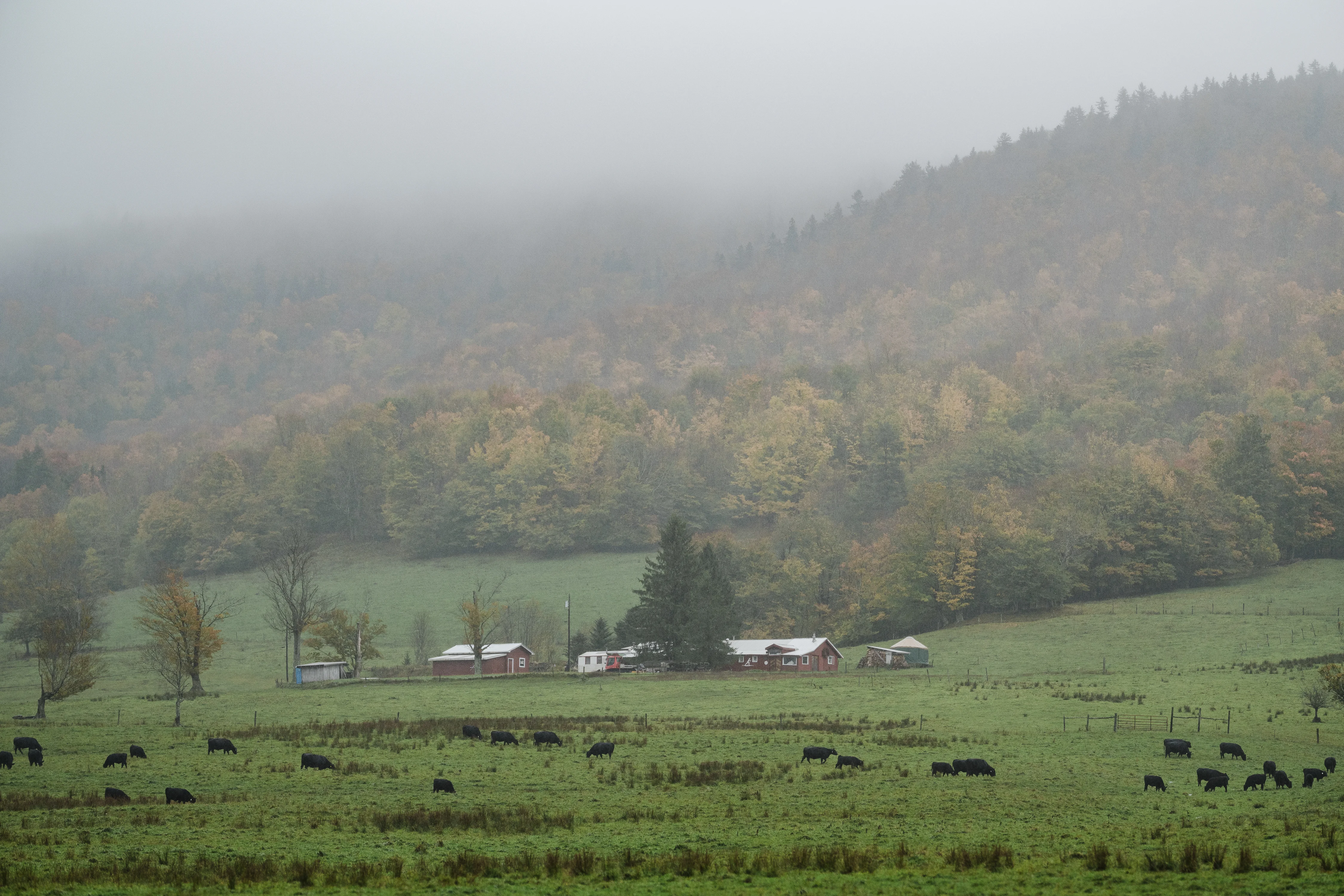
Iowa has been a Republican stronghold, with Trump winning the state by 13 points in 2024. But trade tariffs and rising fuel and fertiliser costs amid strained oil supplies during the Iran war have hit the state’s agricultural economy. Republican Senator Joni Ernst’s decision not to seek re-election has left an open-seat contest between Republican US Representative Ashley Hinson and Democratic state Representative Josh Turek, a two-time Paralympic gold medallist. Hinson has called for an “immediate end” to the Iran war, although according to PolitiFact she voted against six resolutions seeking to end US involvement. Turek has outraised Hinson $20m to $14m, but recent polls show Hinson with a narrow lead.
Kansas has not elected a Democrat to the Senate since 1932, and Trump won the state by 16 percentage points in 2024. Republican Senator Roger Marshall faces Democrat Adam Hamilton, the founding pastor of a Methodist megachurch, and both Trump and Vice President JD Vance have campaigned in the state. Farming is central to Kansas’s economy, and farmers have struggled with rising diesel and fertiliser prices as a result of the Iran war, alongside frustration with Trump’s tariffs. Immigration raids by ICE in southwest Kansas have disrupted businesses, and even Marshall has criticised aspects of the agency’s operations. Hamilton has outraised Marshall $14m to $6m, and Democratic groups have outspent Republicans $28m to $22m.
Maine is one of the Democrats’ biggest opportunities. Republican Senator Susan Collins faces Democrat Troy Jackson, a former Maine Senate president who entered the race in July after the party’s original nominee, Graham Platner, withdrew following sexual assault allegations, which he denied. Collins has sought to distance herself from Trump, acknowledging in a debate that she was not the president’s favourite senator and that he would not campaign in Maine. She was among the Republicans who voted to convict Trump following his impeachment over the January 6, 2021 attack on the US Capitol. Democrats say Collins only votes against Trump when it does not matter, and hope voters hold her accountable for helping confirm Brett Kavanaugh to the Supreme Court, which led to the overturning of a federal right to abortion. Jackson, meanwhile, has faced criticism for refusing to apologise for telling Collins to “shut up” during a debate. Jackson has outraised Collins, bringing in about $26.9m compared with $25.2m through mid-October, while Republican groups have outspent Democrats $76m to $40m.
Republicans appear to have conceded North Carolina, where even Trump has suggested the Democrats will win. At a rally last week in Greenville, Trump told supporters it was “crazy” that former Governor Roy Cooper, a Democrat, was going to be their next senator. Trump won North Carolina by only 3 points in 2024, and Republican Senator Thom Tillis’ retirement made the race an open contest. Trump recruited former Republican National Committee Chairman Michael Whatley to succeed Tillis, but Whatley has been unable to compete with Cooper’s fundraising: Cooper has raised $50m and has $9m in the bank, while Whatley has raised $14m and has just $900,000 on hand through mid-October. Recent polls show Cooper leading by double digits. Affordability has dominated the campaign; in eastern North Carolina, Kelly Spivey, who runs a community food pantry, said rising prices are forcing families to decide whether to pay for medicine, buy food, or pay for day care so they can go to work.
In Ohio, Democrat Sherrod Brown, who has longstanding ties to labour unions and working-class communities, is seeking to win back voters in the industrial Rust Belt state. He faces US Senator Jon Husted, who was appointed to the Senate to replace JD Vance when Vance left for the White House. The cost of living has become a major campaign issue, and the winner of the special election will be on the ballot again in 2028 for a full six-year term. Outside groups on both sides have spent nine figures: Republicans have invested $232m and Democrats $118m. Brown has more than tripled Husted’s fundraising through October 14, bringing in $68m to Husted’s nearly $20m, and recent polls show Brown leading by three to five points.
No Democrat has won statewide in Texas since 1994, but state Representative James Talarico could break the streak. He faces Republican Attorney General Ken Paxton, whom Trump endorsed after run-off voters nominated Paxton over incumbent Republican Senator John Cornyn. Trump won Texas by nearly 14 points in 2024, yet Republican outside groups have already spent $300m to hold the seat. Elon Musk has given $158m to a Republican super PAC supporting Paxton’s race. Recent polls show Talarico narrowly leading or tied.