Closer to Beijing than Washington: Unalaska, Alaska, squeezed by Trump's policies and diesel prices
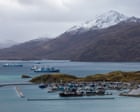
It was less than 17 hours until the start of Alaska's lucrative Bering Sea crab season, and Oystein Lone was standing on a dock in the city of Unalaska, preparing to embark in rough conditions. The next day's forecast of 60mph gusts was not his main worry — crabbing is already one of the most dangerous jobs in the United States.
What was bothering Lone was how to make the numbers work. Diesel costs more than ever thanks to the war with Iran. Lone, who has been fishing since 1989, had already spent $86,000 to put 12,000 gallons of fuel in one of his two boats. The price had climbed higher since then, and if he wanted to fill up again, he expected to spend $100,000. “This is the most challenging time I've seen,” he said.
Located further west than the Hawaiian islands, Unalaska is closer to Beijing, Tokyo and Seoul than to Washington DC. Most visitors arrive on flights from Anchorage, which cost at least $1,600 round trip and are prone to cancellation due to the region's unpredictable storms and fog.
But Unalaska is by no means a backwater. It has been the country's most productive seafood port by volume for more than two and a half decades. When its crab and pollock seasons are open, thousands of deckhands and processors arrive from elsewhere to work. In 2023, the most recent year for which data is available, more than 780 million pounds of catch valued at nearly $225 million came through its port, Dutch Harbor, according to the National Oceanic and Atmospheric Administration. Pollock is the main product.
The diesel squeeze reaches beyond the seafood industry. All of the nearly 4,300 residents of the city rely on the fuel for electricity. “This whole town runs on diesel,” said Daneen Looby, a longtime resident who sits on the city council and owns the Norwegian Rat Saloon. With distributors upping the fuel surcharges she pays for food and alcohol shipments, Looby is thinking of raising her menu prices. “I didn't want to, but I kind of have to, otherwise I'm going to become a charity,” she said.
Since Trump returned to the White House, the impacts of his efforts to remake the US government can be felt in Unalaska. As soon as he took office in 2025, he began signing executive orders billed as rooting out waste. One order, signed in March 2025, attempted to dismantle a slew of federal agencies, including the Institute of Museum and Library Services (IMLS). The office is the source of a yearly grant that Unalaska's public library receives to buy books, and librarian Karen Kresh expected $6,000 last year, only to be told the money would not be coming. “It had been stable and been reliable for years and years, and that was sort of a surprise to see that instability come up with that grant,” she said.
The Museum of the Aleutians in Unalaska is the main repository for cultural and natural history objects from the island chain. When Trump arrived in office, its staff were cataloguing a large collection of artefacts, funded by more than $347,000 in grant money from the National Endowment for the Humanities (NEH). At the beginning of April, the museum's executive director, Virginia Hatfield, received a message saying the grant was being cancelled because it “no longer effectuates the agency's needs and priorities”, and that the funds would be reallocated in a new direction in furtherance of the president's agenda. The cut put the project on hold, and Hatfield was forced to lay off six people. “It's very heartbreaking, and it kind of truncated important work,” she said.
Weeks later, Republicans in Congress approved legislation ending funding for public media outlets. Alaska, the largest state in the country, is full of small, remote communities like Unalaska that are unreachable by road, where cellphone service can be unreliable. That makes radio the best way to get word out when an emergency strikes, and the same day the Senate began debating whether to cut funding, the island's public broadcaster KUCB was putting out a warning of a potential tsunami. The wave did not arrive, and the station lost half of its budget after Trump signed the bill, said general manager Lauren Adams. In the months that followed, KUCB experienced a surge in giving from outraged listeners, and it was among more than a dozen Alaska stations to receive temporary funding from the Bureau of Indian Affairs. Adams said the station now has reserves in the bank, but with annual federal funding gone there is no long-term solution to how it stays open.
The second Trump administration has not solely been a disruptive force in Unalaska. Iliuliuk Family & Health Services is the city's only clinic. Soon, it will open a pharmacy that can replace the mail-order drugs most residents rely on, thanks to more than $400,000 from the federal Rural Health Transformation Program. The program was created by the One Big Beautiful Bill Act, Trump's main domestic policy legislation.
The midterm elections are on Tuesday, and Alaska is set to play a major role in determining whether the president's Democratic foes regain control of Congress. Alaska resoundingly backed Trump in the 2024 election, as did a majority of Unalaska voters, but Democrats believe the president's plunging approval ratings together with rising fuel prices have put its two-term Republican senator, Dan Sullivan, at risk of losing re-election to their nominee Mary Peltola. “I feel like we have a rogue government right now, and I don't feel like the Republicans are doing their job,” Looby said. “I don't understand why Congress isn't getting more involved.”