Not NIL but the transfer portal has brought parity to college football, says expert Brooks Austin
The parity seen in United States college football in recent years is driven mainly not by players' name, image and likeness (NIL) earning opportunities but by the transfer portal, according to college football expert Brooks Austin. In an exclusive interview with OutKick, Austin, known as "The Film Guy," said the freedom of movement has changed the sport more than anything else.
College football was once dominated by the Southeastern Conference (SEC), and more specifically by Alabama. According to Austin's analysis, the field of legitimate championship contenders has now become completely wide open, with no single team standing out as dominant.
As the biggest example of this change, he pointed to Indiana's performance last season. Indiana, historically one of the worst programs in college football, completed a 16-0 dream season last year by winning the national championship.
In Austin's view, the parity has reached an all-time high in the 2026 season. Eight weeks into the season, no truly dominant team is standing out.
Many fans and pundits have attributed this parity to the advent of NIL, and their reasoning is that the spread of talent would naturally become flatter when every program is allowed to legally pay money for players. Austin, however, is not on board with that theory and is one of the voices leading the charge in the opposite direction.
In the interview, Austin said: "Everybody blames it on NIL. I think it has far more to do with freedom of movement. The portal has changed this more than anything else."
As Austin puts it, teams like Alabama and Georgia can no longer stack talented players and stick them on the shelf for three years. He said Georgia can pay their backup just as much as Wake Forest can pay him to be a starter, but when a backup defensive tackle has been sitting on the bench for two years, he wants to play.
Austin did not dismiss the role of money entirely. He said: "I think NIL has certainly created some of this parity and created opportunities for dispersion of talent. But I think a lot of it also has to do with the fact that we're actually able to transfer, we're able to go." In his view, it has just as much to do with the disappearance of depth as it does with overall funding.
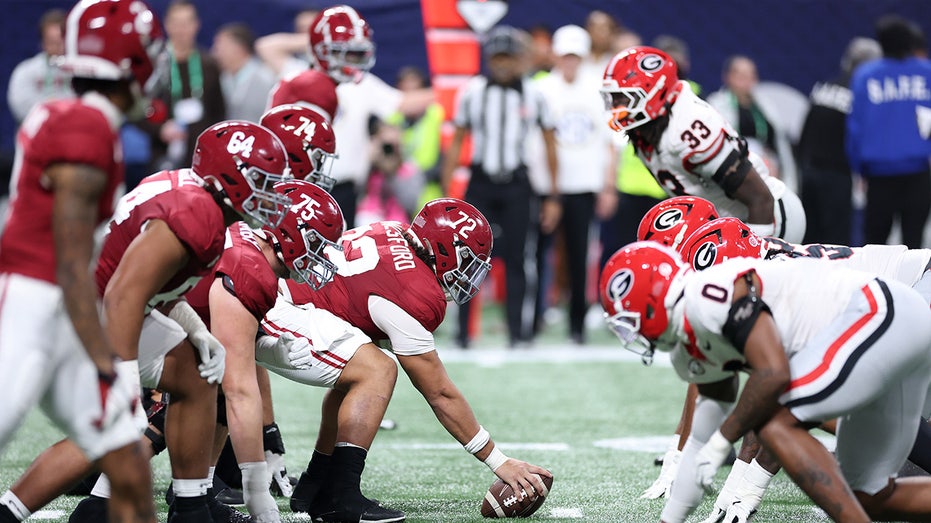
As an example, Austin recalled the 2025 SEC Championship Game, where Georgia and Alabama met. In that game, Georgia were down several starters on the offensive line, and Alabama were down several starters on their defensive line.
By contrast, he drew a comparison with the situation in 2022, before the portal became so rampant. Austin said that when Georgia lost their starting left tackle that year, there was no worry, because the replacement was Broderick Jones, a former five-star player who had barely played at all; he stepped in and blocked Will Anderson for four quarters.
Austin asked whether a player like Broderick Jones would stay around for two years to sit on the bench nowadays. Through that question, he argued that the old model of holding on to backup players no longer survives in the portal era.
Overall, Austin's conclusion is that a combination of NIL and the transfer portal is proving to be the great equalizer in college football, but that it is fairly clear which of the two has a lot more to do with it: the transfer portal.