
Gen-Z protests in 34 German cities, looting and clashes with police in Frankfurt
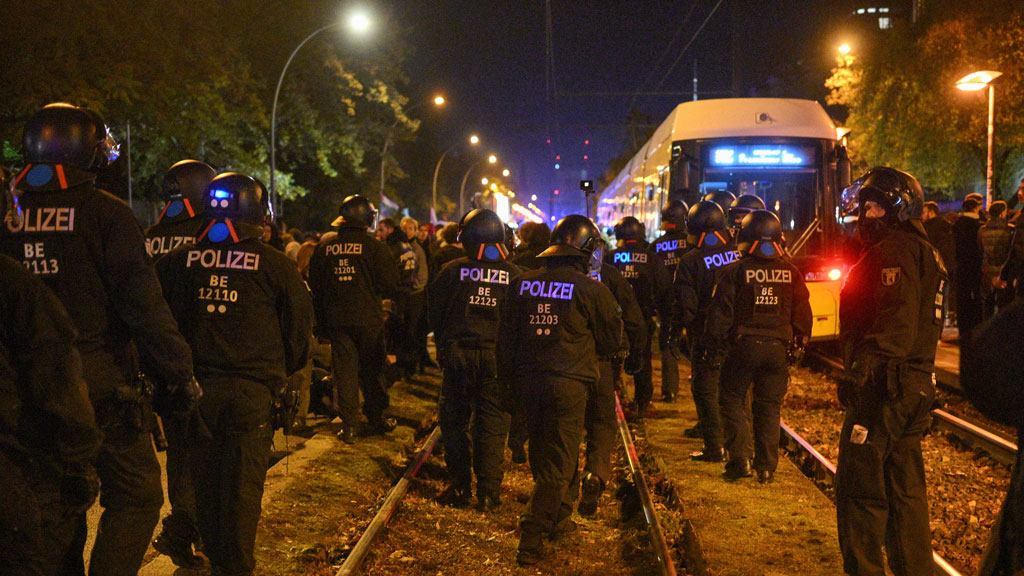
Thousands of young people protested in 34 cities across Germany demanding a better education system, lower living costs and an end to compulsory military service. The programmes were held on Saturday (31 October) in cities including Berlin, Frankfurt and Munich.
The daytime protests were mostly peaceful, but in Frankfurt they turned violent at night. Hooded and masked rioters looted at least two shops there and vandalised several others. Police struggled to bring the situation under control.
Violence was also reported in Berlin, Cologne and Hamburg besides Frankfurt. Police said water cannon were used to disperse protesters after fireworks, stones and bottles were thrown at emergency workers. In Hamburg, several barricades were set on fire.
The protests were organised by a German student group called 'Gen Z regelt', whose name in German means 'Gen Z is taking charge'. The organisers said rising living costs are putting pressure on the young generation; they demanded more investment in education and an end to compulsory military recruitment. A lack of adequate funding in schools and government spending cuts were also among the protest issues.
Frankfurt police said on social media platform X that violent chaos was continuing in the city centre, several shop windows had been smashed and petrol bombs (Molotov cocktails) were being thrown at emergency workers. Police urged the public to avoid the city centre. AFP reported that police closed a large part of Frankfurt's main shopping street and arrested many people there.
Officials later said a suspect was arrested and two weapons seized after an attempt to loot weapons by smashing the window of a gun shop in Frankfurt.
Police and organisers gave different figures for turnout. Police put participation in Frankfurt, Munich and Berlin at a maximum of 18,000, about half of what organisers had expected. Organisers had initially hoped for 182,000 participants; their website mentioned about 36,000 participants.
At a rally in Berlin, Gen Z regelt spokesperson Lina Friedrich said, 'We are here today not for war and coercion, but to fight for peace and freedom.' She said ensuring better support for health and education was most important to them; they oppose compulsory military recruitment and favour a fairer distribution of burdens.
Roman Pisek, interior minister of the state of Hesse, said about '100 clearly identified left-wing extremists' had infiltrated the protest. He described the outcome of the protest as 'shameful'.
Questions have also been raised about whether the movement is truly youth-led, because a wide range of political parties and civil society organisations took part. Germany's national school students' organisation BSK distanced itself from the initiative; it plans to hold a separate protest programme on 20 November.
Sean Becker, a student at the Technical University of Berlin, told Reuters he joined the protest to highlight the dilapidated state of buildings on his university campus. He said, 'When you go inside and enter the rooms, it feels like an abandoned building. Yet we have to come here regularly to study.'
German authorities said Saturday's protests, held at the same time as Halloween festivities, were peaceful in most cases. But they warned that extremist groups could try to use the movement for their own ends. The report also noted that in France on the same Saturday, more than 320,000 people took to the streets in youth-led mass protests.


