A family's fight helps win FDA approval for a Sanfilippo gene therapy first tested on their daughter Eliza
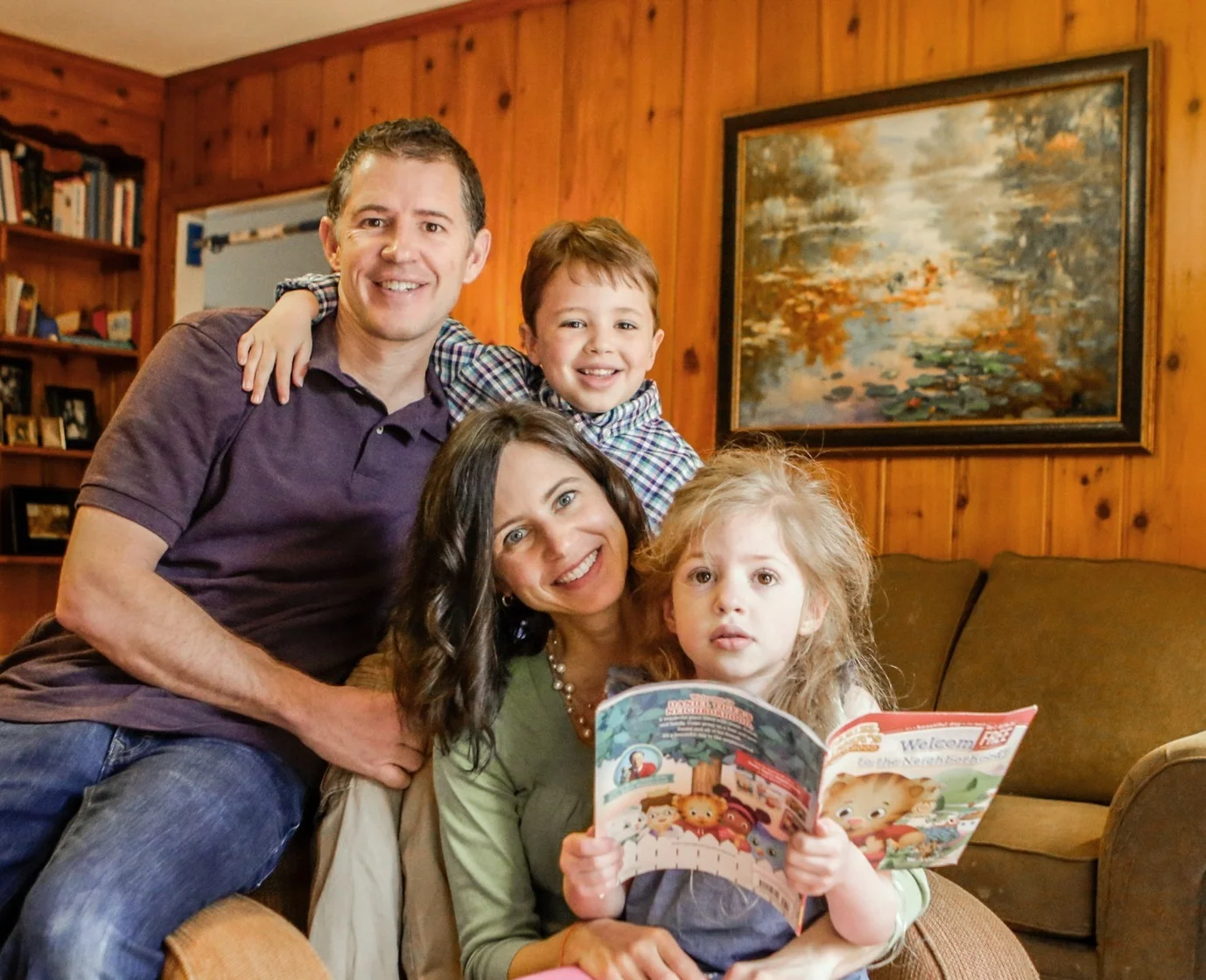
When Eliza O'Neill was 3, her parents noticed she was falling behind on developmental milestones. She was diagnosed with a pragmatic speech delay, meaning she had learned a lot of words but was not using them in a typical way in social situations. Her mother, Cara O'Neill, is a pediatrician in Columbia, South Carolina.
In 2013, one of Cara's colleagues suggested testing Eliza for a group of metabolic disorders, just to rule them out. The test came back positive for Sanfilippo syndrome. Cara remembered learning about the rare inherited disease in medical school. 'When they said the word, it all kind of came rushing back,' she says. 'And it was just this bale of dread, like, oh, my goodness, this is horrific.'
Children with Sanfilippo have a faulty gene that leaves them unable to break down heparin sulfate, a molecule critical to normal cell function. As it builds up in the body, it causes severe complications.
Kids with Sanfilippo lose their ability to speak and walk, have seizures, and usually do not live past their teens, according to the Cure Sanfilippo Foundation, which the O'Neills started and continue to run.
For Eliza's father, Glenn O'Neill, it was only after he got home that he realised how quickly the degeneration happened. 'And that was really the point where we said, "Gosh. Whatever we need to do, we need to do it now."'
At Nationwide Children's Hospital in Columbus, Ohio, researcher Haiyan Fu had been working on a gene therapy in mice for Sanfilippo since the late 1990s. The therapy used a modified virus to deliver a working copy of the broken gene to patients' cells. Fu says the experimental therapy was promising: 'And if we treat early, it could be potentially a cure. So I can't give up.'
Keeping it going, and funded, was challenging. She thought she would have to quit in 2009, but the families of children with Sanfilippo stopped her. 'They said, "You can't leave. Can we give you some of the funds for you to carry on?"' Fu recalls. In all, eight patient foundations, including Ben's Dream and a Cure for Kirby, kept her work going until the research was ready for the first human trial.
A clinical trial would be expensive, and Glenn O'Neill had an idea for raising the money. 'We reached out on a whim to some strangers that we found on the internet about making a viral video,' he says, referring to filmmaker Benjamin Von Wong, who made the video over a few days in 2014.
In the spring of 2014, the Saving Eliza video helped the O'Neills break GoFundMe's record at the time, raising a million dollars in just a few weeks; soon it hit $2 million. The money helped fund the first human trial, which started in May 2016. Eliza was the first patient, aged 6.
The experiments were promising enough for the biotech industry to take notice. Ultragenyx acquired the rights to the gene therapy in 2022 and kept studying it, later submitting data to the Food and Drug Administration for review.
The FDA approved the gene therapy in September. The one-time infusion is called Fayuvi. Ultragenyx chief executive Emil Kakkis says: 'The treatment will work best the younger the child is because the more brain is remaining.' He says children treated at 6 months of age have done really well.
Ultragenyx set the price at nearly $4 million, tying it for the second most expensive gene therapy ever, according to 46brooklyn, a drug price research firm. Kakkis says the company is committed to making sure every patient is treated regardless of the price.
Moments after the approval was announced, Fu got a call from Cara O'Neill and messages from other families that funded her research; some had lost a child along the way. Fu says the approval brings mixed emotions: 'It shouldn't take this long.'
Eliza is almost 17 now. Because she was 6 when treated, she had already lost her ability to speak and it never returned, but she can communicate with picture cards and devices. She goes to school, and this summer she swam and learned to float on a pool noodle. 'I just feel proud of my girl,' Glenn O'Neill says. 'It's been a rough road for her, but we also know she's very lucky.'