HSC result slump hits higher education: nearly 850,000 undergraduate seats may stay vacant
Because of the slump in this year's Higher Secondary Certificate (HSC) and equivalent examination results, around 850,000 seats at undergraduate and equivalent level will remain vacant. Most colleges affiliated with the National University and struggling private universities are expected to face a severe student shortage.
Sources say competition for admission to public universities, medical and dental colleges and engineering universities will also be comparatively lower this year, because fewer students have achieved GPA-5 than the number of seats available at those institutions.
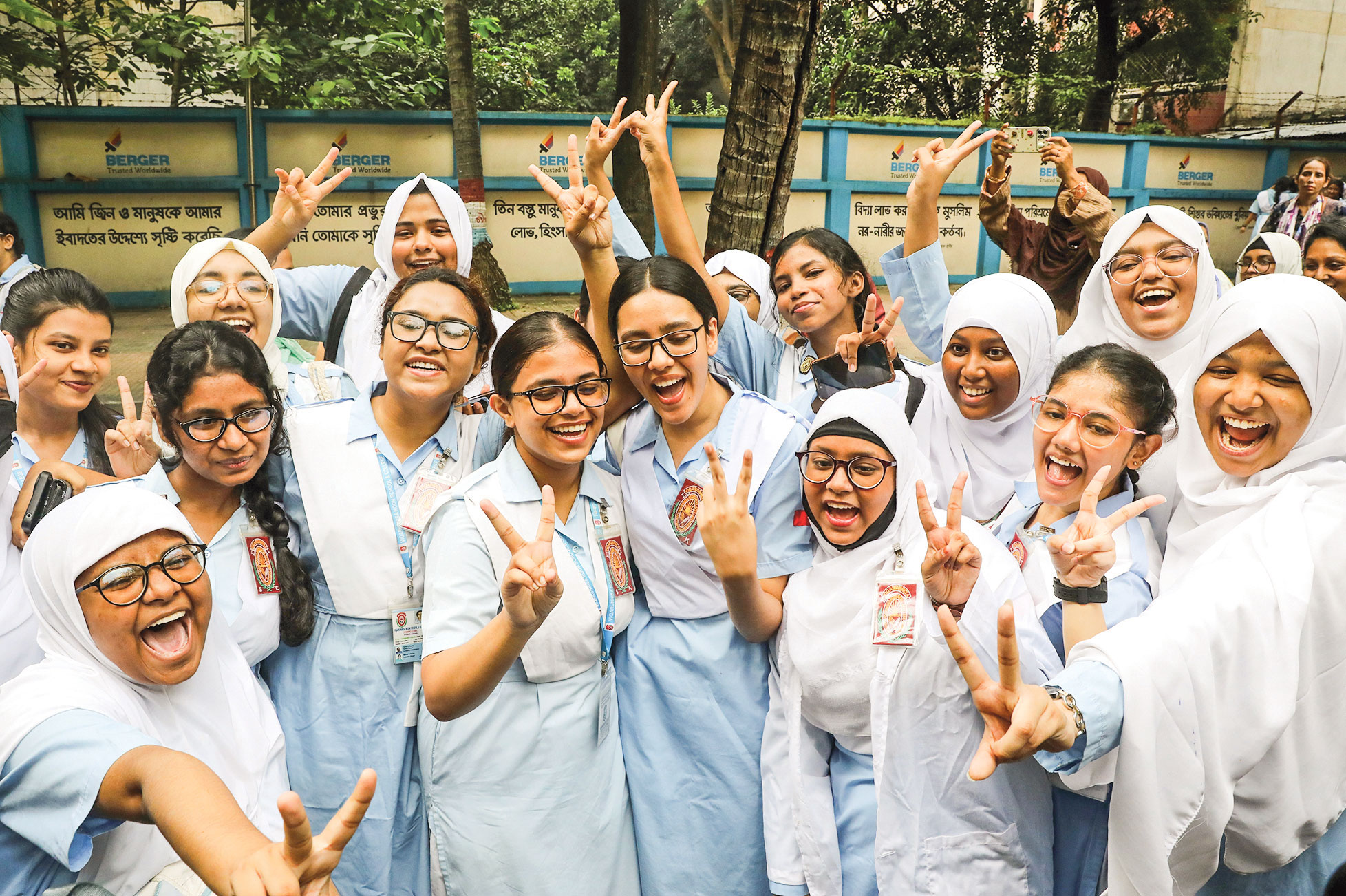
This year's HSC and equivalent results were published last Saturday. A total of 646,685 students passed the HSC and equivalent examinations this year. The average pass rate across the nine general education boards and the madrasa and technical education boards is 52.12 percent.
According to the latest data from the University Grants Commission (UGC), which oversees higher education, there are a total of 1,082,288 undergraduate and equivalent seats across public universities, engineering universities, medical colleges, the Open University and National University-affiliated colleges. Private universities have another 410,000 undergraduate seats. By that calculation, even if every student who passed this year enrols, 845,603 undergraduate seats will remain vacant at various institutions.
A total of 1,240,798 students took part in this year's HSC and equivalent examinations, of whom 646,685 passed. Among them, 40,084 achieved GPA-5. Compared with last year, both the pass rate and the number of GPA-5 achievers have fallen by record amounts. The pass rate has dropped by 6.71 percentage points year on year, and the number of GPA-5 achievers has fallen by 29,013. In 2025 the pass rate was 58.83 percent, and 69,097 students achieved GPA-5 that year.
Result analysis shows that fewer students have achieved GPA-5 this year than the number of seats at public universities. Admission test competition will therefore be comparatively lower this time, although competition at a few renowned public universities will remain as before.
Education Minister A N M Ehsanul Haque Milon said there is no shortage of seats for admission to higher education institutions. Speaking at the HSC result publication event at the Secretariat last Saturday, he said many seats will remain vacant even after all students who passed the HSC and equivalent examinations enrol.
Analysis shows the result slump was driven by proper evaluation of answer scripts, students' poor performance in English, ICT and accounting, and the impact of political instability following the July mass uprising. This is the first time since 2004 that the HSC pass rate has been this low. In 2004 the pass rate was 47.74 percent; the following year, 2005, it was 59.07 percent. The pass rate had mainly been rising since 2005.
According to UGC data, the 61 public universities have 63,656 undergraduate seats; government medical colleges have 5,100 seats; private medical colleges 6,278; government dental colleges 545; private dental colleges 1,350; the Armed Forces Medical College 350; the 107 private universities have 410,000 undergraduate seats and 1,160 in pass courses; National University-affiliated government and private colleges have 946,095 seats at undergraduate (pass), undergraduate (honours) and undergraduate technical/equivalent levels; madrasas under the Islamic Arabic University have 11,055; the Open University 42,434; engineering colleges 720; textile colleges 720; marine colleges 660; colleges affiliated with Dhaka, Chattogram and Rajshahi universities 3,790; international specialised universities 800; and nursing and midwifery 5,600 seats.
People concerned say the main target of students with good SSC and HSC results is admission to public universities, medical colleges and engineering universities. This year those institutions have 60,000 seats. Beyond that, some students enrol in specialised subjects at renowned private universities. It is feared that this year, apart from a handful of National University-affiliated colleges, most will not get students. Private universities that have been struggling along will also fall into crisis.
National University Vice-Chancellor Prof Dr Amanullah Ferdous said the number of seats at the National University is higher than the number of students who passed the HSC this year, creating a risk that several lakh seats will stay vacant. He said alternative paths are being sought to tackle the crisis. He also said there is thinking about bringing unsuccessful students under job-oriented education by launching new technical courses under the National University.
Education Minister A N M Ehsanul Haque Milon has given strict instructions to bring under accountability the institutions where the pass rate in this year's HSC and equivalent examinations is zero or alarmingly low. In addition, the application process for re-scrutiny and re-evaluation of answer scripts has begun for those who have objections to the 2026 HSC and equivalent results.