Iranian 'ghost fleet' filmed evading US blockade en route to China, UANI says
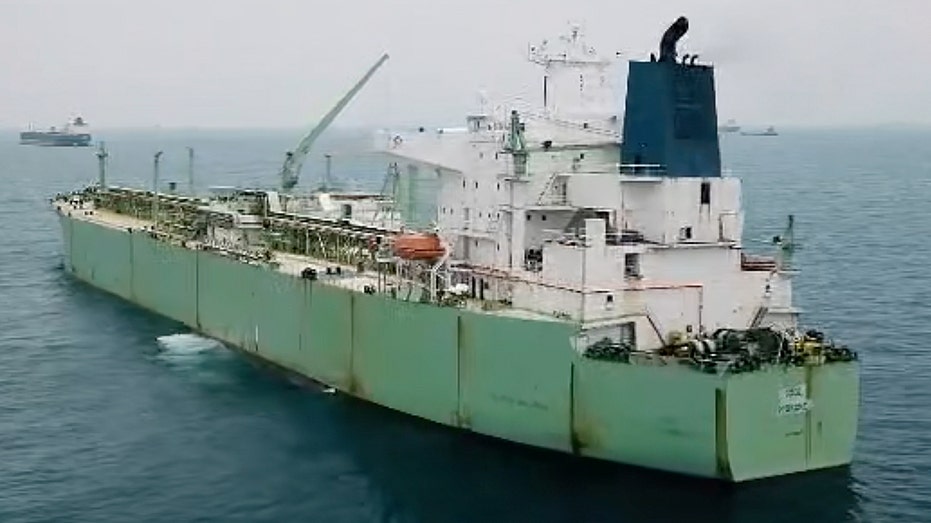
Small Iranian 'ghost fleet' tankers are slipping past the US naval blockade and smuggling sanctioned liquefied petroleum gas (LPG) to China through a shadowy maritime hub off Malaysia, according to US investigators who covertly filmed one of the vessels en route in September.
United Against Nuclear Iran (UANI), which conducted the months-long probe, said at least nine similar tankers carrying Iranian oil or LPG have also evaded US restrictions in the Strait of Hormuz since Washington reinstated the Iranian port blockade in July.
UANI identified one of the sanctioned tankers as the SOGL. It allegedly escaped the blockade on 1 September carrying approximately 500,000 barrels of Iranian LPG after collecting it at an Iranian port in August.
The vessel then travelled thousands of miles to a Malaysian offshore anchorage, where UANI filmed the vessel receiving fuel and other services offshore. The ship then travelled on to China, where the organisation said it discharged its Iranian cargo.
Jemima Shelley, a senior analyst at UANI, said: 'This tanker had loaded its Iranian LPG from Assaluyeh Port, Iran, in late August. It then breached the US blockade and made its way to a Malaysian anchorage.' She said: 'What this shows us is that some vessels are managing to breach the US maritime blockade.'
Shelley added that most vessels are not managing it, but since the reinstatement in mid-July, only nine small tankers have been successful in breaching the blockade and departing the Gulf of Oman laden with oil or LPG. She said the US blockade is an overwhelming success at preventing vessels laden with Iranian oil and petrochemicals from leaving the Gulf of Oman, and that since the blockade was reinstated, no Iranian crude oil has managed to depart as a successful export.
At the centre of the operation is the Malaysian Eastern Outer Port Limits Anchorage, known as the EOPL, an offshore shipping area approximately 70 kilometres from Malaysia's coastline. Shelley said the anchorage has become a critical staging ground for Iran's sanctioned energy trade with China. The area allows vessels to wait offshore, receive supplies and transfer cargo between tankers.
UANI had been monitoring the SOGL before its arrival in Malaysian waters. Shelley said that on 16 September, UANI chartered a supply vessel and transited 100 nautical miles into the Malaysian Eastern Outer Port Limits Anchorage. There they witnessed firsthand the illicit activities of ghost fleet tankers, as well as some Iran-flagged cargo ships located in the anchorage, one of them being the SOGL. She described the SOGL as a Handymax small tanker laden with 500,000 barrels of Iranian LPG.
The US maritime blockade was first imposed on 13 April, temporarily lifted in mid-June and reinstated on 14 July after diplomatic negotiations collapsed. According to Shelley, the United States is primarily prioritising Iranian crude and very large tankers, which often carry two million barrels of Iranian crude, while the smaller vessels exploit those challenges.
The smaller vessels use tactics commonly associated with Iran's ghost fleet, Shelley said. They turn off their AIS and often fly a false flag, so they are completely stateless vessels. AIS transponders broadcast a vessel's identity, position and movements to other ships and maritime authorities; switching them off can make a vessel more difficult to track. She also said the vessels often load, transit the Persian Gulf and the Strait of Hormuz, and in the Gulf of Oman conduct a ship-to-ship transfer — a very high-risk transfer because it is LPG, not crude oil.
The SOGL, identified by IMO number 9208227, was added to the US Treasury Department's Office of Foreign Assets Control sanctions list on 8 October over its alleged involvement in transporting Iranian petroleum products since 2025. The vessel has operated under multiple flags, including the Comoros and Zimbabwe, and has been linked in sanctions records to Gravion Maritime Co.
Shelley said the EOPL anchorage is also used for floating storage, and that since the blockade has been enforced, Iranian floating storage has fallen to zero to seven million barrels. Malaysia is roughly a 10-day-to-two-week journey from Iran. UANI's video also shows the SOGL sitting low in the water and receiving bunkering services from a smaller tanker off Malaysia.
China is the dominant destination for Iranian oil and LPG. Shelley said that for years, China has made up 80% of Iran's liquid cargo exports, and now China is importing almost 100% of Iran's oil and LPG exports. She said the trade has allowed Iran to avoid sanctions, whilst China is able to buy highly discounted Iranian oil and LPG.