Florida police unveil flying patrol vehicle, but regular patrol flights still await approval
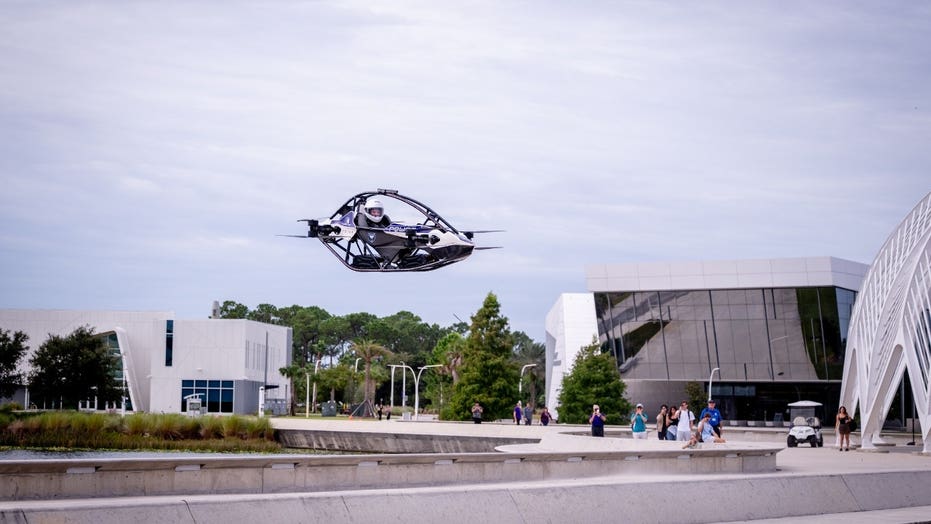
Police patrols in Florida have gained a flying vehicle. The Florida Polytechnic University Police Department in Lakeland has introduced a single-seat electric flying vehicle, nicknamed Astro, for use as a police patrol vehicle. The aircraft is a Jetson ONE built by the company Jetson.
According to the university, it is the first United States law enforcement agency to add this type of piloted electric aircraft to its fleet. Jetson also calls it a world first. However, Astro still needs authorization from the Federal Aviation Administration (FAA) before officers can use it for operational police patrols.
Astro takes its name from the dog in the classic cartoon The Jetsons. The aircraft uses electric vertical takeoff and landing technology, known as eVTOL, so it can lift straight into the air without a runway. Unlike a conventional police helicopter, it has a compact frame that folds for easier transport and storage. It has an open cockpit surrounded by a lightweight frame.
Eight electric motors power its eight propellers, and a four-axis joystick lets the pilot control its movement. Florida Polytechnic University selected the Jetson ONE to explore its potential for law enforcement. The aircraft arrived in summer 2026. Since then, police personnel have completed flight training, including Police Chief Aaron Murray.
Jetson identifies the aircraft by its registration number, N911FP, a reference to emergency services and Florida Polytechnic University. The company says Astro is a standard Jetson ONE with police lights added. Officers use a handheld radio, and the aircraft has mounts for action cameras. A pilot-controlled searchlight could be added in the future, the company says.
According to Jetson's published specifications, the aircraft can reach speeds of 63 miles per hour, fast enough to cover short distances across a large campus without following roads or dealing with traffic. Battery life, however, limits how long it can stay airborne: about 20 minutes of flight time per charge. It takes about 90 minutes to recharge using a 240-volt connection, and about three hours through a standard household outlet. Officers can swap batteries between flights, so they can return to the air sooner if fully charged replacements are available.
Jetson confirms that the 210-pound maximum includes the pilot, police gear and any emergency supplies. The company says this is a hard limit, which could restrict how much equipment an officer can carry. On safety, the company says Astro can continue flying even if one motor fails, and it has an automatic landing system and a ballistic parachute designed for emergencies.
Jetson lists the vehicle at 148,000 dollars before taxes and additional fees, a significant investment for a police department. Florida Polytechnic University wants to explore whether Astro can help officers respond when roads become difficult to navigate. After a major Florida storm, roads may flood, debris can block access and emergency crews may struggle to reach certain locations. Once weather and flying conditions allow, a small aircraft that takes off vertically could help officers survey the damage.
Police Chief Aaron Murray believes Astro could help officers monitor the campus and reach places that traditional vehicles cannot easily access. The department also wants to investigate using it to deliver emergency supplies. Murray said: “Advanced air mobility is a technology on the rise, and we can either choose to be proactive or reactive as it develops.”
The limitations are clear, however. Astro carries only its pilot. It cannot transport an injured person or bring someone back from a rescue mission. Because the 210-pound limit includes the officer and everything onboard, the amount of emergency supplies Astro can carry depends on the pilot's weight and equipment.
There is also an important regulatory issue. Jetson developed the ONE as a recreational aircraft designed around the FAA's Part 103 ultralight rules. Those rules allow qualifying ultralight vehicles to operate without traditional aircraft or pilot certification, but their use is limited to recreational or sporting purposes. Police patrols fall outside those permitted uses. FAA guidance specifically identifies aerial surveying and patrolling as activities that cannot operate under Part 103.
Jetson says Florida Polytechnic University needs additional federal authorization involving FAA Part 91 rules to use Astro for public-safety missions. When the university announced the aircraft in mid-October, it said the approval process was in its final stages, and officials expected approval in November or December. The university has not publicly confirmed when regular operational police patrols will begin.
Beyond its potential police duties, Astro will serve as a hands-on research platform for Florida Polytechnic University students. The university launched an aerospace engineering degree program in fall 2026. Students will have an opportunity to study electric aircraft technology while learning about the challenges of operating it. Faculty members and students plan to use Astro's flight data for research and senior engineering projects, and reports indicate the university is exploring virtual training simulations for police officers.
Florida is also expanding its involvement in advanced air mobility. The nearby SunTrax transportation testing facility in Auburndale has a dedicated aerial test track for emerging aircraft technology. Testing under Florida's participation in a federal advanced air mobility pilot program is expected to begin by the end of 2026. That statewide testing effort is separate from Astro's pending authorization for police operations.
Police helicopters require significant resources to purchase and maintain. A smaller electric aircraft could eventually offer another option for certain missions, especially when an officer needs a quick view of an area from above. Its short flight duration, however, means officers would need to plan missions carefully. Swappable batteries could support repeated flights, but officers would still need to land between missions to replace them. Weather conditions and airspace restrictions could further limit its use.